How to Remove a Bearing Race from a Wheel Hub
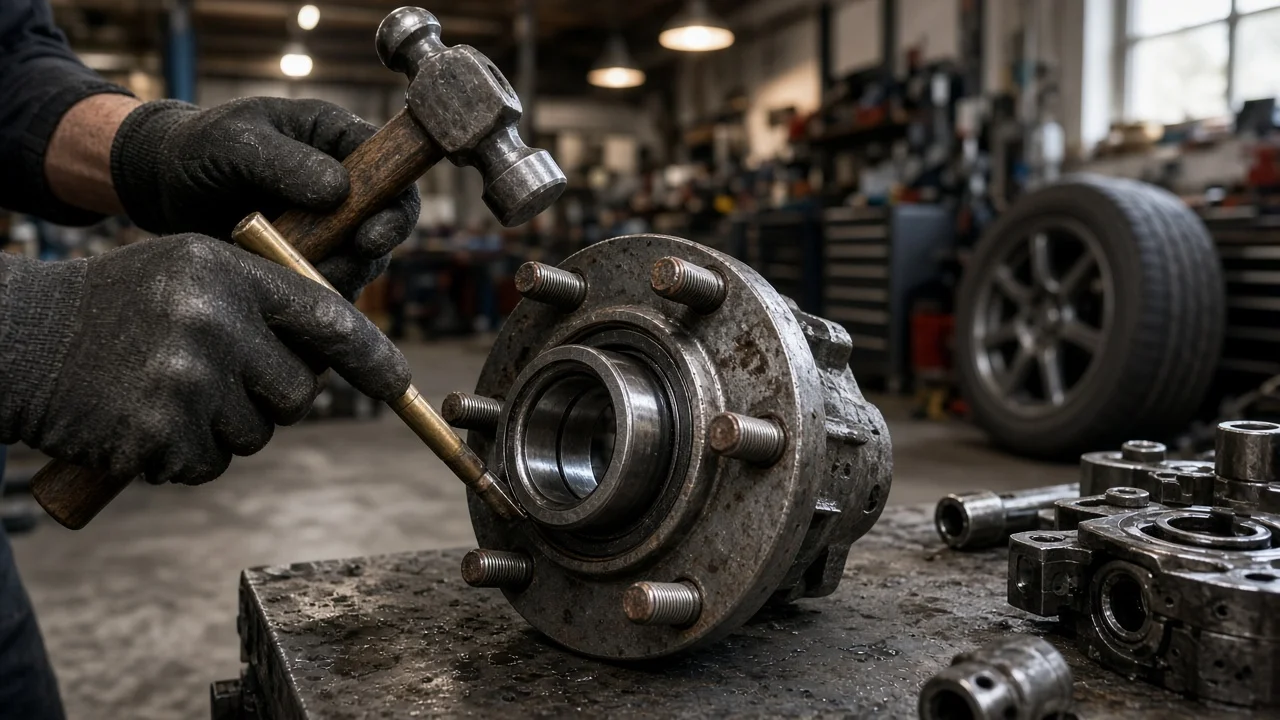
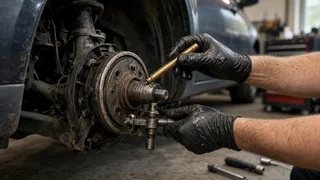
Removing a bearing race from a wheel hub is a press-fit job that requires controlled force directed squarely through the hardened steel ring. The race sits in a machined bearing seat inside the hub assembly, and attempting to knock it out with an off-angle drift often damages the bore or leaves a partial ring wedged in place. A successful removal frees the old outer race after the bearing has failed or during hub service. Because the interference fit holds the ring tightly, heat, penetration oil, and a properly sized driver usually make the difference between a clean extraction and a damaged hub surface.
Direct answer
If a steel bearing race is captured in the wheel hub, the ring must be driven or pressed out from the opposite side. Bring the race to an even temperature and drive it with a brass, aluminum, or mild-steel punch, working in small increments around the circumference to keep it square in its bore. A blind bore with no rear access may require an internal puller or a carefully controlled weld bead that shrinks the ring, because there is no lip behind the race for a punch to strike.
When a retaining ring or snap ring is present, remove it before applying force to the bearing race. The snap ring occupies a groove near the outer edge of the bearing seat and still restrains the race even after the visible ring appears loose. Without removing that retainer, hammering simply deforms the race edge and may crack the surrounding hub assembly. A press-fit removal always works better when the ring is fully exposed and the load path through the old race is not blocked by a fastener or stamped cover.
How to proceed
Secure the steering knuckle or hub assembly so hammer blows do not move the workpiece, because a swinging hub wastes impact energy and increases the chance of an off-angle strike. Clean the exposed bore with a wire brush, apply a light penetrating oil around the seat, and inspect the back side for two or three shallow relief notches machined into the hub. Those notches are intended punch points that expose a small lip of the outer race for the drift tip.
Heat the area around the bearing seat with a propane torch, keeping the flame moving around the outside of the hub rather than pointing only at the race. The aluminum or iron hub expands faster than the hardened steel ring and temporarily loosens the press fit. Strike the drift alternately at opposite points so the race walks out fairly straight. Once the old race clears the bore, clean the seat with a fine abrasive pad and check for scratches that would affect the next bearing preload and seating, then press the replacement bearing squarely against the bottom shoulder.