How to Record a Car Problem That Happens Only Occasionally
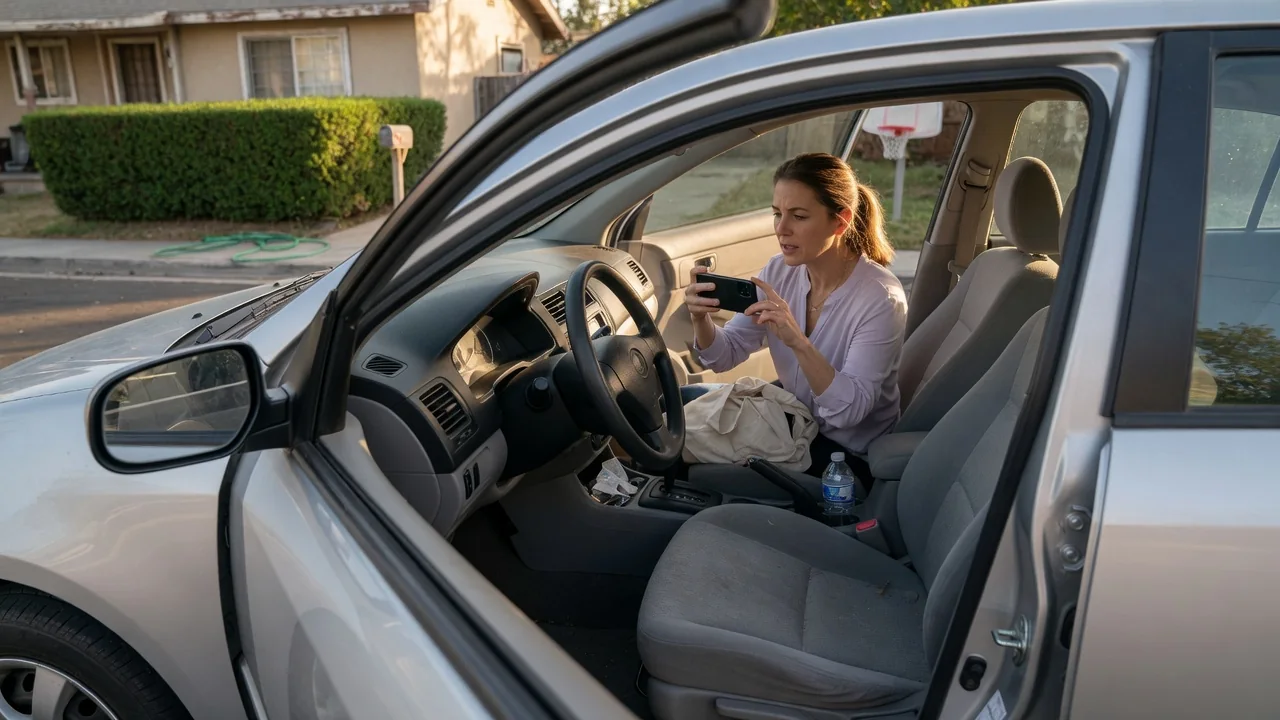
An intermittent fault is frustrating because the car often behaves perfectly once it reaches the shop. Learning how to record a car problem that happens only occasionally gives a technician something solid to work with. A simple symptom log, kept consistently, turns a vague complaint into a pattern of dates, conditions and observations that can be tested and narrowed down.
Time and conditions
Start every entry with the date, time of day and odometer reading, then note how long the car had been running. Many intermittent faults follow temperature: a rough idle that appears only in the first minutes after a cold start points in a different direction than a stumble that arrives after forty minutes on the highway. Record the outside temperature, whether it was raining or humid, and whether the car had been parked overnight or only briefly. These details help separate heat-related, moisture-related and purely mechanical causes.
Next, describe what the car was doing at that moment. Write down the approximate speed, the gear or drive mode, whether you were accelerating, braking, coasting or turning, and the road surface. Note the fuel level, the number of passengers or cargo load, and which accessories were on, such as air conditioning, rear defroster or headlights. A vibration that appears only at a certain speed under light throttle, or a noise that occurs only on left turns, becomes far easier to trace when those conditions are written down every time.
Warning messages
When a warning light or message appears, photograph the instrument cluster as soon as it is safe, or have a passenger do it. Capture the exact wording, the color of the light, and whether it was steady or flashing, because those distinctions change the urgency. Note how long it stayed on and whether it cleared by itself or after a restart. Symbols and message text differ between manufacturers and even between model years, so the owner's manual for your specific vehicle is the right reference for what each indicator means.
If you own a basic scan tool, write down any stored or pending codes along with the freeze frame data, which captures engine conditions when the code set. Avoid clearing codes before a shop visit, since that erases information a technician relies on. Treat a code as a clue rather than a verdict: it identifies a circuit or system reporting something outside its expected range, not a failed part. Some codes are manufacturer-specific, so their meaning needs to be confirmed against information for your exact vehicle.
Reproduce safely
Once a pattern starts to emerge, you may be tempted to trigger the problem on purpose. Do so only where it carries no risk: a quiet street, an empty parking lot, or a stationary car in park with the parking brake set. Never operate a phone while driving to capture a symptom. A passenger can record audio or video, or a dash camera or securely mounted phone can run unattended. Sound recordings are especially valuable for squeaks, knocks and whines that are hard to describe in words.
Change one condition at a time so the result means something. If a shudder appears with the air conditioning on, try the same road and speed with it off and record what happens. Do not attempt to recreate anything involving braking performance, steering response, stalling in traffic or loss of power at speed, since those faults can leave you without control when you need it. If the symptom falls into that category, stop driving the car beyond what is necessary and let a qualified shop do the testing under controlled conditions.
Everyday Use and Observations
Ordinary driving supplies most of the useful evidence, provided you write things down promptly. Keep a small notebook in the glovebox or a notes file on your phone, and complete the entry once parked, while the details are fresh. Use your senses in turn: what you heard, what you felt through the steering wheel, pedals or seat, what you smelled, and what you saw on the gauges. Describe where a sound seemed to come from and whether it changed with engine speed or with road speed, which helps distinguish engine from driveline sources.
Record the context around the fault as well as the fault itself. A recent fill-up, a car wash, a battery replacement, a jump start, new tires or any repair work may be relevant even when the connection is not obvious. Note the occasions when the conditions were the same and nothing happened, since a missing symptom also narrows the possibilities. Layouts vary widely between vehicles, so a sound from the front right in one car may involve entirely different components in another; stick to describing what you observed rather than naming a suspected part.
Limits and Next Steps
A symptom log has clear limits. It documents when and how a problem shows itself, but it cannot confirm a cause, and patterns that look convincing on paper sometimes turn out to be coincidence. Several unrelated faults can produce similar sensations, and electrical problems in particular may come and go with no obvious trigger. Use the notes to inform a diagnosis, not to replace one. Buying parts on the strength of a log or a single code often adds expense without fixing the original complaint.
When you book the car in, hand over a copy of the log with the photos, recordings and any code readouts, and summarize the strongest pattern in a sentence or two. Offer to ride along on a test drive so you can point out the symptom when it occurs, and ask whether leaving the car overnight would help if the fault appears on cold starts. If the shop cannot reproduce it, keep logging and return with new entries. Any flashing warning, overheating, or change in braking or steering calls for prompt professional attention.