How to Plan an Overnight Stop With a Loaded Car
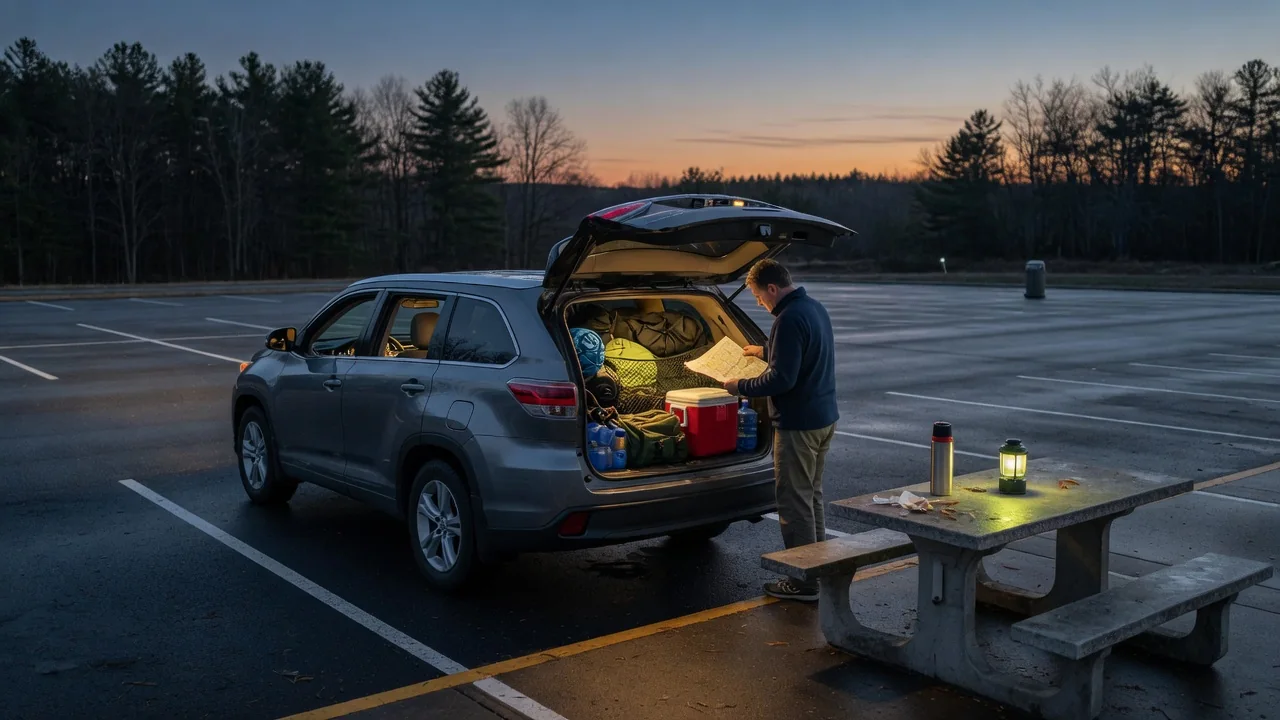
A loaded car changes how an overnight stop should be planned. Luggage, tools, camping gear, or a roof box can make the vehicle a more noticeable target. The extra weight rests on the tires and suspension all night, and there is more to inspect before driving on. Planning an overnight stop with a loaded car comes down to three decisions: where you park, what stays inside the vehicle, and how you check the car and its load in the morning.
Parking Choice
Pick the stop before you are tired. If you choose a destination and a fallback earlier in the day, you are less likely to take the first open space you find late at night. Lodging with its own parking is usually the simplest option. At check-in, it is reasonable to ask whether the lot is gated, watched by staff, or covered by cameras, and which spaces the staff would suggest. In general, a space close to an entrance or lobby window, with steady lighting and people coming and going, gets more passive attention than a dark corner at the far edge of the lot.
Size and shape matter as much as location. Look for a reasonably level space with room to open the trunk, hatch, or tailgate without standing in a traffic lane. If you carry a roof box, roof rack, or bikes on top, check the posted clearance before entering a parking garage. Know your loaded height from your own measurement or the accessory's documentation rather than guessing. A trailer adds another layer: many lots lack pull-through spaces, and some properties restrict trailers, so confirm with the property before you arrive.
Orientation is a small but useful choice. Where practical, park so the cargo opening faces a wall, a curb planting, or another obstacle, which makes it harder to open the rear unnoticed. Leave yourself enough room to reach the cargo in the morning. Backing into the space can also make departure easier with a heavier, less nimble car. On any slope, set the parking brake firmly and follow the owner's manual for your transmission type, because a heavier load puts more demand on whatever holds the car in place.
Valuables
Start with what comes inside. Documents, cash, cards, medications, laptops, cameras, and spare keys are worth carrying into your room even if it takes an extra trip. The easiest way to make this routine is to plan for it when you first load the car. Keep one overnight bag with clothes and essentials, and place it where you can lift it out without unpacking everything else. If that bag ends up buried at the back of the cargo area, a quick stop turns into a full unload.
For items that stay in the car, the goal is that nothing worth stealing is visible. Move bags into the cargo area or under a cargo cover before you arrive, not in the lot, because rearranging gear in front of other guests shows exactly where it went. Remove phone mounts, charging cables, and dash cameras where possible, since they suggest electronics are inside. Avoid leaving printed itineraries or papers that show you are far from home. A retractable cargo cover or privacy glass helps, but a cover only hides items; it does not secure them.
Exterior cargo needs separate attention. Lock roof boxes and racks if they have locks, and secure bikes to the carrier and the carrier to the vehicle where the design allows. Take off small quick-release parts that are easy to steal. Indoors, keep key fobs away from doors and windows. Some owners use signal-blocking pouches for keyless systems, though how much they help depends on the vehicle. Finally, personal belongings stolen from a car are often handled under a homeowners or renters policy rather than an auto policy, so check your coverage before a long trip.
Morning Check
Before reloading anything, walk around the car. Look for broken or cracked glass, scratches around locks and latches, a roof box lid that is not fully closed, or cargo that appears to have moved. Glance under the vehicle for fresh drips. Clear water near the front is often air conditioning condensation, but oily, colored, or sweet-smelling fluid deserves a closer look before a long drive. If you find damage or signs of a break-in, photograph it and report it to the property, and to the police when appropriate, before moving the car.
The tires carry the full load overnight. Morning is the best time to check them because they are cold, which is the condition recommended pressures assume. Use a gauge rather than judging by eye, and compare the readings with the tire placard, usually on the driver's door jamb, and with the owner's manual. Some vehicles list a separate pressure for heavier loads; use that figure if your vehicle provides one. While you are down there, check the tread and sidewalls for cuts or bulges. Then confirm that all lights and the license plate are working and visible, including any lights or plates mounted on a rack.
Then check the load itself. Straps and tie-downs can loosen as cargo settles, so retighten them, confirm the roof box latches are locked, and make sure heavy items are low and secured. Nothing loose should sit in the cabin where a hard stop could throw it forward, and the rear window and mirrors should give you the view you need. If a cooler or charger stayed plugged in overnight, watch for slow cranking. After starting, confirm that no new warning lights stay on.
Practical Implications and Limits
These steps cost time, and that time is easier to find when it is planned. Arriving with some daylight left makes it easier to judge a lot and arrange cargo. Building a short inspection into the departure schedule keeps the morning check from being skipped when you are eager to leave. The aim is to reduce exposure, not eliminate it. Unloading the entire car is the most thorough option but rarely realistic on a multi-day trip, so most travelers weigh the effort against the value of what stays behind. No parking spot or cover guarantees that nothing will happen.
The details also depend on the vehicle and the place. Payload limits, roof load ratings, recommended loaded tire pressures, alarm behavior, and cargo cover design vary from one vehicle to another. The owner's manual and door placard are the authority for your car; the guidance here describes general practice. Overnight parking rules differ too. Rest areas, retail lots, and city streets have their own restrictions, which vary by state, city, and property, so read the posted signs or ask before treating any space as an overnight option.