How to Make a Short Car Trip Easier With a Baby
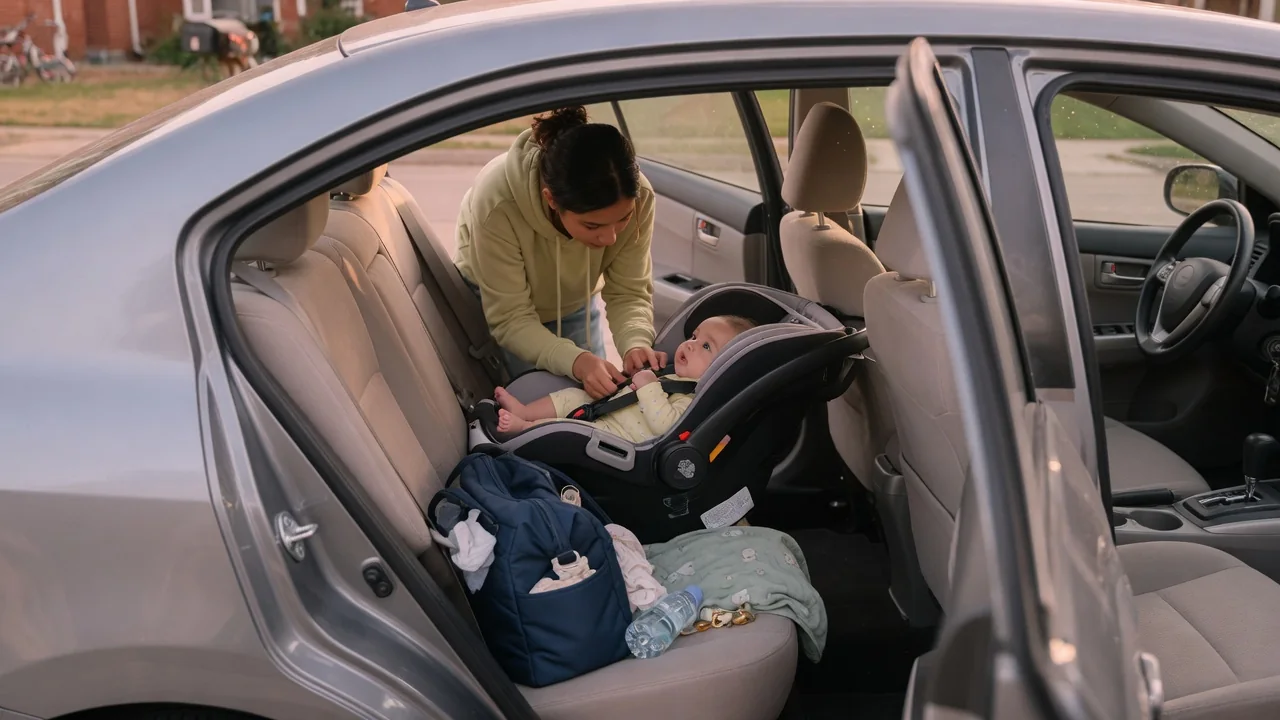
Learning how to make a short car trip easier with a baby is mostly a matter of preparation before the engine starts. A twenty-minute drive can feel long when a feeding is overdue or the cabin is too warm. Thoughtful packing, sensible timing, and a route with a few fallback options keep the driver focused and the smallest passenger settled.
Time and supplies
Timing does more for a calm drive than any accessory. Many parents find that leaving shortly after a feeding and a fresh diaper gives the widest window of contentment, and a departure that overlaps with a usual nap can let the motion of the car do the settling. Build in extra minutes for loading, because rushing through a driveway departure is when bags get left on the roof or the porch. Checking the fuel level or battery charge the night before removes one unplanned stop from the trip.
Supplies for a short drive should be compact and reachable rather than comprehensive. A small bag holding diapers, wipes, a change of clothes, a burp cloth, and whatever feeding items your baby needs belongs in the cabin, not buried under groceries in the cargo area. Where it fits depends on the vehicle: a sedan may offer only the rear footwell or the adjacent seat, while an SUV or minivan may have seatback pockets and door bins within arm's reach. Keep heavy or hard items stowed low so they cannot slide forward under braking.
Cabin temperature
A parked car can be far hotter or colder than the air outside, and a baby cannot say so or adjust their own layers. Running the climate control for a few minutes before loading brings the cabin closer to a comfortable temperature, and vehicles with remote start or app-based preconditioning make that easier. In summer, touch the seat surface and buckle hardware before settling your baby, since dark fabric and metal parts left in direct sun can become uncomfortably hot. Never leave a baby alone in a parked vehicle, even briefly.
Airflow in the back seat often differs from what the driver feels. Some vehicles have dedicated rear vents in the center console, the pillars, or the roof, while others rely on air drifting back from the dashboard, so the rear row may lag well behind the front. A rear-facing seat can also shield a baby from that airflow. Window shades help with direct sun on the side glass, and dressing your baby in light layers lets you adjust easily. A flushed face, damp hair, or cool hands at a stop are useful cues.
Stops
Even a short route benefits from knowing where you could pull over. Before leaving, glance at the map for a parking lot, gas station, or rest area roughly midway, so an urgent diaper change or feeding does not mean improvising on a narrow shoulder. A level, well-lit lot away from moving traffic is the kind of place to look for. Choosing a route with steady speeds over one with constant stop-and-go can also help, since many babies settle with consistent motion and fuss when the car sits idle at long lights.
When crying starts, the safest response is to find a proper place to park rather than reaching back or turning around while driving. Once stopped, set the parking brake and tend to your baby from the side of the car away from traffic where possible. The space you have to work with varies: a hatchback's cargo floor or a minivan's wide door opening makes a changing spot easier than a compact sedan's rear seat. A foldable changing pad kept in the bag turns almost any flat surface into a workable one.
Everyday Use and Observations
Repeated short drives reveal patterns worth noting. You may see that your baby settles faster on smooth highway pavement than on rough city streets, or that a particular time of day reliably goes poorly. Road and tire noise, the firmness of the suspension, and how much sunlight reaches the rear seat all differ between vehicles, so what works in one family car may not carry over to another. A passenger riding in the back, when one is available, can watch your baby and hand over a pacifier without distracting the driver.
Small habits make the routine smoother over time. Restocking the diaper bag as soon as you get home means it is ready for the next departure, and keeping a spare outfit and a few wipes permanently in the car covers the days you forget. A baby mirror, if you use one, should be secured as its maker directs so it cannot come loose. Soft music or quiet often works better than a loud cabin, and keeping loose toys, bottles, and phones contained prevents them from rolling under the pedals or becoming projectiles.
Limits and Next Steps
Preparation reduces fuss but cannot eliminate it. Some babies simply dislike riding in the car for a period, and a drive that goes well one week may be difficult the next. Packing and planning also cannot substitute for a correctly fitted child restraint, which falls outside the scope of this piece; the seat's manual and your vehicle owner's manual are the authorities there, and a certified child passenger safety technician can check your setup. For health questions, such as how long a young infant should stay in a seat, ask your pediatrician.
A sensible next step is a trial run on a familiar route close to home, where turning back is easy. Afterward, note what you reached for, what stayed untouched, and where the bag would have been handier, then adjust the kit accordingly. Look through your owner's manual for features you may not be using, such as rear climate settings, rear door child locks, or a rear seat reminder. With each outing the routine gets quicker, and those lessons scale up naturally when a longer journey eventually comes along.