How to Keep Sand From Outdoor Gear Out of the Car
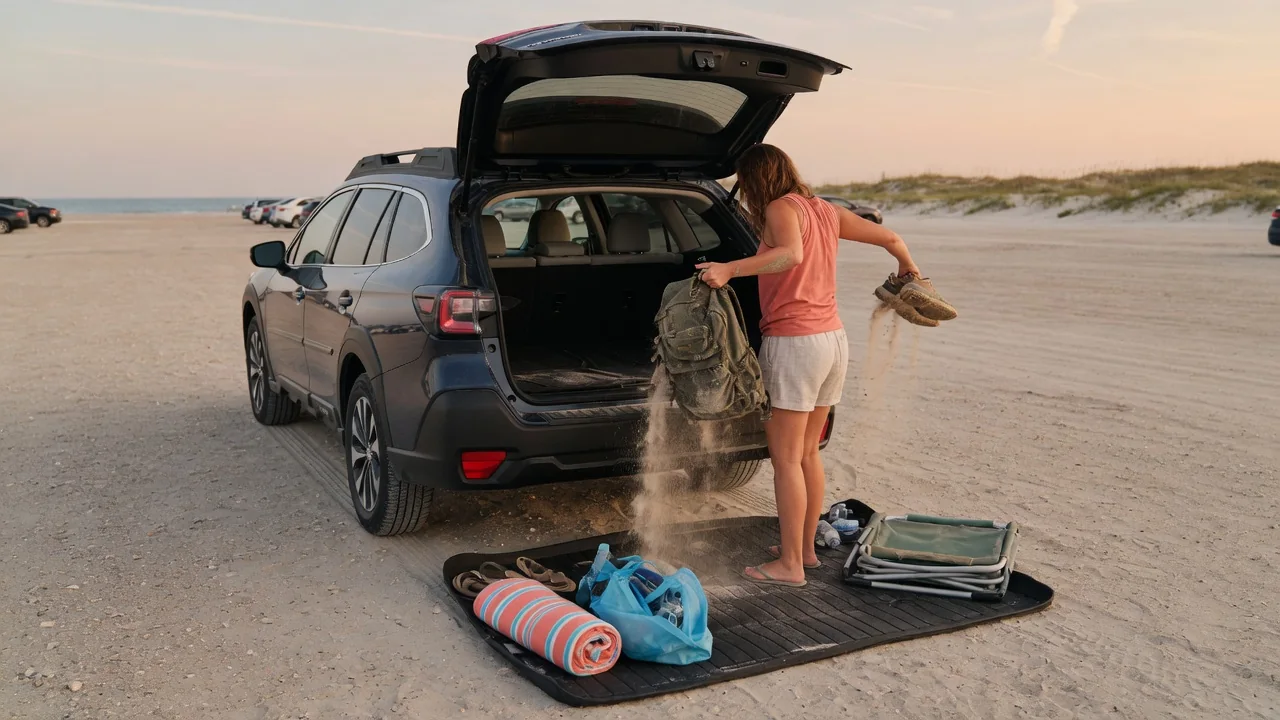
Sand travels home in towels, chairs, coolers, and shoe treads, then works into carpet fibers, seat tracks, and door seals. Knowing how to keep sand from outdoor gear out of the car comes down to a simple routine: remove what you can before loading, contain what remains, and clean up at home once everything is dry. Each step takes only a few minutes and spares the interior.
Shake before loading
Most of the sand that ends up in a cabin was carried in on gear that could have been cleared a few steps from the vehicle. Before anything goes through the hatch, shake towels and blankets downwind of the open doors, tip folding chairs upside down so grains fall from the tube frames and fabric pockets, and knock sandals together sole to sole. Dry sand releases easily, so letting damp items sit in the sun for a few minutes while you pack makes this step far more effective.
Hard goods need a different approach than fabrics. Coolers collect sand around the lid gasket and under the wheels, beach toys hold it inside hollow handles, and tent stakes or umbrella anchors carry a damp coating that will not shake free. A soft hand brush or a quick rinse from a water jug handles those spots. Feet deserve the same attention, since brushing dry skin and changing into clean footwear keeps grit off the pedals, the driver's floor mat, and the door sill plates.
Use containment
Whatever survives shaking should travel inside something with a bottom and sides. Lidded plastic totes, a collapsible cargo bin, or a heavy tarp folded up around the load keeps loose grains in one place instead of letting them migrate with every turn and stop. Mesh bags are useful on the walk back because sand drops through them, but once at the vehicle they belong inside a solid container. Wet suits and towels ride best in a waterproof bag that also holds dripping saltwater.
The vehicle's layout decides where containment works best. An SUV or hatchback shares air and floor space with the passenger area, so a raised-edge cargo liner and a seatback cover matter more than they do in a sedan with a separate trunk. Pickup owners can leave the dirtiest items in the bed, secured against wind. Check whether your cargo area has an underfloor storage well, a spare tire compartment, or split-fold seat gaps, because sand reaching those spaces is far harder to retrieve later.
Vacuum later
Resist the urge to wipe or scrub sand at the beach parking lot. Damp grains smear into carpet pile and cloth upholstery, and rubbing them across leather, glossy trim, or a touchscreen can leave fine scratches. Waiting until the interior is fully dry at home lets the sand sit loose on the surface, where suction can lift it. Start by lifting out the containers and liners carefully, carrying them level, and emptying them away from the car before any vacuuming begins.
Work from the top down so dislodged grains fall toward areas you have not cleaned yet. Remove the floor mats and beat or shake them outside, then use a stiff brush to agitate the carpet while the vacuum nozzle follows closely behind. A narrow crevice attachment reaches seat rails, the gap beside the center console, and the channel along the hatch opening. Carpet construction varies widely between vehicles, and dense loop pile usually takes several slow passes before it stops giving up grit.
Everyday Use and Observations
Over a season of trips, small signs show whether the routine is working. A gritty crunch underfoot, a scratchy sound when a seat slides, or a faint haze on the dashboard after running the fan all suggest sand is getting past your containment. Look at the door seals and the hatch weatherstrip as well, since grains stuck to rubber can prevent a clean seal and get dragged across paint. Window channels are another place where trapped sand may mark the glass over time.
Habits around the vehicle matter as much as equipment. Loading through the rear opening rather than the side doors keeps the mess away from seating, and assigning one tote permanently to beach or dune duty means it never needs to be perfectly clean. All-weather mats with raised edges catch what shoes bring in, though fit differs by model, and a mat that slides or bunches near the pedals is a hazard. Use whatever retention hooks or clips your vehicle provides for the driver's side.
Limits and Next Steps
No routine removes every grain. Fine, wind-blown sand behaves almost like dust, settling into vents, speaker grilles, cup holder seams, and seat stitching where a household vacuum cannot reach it. Compressed air can push it out of some crevices, but it can also drive it deeper, so use it sparingly and away from electronics. If seat adjusters, seat belt retractors, or sliding door tracks begin to feel rough or noisy, stop forcing them and have the mechanism inspected rather than lubricating over the grit.
Refine the process after each outing by noting where sand actually turned up. If it gathers in the cargo area corners, a better-fitting liner is the answer; if it appears in the footwells, the foot-cleaning step needs more time. Salt often accompanies beach sand, so wiping down metal seat hardware and rinsing the exterior, including the door jambs, is a sensible follow-up. The owner's manual lists approved cleaning products for your upholstery, and a professional detail can reset an interior that has become heavily embedded.