How to Keep Pet Hair Out of Car Seat Crevices
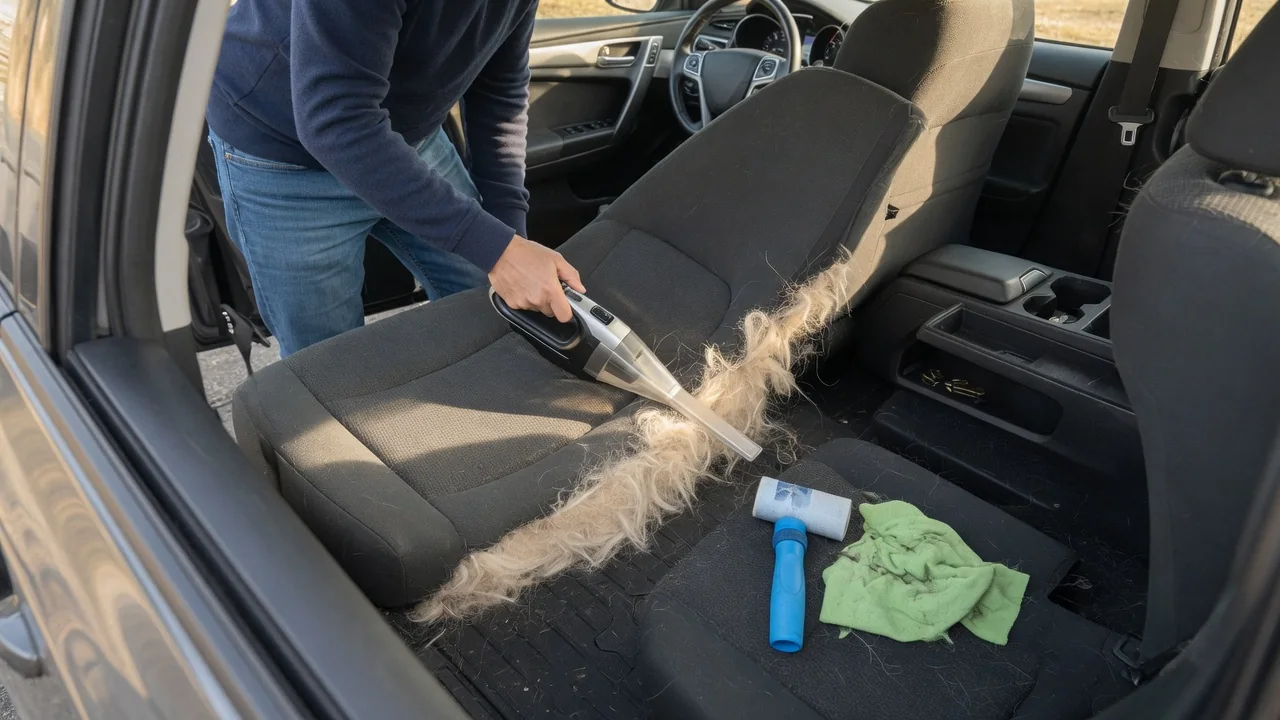
Pet hair works its way into the seams between seat cushions, around seat belt buckles, and along the seat tracks, where it packs down and resists ordinary cleaning. Learning how to keep pet hair out of car seat crevices comes down to two habits: blocking the gaps with a well-fitted cover and removing loose fur before it gets pressed deep into the upholstery.
Cover selection
The most useful cover for this job is one that bridges the gaps rather than simply draping over the cushion. Hammock-style rear covers attach to both the front and rear head restraints, forming a sling that closes off the footwell and the seam where the seat base meets the backrest. Bench covers with tuck-in anchors push into that same seam and hold the fabric tight, so fur lands on a continuous surface instead of sliding toward the crease whenever the dog shifts its weight.
Material matters as much as shape. Tightly woven, smooth fabrics release hair with a quick shake, while fleece and loose weaves trap it and shed it back into the cabin. Check how the cover handles seat belt buckles, split-folding seatbacks, and child seat anchor points, because openings for these are exactly where hair slips through. Fit varies with seat width, head restraint design, and whether the vehicle has seat-mounted side airbags, so confirm in the owner's manual that a cover will not obstruct airbag deployment.
Vacuum tools
A standard wide floor nozzle rides over a seat seam without reaching into it, which is why hair seems to survive every vacuuming. A narrow crevice attachment concentrates suction into the gap between the cushion and backrest, beside the center console, and around the buckle stalks. A small brush head with stiff bristles helps on cloth upholstery, where individual hairs weave into the fabric and need to be agitated loose before the airflow can carry them away.
Suction alone often loses to static cling and embedded fur, so pairing the vacuum with a loosening tool makes a visible difference. A rubber brush, a slightly damp rubber glove, or a soft detailing brush dragged along the seam gathers hair into clumps that lift out easily. On leather or vinyl, use soft bristles and light pressure to avoid scuffing the surface or the stitching. Perforated seats, found in some vehicles with heated or ventilated cushions, deserve gentle treatment so debris is not pushed into the holes.
Routine
Hair is easiest to remove while it is still sitting loose on the surface. After a trip with a heavy shedder, shaking out the cover outside the vehicle and making a quick pass along the exposed seams prevents fur from migrating downward. Each time a passenger sits or the seat is folded, loose hair is pushed further into the crease, and once it compacts with dust and skin oils it forms a felt-like mat that takes far more effort to extract.
A sensible rhythm combines that quick post-trip cleanup with a deeper session at intervals that suit how often the pet rides and how much it sheds. During the deeper clean, remove the cover entirely, wash it according to its care label, and vacuum the seat beneath it, since some hair always finds its way around the edges. Brushing the dog before a drive, especially during seasonal coat changes, reduces the amount of fur that enters the cabin in the first place.
Everyday Use and Observations
Watching where hair collects tells you where the protection is failing. A line of fur along the seat bight suggests the cover's anchors are pulling out or the fabric is too loose. Tufts around the buckles point to oversized belt openings, while hair in the footwell or under the front seats indicates the dog is moving beyond the covered area. Sliding the front seats fully forward and back occasionally reveals fur on the tracks and carpet that normally stays hidden.
Vehicle layout changes the pattern considerably. Sport seats with deep bolsters have more seams and tighter channels than a flat bench, and a split-folding rear seat adds a gap down the middle that a one-piece cover may not seal. In SUVs and hatchbacks, hair drifts forward from the cargo area through the space behind the rear seatback. Cloth upholstery tends to hold fur in the weave, whereas leather lets it slide freely toward the nearest crevice, so each surface calls for attention in different places.
Limits and Next Steps
No cover seals a seat completely. Covers shift under a moving animal, straps loosen, and fine undercoat floats on cabin air currents and settles wherever it lands, including vents, door pockets, and the gaps beside the console. Expect to reduce the problem sharply rather than eliminate it. Avoid digging into seams with sharp or metal tools, and take care around wiring and connectors under the seats, which may serve seat heaters, occupancy sensors, and airbag components.
If hair has already packed deep into the cushions, or if odor lingers after thorough cleaning, a professional interior detail can reach areas that home tools cannot, sometimes using compressed air and extraction equipment. Afterward, a properly fitted cover and a consistent cleanup habit keep the result from slipping. For dogs that ride often, a secured travel crate or a cargo-area liner with a barrier may contain shedding better than any seat cover, depending on the space your vehicle offers.