How to Keep a Windshield Clear During a Winter Drive
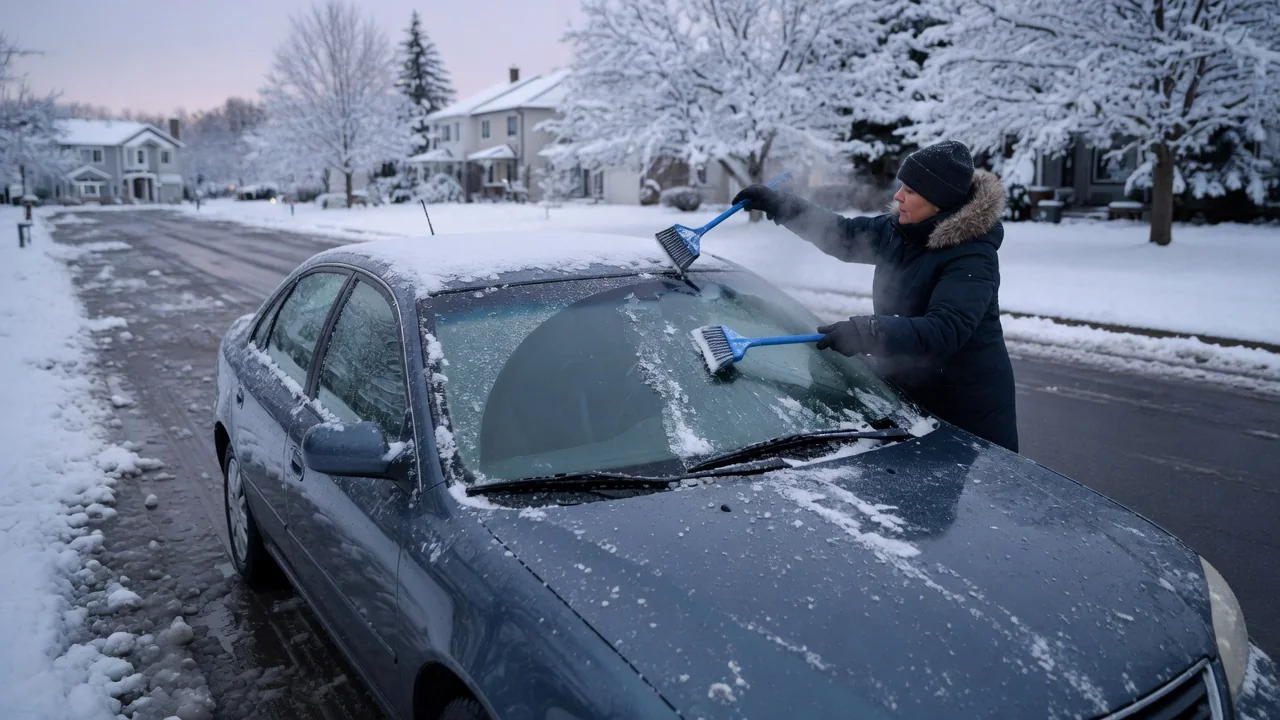
Learning how to keep a windshield clear during a winter drive is mostly a matter of coordination. The heating and ventilation system dries and warms the glass from the inside, the washer dissolves salt film on the outside, and the wipers sweep away what remains. When any one of the three falls behind, visibility degrades quickly, so it helps to understand how they work together.
Choose defrost
The defrost setting does more than point air at the glass. On most vehicles, selecting it sends the bulk of the airflow to the vents at the base of the windshield and, in many designs, engages the air conditioning compressor to pull moisture out of the air before it is heated. Dry, warm air clears interior fog far faster than warm air alone. Some vehicles do this automatically while others require pressing the air conditioning button separately, so the owner's manual is worth checking.
Early in a drive, the engine or heater has little warmth to give, so the air from the vents may feel cool for the first several minutes. Setting the fan to a moderate speed and raising it as the temperature gauge climbs usually works better than blasting cold air at full force. Electric and hybrid vehicles may deliver heat sooner through electric heaters or heat pumps. Rear glass and, on some models, heated mirrors or a heated wiper rest area are controlled by separate buttons.
Manage moisture
Interior fog forms when humid cabin air meets cold glass, and winter driving supplies humidity constantly: breath from passengers, snow melting off boots, wet coats and damp floor mats. Recirculation mode traps that moisture inside, which is why the windows often fog shortly after it is switched on. Selecting fresh air brings in colder outside air that holds less water, and once heated it readily absorbs moisture from the cabin. Many systems disable recirculation automatically in defrost mode, though not all do.
The outside of the glass has its own moisture problem. Spray from other vehicles carries road salt and grime that dries into a hazy film, especially on a warm windshield. A winter-rated washer fluid is formulated to resist freezing in the reservoir, lines and nozzles, whereas summer fluid or plain water can freeze and leave the washer useless. Spraying generously before wiping lets the fluid dissolve the film instead of smearing it, and warming the glass with defrost first helps keep the fluid from freezing on contact.
Stop if visibility falls
There are conditions the systems cannot keep up with. Heavy wet snow can pack onto the wiper blades and arms until the rubber no longer touches the glass, leaving streaks or an unwiped arc directly in the driver's line of sight. Freezing rain can glaze the windshield faster than the defroster melts it. If the clear area is shrinking rather than holding steady, the safe choice is to leave the road at a parking lot, rest area or other protected spot well away from traffic.
Once stopped, with the wipers switched off, ice can be knocked from the blades by hand and the glass scraped while the defroster runs at full heat. Switching the wipers off before shutting down matters, because blades frozen to the glass can strain the motor or linkage when they try to move at the next start. Stopping on the shoulder of a fast road carries its own danger in poor visibility, so an exit is preferable whenever the windshield still allows safe travel to reach one.
Everyday Use and Observations
Small habits make a difference. Brushing snow off the roof, hood and the cowl vents below the windshield before leaving prevents it from sliding onto the glass under braking or being drawn into the fresh air intake, where it adds moisture to the cabin. Knocking snow from footwear before getting in and shaking out mats reduces the water that later evaporates onto the windows. A clean inner glass surface also fogs less readily, since the film left by plastics and dust gives moisture something to cling to.
Drivers can learn a lot from watching how the glass behaves. Fog that begins at the lower edges and creeps upward suggests the cabin is too humid or airflow is too low. Streaks that follow the wiper path point to worn, hardened or ice-laden blades, while a haze that returns moments after washing usually means salt spray is heavy and fluid use will be high. Checking the washer reservoir before a long trip is sensible, since the low-fluid warning is not fitted to every vehicle.
Limits and Next Steps
Some clearing problems point to a fault rather than weather. A sweet smell with a greasy film on the inside of the glass can suggest coolant entering the heater airflow, which deserves prompt inspection. Weak airflow at every fan speed may indicate a clogged cabin air filter, and air that never warms could relate to coolant level, the thermostat or a blend door. These are possibilities to confirm with proper diagnosis, not conclusions, and the likely causes differ between vehicle designs.
Washer and wiper issues deserve the same measured approach. Nozzles that stop spraying in the cold may simply be frozen, or the fluid may not be suited to the temperature, before a pump or hose is suspected. Blades that chatter or streak after cleaning are usually due for replacement, and winter-style blades with a covered frame resist ice buildup on some vehicles. Fitment, fluid recommendations and any heated windshield features vary by make and model, so the owner's manual or a qualified technician is the right reference.