How to Keep a Car Clean During School Runs
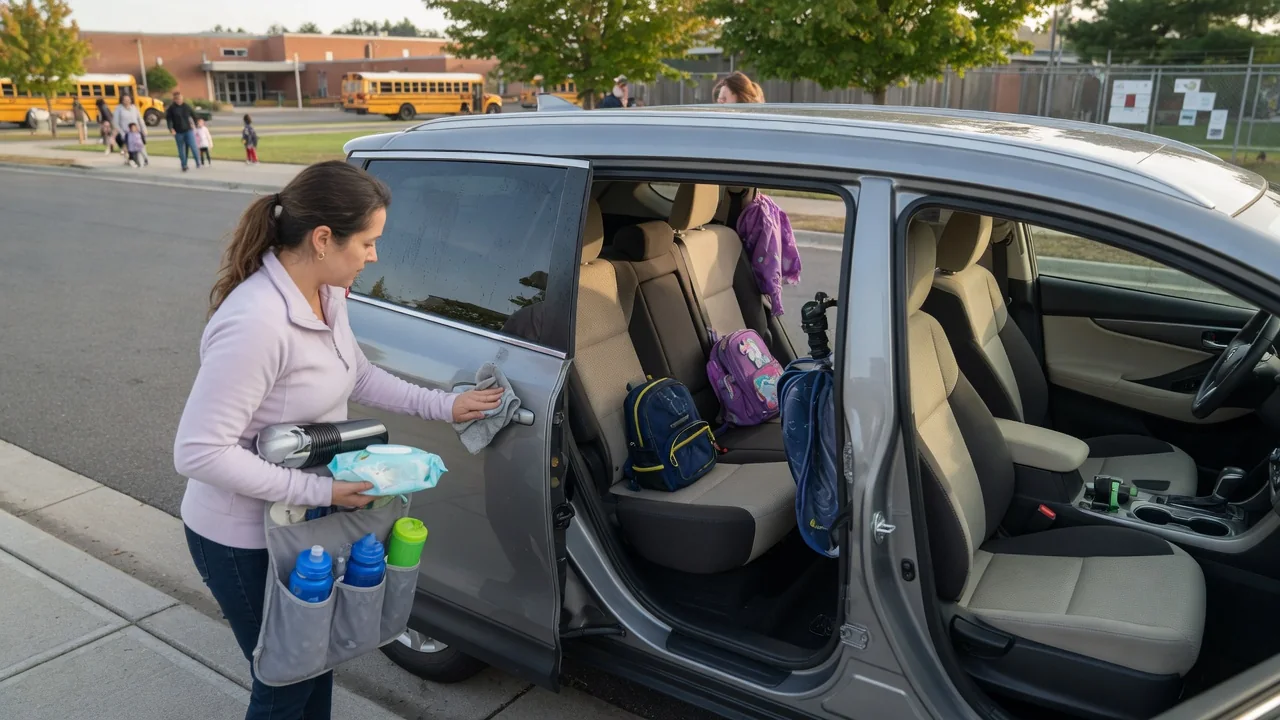
Figuring out how to keep a car clean during school runs comes down to a routine short enough to repeat every day. Backpacks, lunch boxes, wrappers and wet shoes arrive twice daily, so mess builds faster than a weekend cleanup can handle. A quick daily reset, built around fixed storage, controlled snacks and prompt trash removal, keeps the cabin tidy without demanding much time.
Assign storage
Clutter spreads when items have no home, so the first step is giving every regular passenger and object a fixed spot. Backpacks can ride in the cargo area or on the floor behind a front seat, while seatback pockets hold books, tissues and a water bottle. A small bin or organizer in the trunk catches sports gear and spare jackets. When each item returns to the same place after every trip, the daily reset becomes a matter of checking a few locations rather than searching the whole cabin.
Storage options differ considerably between vehicles. A minivan or three-row SUV may offer under-floor compartments, multiple cup holders and door bins in every row, while a compact sedan might provide only front door pockets and a shallow center console. Look at what your cabin actually has before buying organizers, and check that anything added sits clear of seat belt buckles, child seat anchors and seat tracks. Loose heavy objects are best kept low or in the cargo area, since they can shift during hard braking.
Manage snacks
Food is the largest source of mess on a school run, and the choice of snack matters more than any cleaning product. Dry, low-crumb items in resealable containers leave far less behind than flaky pastries, yogurt tubes or anything coated in powder or chocolate that melts on warm upholstery. Water in a bottle with a closing lid is the safest drink, because a spill dries without stickiness or odor, whereas juice and milk soak into fabric and carpet and can sour within days.
A simple rule helps: snacks are handed out in a container, and the container comes back to the front before the doors open. Crumbs tend to collect in predictable places, including the seams of seat cushions, the gap around child seat bases, cup holder wells and the channels of floor mats. Cloth seats hold crumbs and stains more stubbornly than leather or vinyl, which wipe down quickly, so families with fabric interiors may prefer to limit eating to the ride home or to longer trips only.
Remove waste
Trash that stays overnight becomes trash that stays all week. A dedicated container, whether a small lidded bin, a hanging bag on a seatback or a liner tucked into a door pocket, gives children an obvious place for wrappers, tissues and juice boxes. Position it where back-seat passengers can reach it while buckled, and keep it away from the driver's footwell so nothing can roll beneath the pedals. Emptying it at the same point each day, such as the afternoon arrival home, anchors the reset.
The reset itself can be brief. As everyone climbs out, each child carries their own bag, bottle and any trash, and the driver glances across the seats and floor for strays. Damp items deserve priority, since wet gym clothes, rain-soaked jackets and half-finished drinks raise cabin humidity, fog the windows and encourage musty smells. Where the bin sits will depend on the vehicle; some consoles and door panels accommodate one neatly, while smaller cabins may need a slim bag hung from a headrest post.
Everyday Use and Observations
Daily use reveals where a particular car gathers dirt. Front seatbacks often show scuffs from swinging shoes, rear door sills collect grit at the point where children step in, and window glass picks up fingerprints at child height. Floor mats tell the clearest story: sand, leaves and mud accumulate fastest behind the front seats. Rubber or all-weather mats with raised edges contain that debris and can be shaken out in seconds, while carpet mats trap it and usually need vacuuming.
Seasons change the pattern. Wet weather brings muddy footwells and damp carpet, winter can bring road salt that leaves white residue, and warm months bring melted snacks and sunscreen smears on door panels and trim. A pack of interior-safe wipes and a microfiber cloth kept in the glove box or console handle most of these marks while they are fresh. Noticing a persistent smell, a sticky cup holder or a gummy seat belt buckle button is a cue to look closer that week.
Limits and Next Steps
A daily reset controls loose clutter and fresh mess, but it does not replace deeper cleaning. Ground-in crumbs, set stains and spills that reached the carpet padding need a thorough vacuum and, at times, upholstery cleaning or professional detailing. Cleaning products should suit the surface, since leather, cloth, vinyl and touchscreens react differently, and the owner's manual usually lists what the manufacturer recommends. Testing a cleaner on a hidden area first avoids discoloring a visible panel.
Child seats deserve separate attention. Covers and harnesses have their own cleaning instructions from the seat maker, and harness straps in particular should only be cleaned as those instructions allow. After removing a seat to clean beneath it, reinstall it according to both the child seat and vehicle manuals, and seek a qualified fitting check if anything seems uncertain. From there, a weekly vacuum and an occasional full interior clean build on the daily habit, keeping the workload small and the cabin ready for the next morning.