How to Keep a Car Trunk Ready for Both Groceries and Luggage
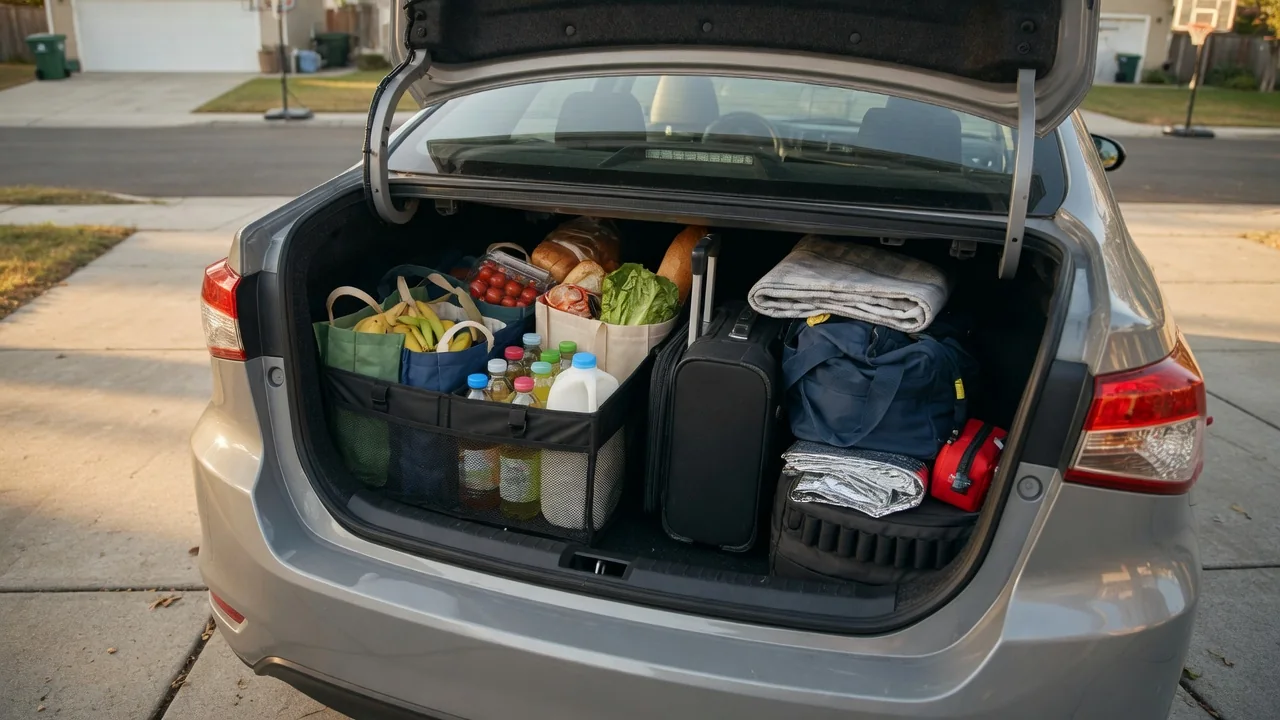
Learning how to keep a car trunk ready for both groceries and luggage comes down to treating the cargo area as a set of flexible storage zones rather than one open box. With a few removable organizers, a fixed home for emergency gear, and a quick routine for clearing the floor, the same space can handle a weekly shopping run and a weekend suitcase load.
Choose removable organizers
Collapsible organizers suit a dual-purpose trunk because they occupy space only when needed. A fabric bin with folding walls can stand upright to hold grocery bags on a shopping day, then flatten to roughly the thickness of a floor mat when suitcases need the full floor. Rigid plastic crates protect fragile items better but claim their footprint permanently unless lifted out. Look for carry handles and a non-slip base, since an organizer that slides under braking defeats the purpose of having one in the first place.
Fit matters as much as design. Trunk shapes differ widely: a sedan often has a deep but low opening with intruding wheel wells or hinge arms, while a hatchback or SUV offers height but a shorter floor. Measure the flat floor area between the wheel housings before buying, and check whether the lid hinges swing down into the cargo space when closed. An organizer that sits against the rear seatback usually leaves the area near the opening free for luggage or bulky one-off purchases.
Secure essentials
Emergency and maintenance items deserve a permanent spot that never competes with cargo. Jumper cables, a tire inflator, a first-aid kit, and a flashlight can ride in a small zippered bag tucked into a side pocket or strapped to a tie-down point. Many vehicles have recesses beside the wheel wells or an underfloor compartment around the spare tire or repair kit, though layouts vary by model, and some hybrids and electric vehicles place batteries or other components beneath the floor instead.
Securing these items is a safety matter as well as a convenience. Loose heavy objects can shift during hard braking or a collision, and in hatchbacks and SUVs the cargo area is open to the cabin. Use the factory tie-down rings, cargo net hooks, or hook-and-loop straps that grip trunk carpet to hold the kit in place. Whatever arrangement you choose, keep access to the spare tire, jack, and any underfloor tools clear enough that a roadside stop does not require unloading everything first.
Reconfigure quickly
A setup that takes more than a minute to change tends to get left in the wrong configuration. Aim for a layout where switching from grocery mode to luggage mode means folding one organizer flat and unhooking one net. Storing reusable shopping bags inside the collapsed organizer keeps both together, so the grocery zone can be rebuilt in a parking lot without hunting for parts. Envelope-style cargo nets are helpful here because they stay attached and lie nearly flat against the seatback or sill when empty.
Built-in features can speed the changeover, though equipment varies by vehicle and trim. Some trunks have bag hooks molded into the side panels or the underside of the parcel shelf, adjustable-height cargo floors, or rails with sliding anchors. Split-folding rear seats extend the load floor for long luggage while leaving one seat usable. Check the owner's manual for release levers inside the trunk and for any stated guidance on loading the folded seatbacks, since designs and limits differ between manufacturers.
Everyday Use and Observations
Daily driving shows quickly whether the zones work. Listen for thumps or rolling sounds on corners and ramps, which suggest something is unrestrained or an organizer is sliding. After a shopping trip, note whether bags stayed upright and whether cold items, kept together in an insulated bag, were easy to grab first. Heavy goods such as bottled drinks or pet food ride best low and close to the rear seatback, where they have little room to slide under braking and are less likely to crush lighter bags.
Luggage loading gives different feedback. Hard-shell suitcases generally pack best flat or on edge against the seatback, with soft duffels filling gaps around the wheel wells and near the opening. Watch that nothing presses on the trunk lid hinges, the cargo cover, or the rear window, and in open cargo areas keep the stack below the top of the seatbacks so rearward visibility through the mirror remains usable. A liner or washable mat underneath handles both leaking produce and gritty suitcase wheels.
Limits and Next Steps
No organizing system raises what a vehicle can safely carry. Payload limits, usually shown on a placard in the driver's door opening, cover passengers and cargo together, and a full cabin plus heavy luggage can approach that figure sooner than expected. Tire pressure recommendations may also differ for a fully loaded vehicle, so check the placard or manual before a long trip. When the trunk simply runs out of room, a roof box or hitch carrier is an option, each with its own rated limits.
A useful next step is a short seasonal review. Empty the trunk completely, clean the liner, and question every item going back in; forgotten sports gear and half-used fluid bottles steadily eat space and add weight. Confirm that the inflator works, the first-aid supplies are in date, and the spare or sealant kit is still accessible. Then photograph the layout that worked best, so the arrangement can be restored easily after a big trip or a furniture run changes everything.