How to Handle Luggage When Every Seat Is Occupied
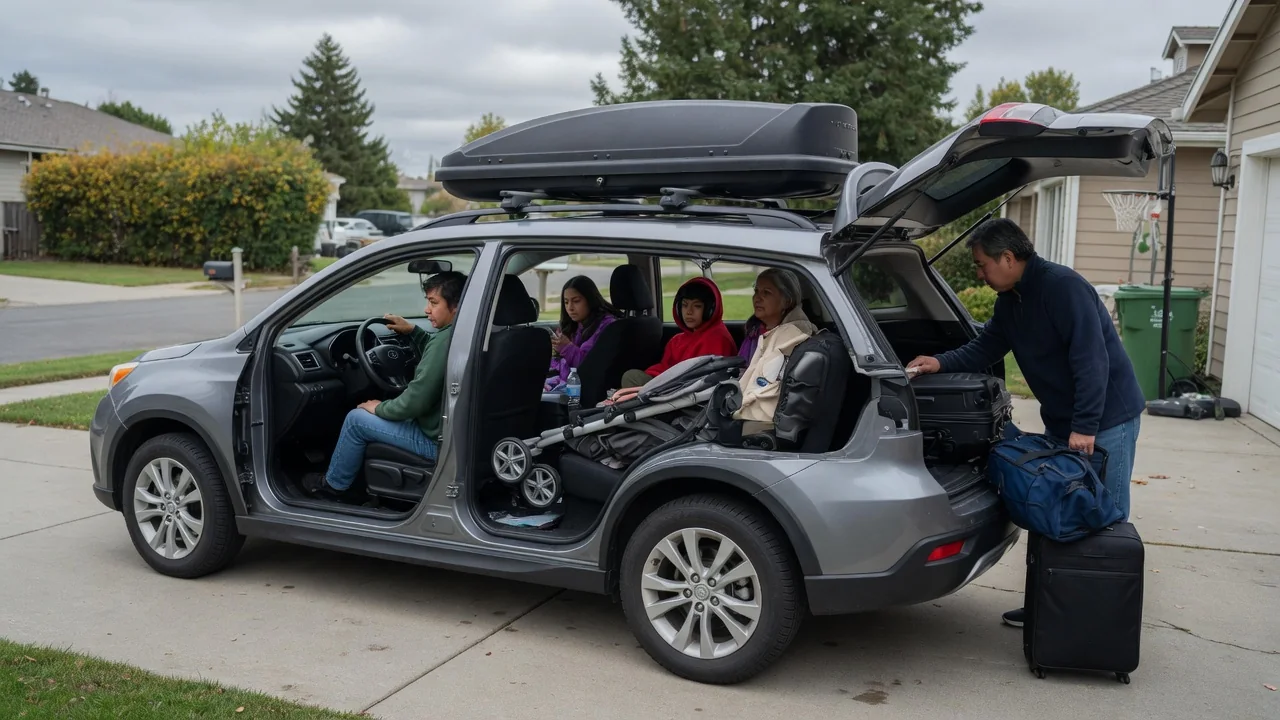
A full cabin changes the packing problem. With no folded seatback or empty footwell to absorb overflow, everything has to fit in the dedicated cargo area or go outside the vehicle. Knowing how to handle luggage when every seat is occupied comes down to using the load floor well, protecting visibility, restraining what you carry, and respecting the weight limits printed on the vehicle.
Prioritize cargo floor
Start with the cargo floor, because it is the lowest and most stable surface available. Heavy, dense items such as hard-shell suitcases, coolers, and tool bags belong flat against the floor and pushed forward against the rear seatback. Placing mass low keeps the center of gravity down, which helps the vehicle stay composed in corners and during braking. Lighter soft bags can then fill the gaps above and around the heavier pieces, where their shape adapts to the remaining space.
What that floor looks like varies considerably. A sedan trunk has a fixed opening and a lip to lift over, while a hatchback, wagon, or SUV usually offers a taller space with a removable cover. Three-row vehicles often leave only a narrow well behind the last row once it is upright. Look for underfloor compartments, side pockets, and the area around the spare tire or repair kit, but leave access to that equipment and avoid blocking anything a roadside stop would require.
Keep windows clear
Stacking bags to the headliner is tempting when passengers fill every seat, yet it removes the view through the rear glass that the inside mirror depends on. A practical guide is to keep the load below the top of the rear seatbacks in an open cargo area. Below that line, the seatback also acts as a barrier; above it, a loose bag can slide forward into the cabin during hard braking. A sedan's enclosed trunk avoids this particular problem by design.
Visibility extends beyond the rear window. Items wedged against the rear side glass can hide a vehicle in the adjacent lane, and jackets or pillows piled on a rear shelf may shift into the mirror's sightline. Rearview cameras and blind-spot sensors help, but on most vehicles the camera only shows what is behind while reversing, and some models offer a camera-based mirror while others do not. Sit in the driver's seat after loading and check each mirror before leaving.
Use rated anchors
Many vehicles provide tie-down points in the cargo area, typically metal loops or recessed rings at the floor corners. These are engineered fixtures, and where the manufacturer publishes a load rating, it appears in the owner's manual rather than on the ring itself. Trim panels, plastic hooks meant for grocery bags, and seat-adjustment hardware are not substitutes. Child-seat anchors also have a dedicated purpose and should be left for it, especially with every seat in use.
A cargo net or ratchet strap run between rated points keeps a stack from shifting, and a factory cargo barrier or retractable net, where fitted, adds separation between luggage and passengers. Roof rails and crossbars follow the same logic outside the vehicle: a roof box or carrier needs properly matched mounts, and the roof has its own load limit listed in the manual. A hitch-mounted carrier is another option on vehicles equipped with a receiver, subject to its tongue-weight rating.
Everyday Use and Observations
In daily use, the small items cause most of the trouble. Backpacks, water bottles, and laptop bags tend to end up on laps or in footwells when the cargo area is full. Anything near the driver's feet can roll under the pedals, so that footwell should stay empty. Passengers can hold soft items, but hard or heavy objects are better stowed in door pockets, seatback pockets, or the console, where they will not become projectiles in a sudden stop.
A fully loaded vehicle also feels different, and those changes are worth noticing. Expect longer braking distances, a softer rear ride, slower acceleration when merging, and headlights that may aim slightly higher as the rear settles. Some vehicles have load-leveling suspension or a manual headlight adjuster; many do not. Tire pressure deserves a look too, since the placard on the driver's door jamb sometimes lists a different pressure for full loads. Loading order matters as well, so pack the items needed first closest to the opening.
Limits and Next Steps
Every vehicle has a payload limit covering passengers and cargo together, shown on the tire and loading placard, usually in the driver's door opening. With all seats occupied, the occupants alone consume a large share of that figure, so the remaining allowance for luggage can be smaller than the cargo area's volume suggests. Space and weight are separate limits. A trunk that closes easily can still be overloaded if it is full of dense items like books or bottled drinks.
When the luggage does not fit within those limits, the sensible next steps involve reducing or relocating the load rather than forcing it. Switching from rigid cases to soft duffels, sharing bags among passengers, shipping bulky gear ahead, or adding a properly rated roof or hitch carrier all work. For frequent full-cabin trips, compare cargo measurements with the rear seats upright when choosing a vehicle, and confirm payload, roof, and towing figures in the owner's manual for the specific model.