How to Secure Groceries in a Car
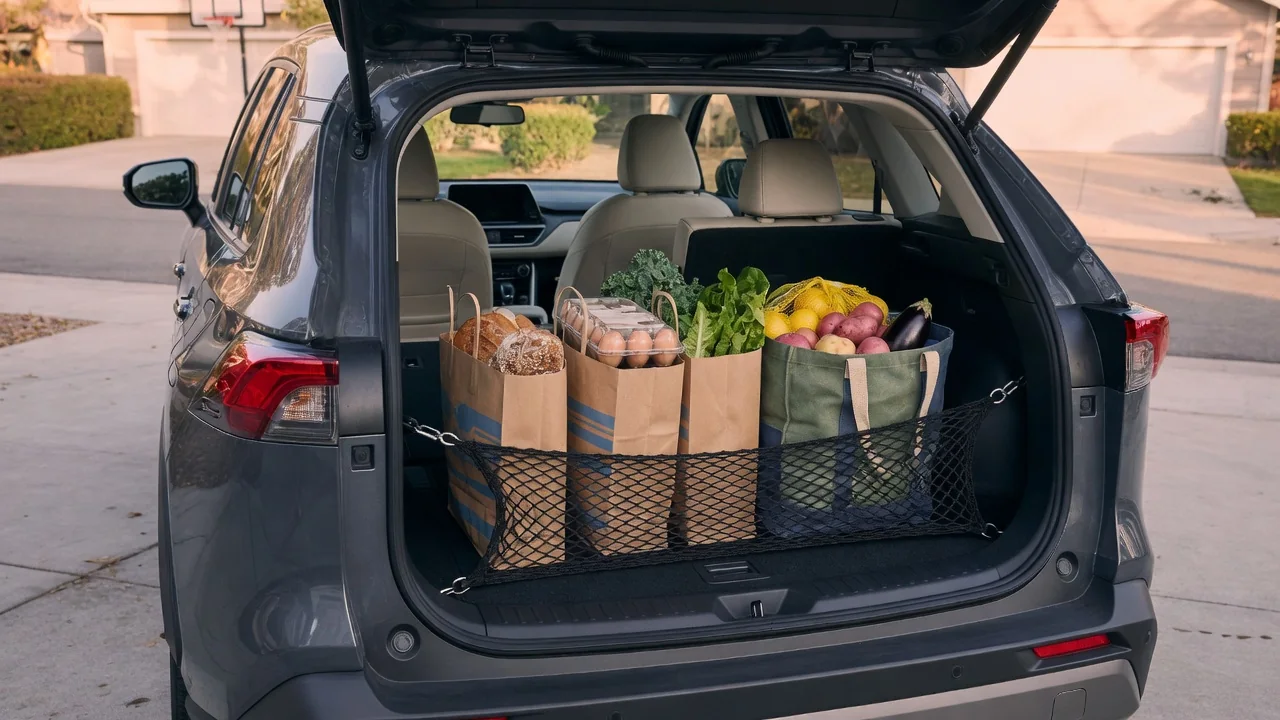
Learning how to secure groceries in a car comes down to physics more than gadgets. Every stop, turn, and bump pushes loose bags in a predictable direction, and a few deliberate loading habits keep cans from rolling, eggs from cracking, and liquids from tipping. The practices below work in sedans, hatchbacks, SUVs, and pickups with minor adjustments.
Place heavy items low
Weight placed low and against a fixed surface has the least room to build momentum. Cases of water, canned goods, pet food, and detergent jugs belong flat on the cargo floor, pushed up against the rear seatback or a trunk sidewall. When the brakes are applied, a heavy item already resting against a solid surface simply presses into it, while the same item sitting in open space slides forward and gathers speed before striking whatever lies in its path, often the bag holding bread or fruit.
Stacking order matters as much as position. A gallon of milk perched on top of a bag will tip in the first sharp turn, but standing upright on the floor and wedged between heavier neighbors it tends to stay put. Cargo floors differ between vehicles: some trunks have a deep well, some SUVs have a raised load floor above a spare tire, and some hatchbacks slope toward the bumper. A quick look at where a loose can naturally rolls shows which corner makes the most stable base.
Separate fragile goods
Eggs, bread, chips, soft fruit, and glass jars fail for different reasons, so they benefit from their own space rather than a spot atop the heap. Crushable items are damaged by weight from above, while glass is damaged by impact from the side. Keeping a dedicated bag for delicate goods and setting it away from anything dense removes both risks. The rear footwell behind a front seat works well because it is enclosed on several sides and low enough that nothing can fall far.
Liquids and cold items deserve similar separation. Raw meat packages and anything prone to leaking are better isolated in a lined bin or a reusable insulated bag, where a drip stays contained instead of soaking into carpet. A seat cushion may look like a soft resting place, yet most are angled and will send a bag sliding forward under braking. Vehicles with flat-folding seats, underfloor compartments, or molded side pockets offer extra nooks, and those are worth checking before buying an organizer.
Use existing anchors
Many vehicles already include hardware designed to restrain light cargo. Common examples are bag hooks on the trunk sidewalls or seatbacks, tie-down loops in the corners of the cargo floor, elastic cargo nets, and sliding dividers. Looping bag handles over a hook keeps the bag upright and stops it from migrating, though hooks are meant for modest loads and thin handles can tear under heavy contents. The owner's manual usually identifies these features and notes any load limits that apply to them.
Where factory anchors are sparse, simple additions fill the gap. A collapsible crate, a laundry basket, or a rigid tote turns several floppy bags into one stable block, and a non-slip mat beneath it adds friction on smooth plastic or carpeted floors. A bungee cord or short strap between two tie-down loops creates a barrier that holds a row of bags against the seatback. Anchor locations and styles vary widely, and some trims omit them, so it helps to inspect the cargo area with it empty.
Everyday Use and Observations
The drive home reveals whether the load was arranged well. Thuds during braking, rolling sounds in turns, or a rustle of bags settling suggest something has open space around it. Filling gaps is usually the fix: bags packed snugly side by side support one another, while a single bag alone in a wide trunk will fall over almost regardless of what it contains. For a small shopping trip, the passenger footwell often restrains two or three bags better than a large empty cargo area.
Driving style contributes too. Gentle braking, smooth acceleration, and unhurried cornering reduce the forces acting on everything in the vehicle, which protects groceries and passengers alike. Hot weather adds a second concern, since a closed trunk warms quickly and frozen or chilled foods fare better in the air-conditioned cabin or an insulated bag. Pickup owners face a different challenge because an open bed exposes bags to wind and offers a large slick surface, making the cab or a secured bin the more reliable choice.
Limits and Next Steps
These habits manage ordinary driving, not emergencies. In a hard stop or collision, unsecured objects in the cabin can become hazards, so heavy or rigid items such as canned goods and glass bottles are safer in a trunk or behind a cargo barrier than on a seat beside occupants. Nothing should rest where it could roll under the brake pedal, block the driver's view, or interfere with a seat belt or child seat. Hooks and nets are conveniences and should not be treated as heavy-duty restraints.
If spills keep happening despite careful loading, the cargo area itself may merit attention. A worn or missing floor mat, a broken hook, or a seatback that no longer latches firmly can each undermine an otherwise sound routine, and a dealer or parts counter can confirm which accessories were designed for a particular model. A fitted cargo liner, organizer, or net made for the vehicle is a reasonable next step. Until then, a sturdy box and thoughtful placement handle most weekly shopping runs.