How to Keep a Car's Cargo Floor From Getting Damaged
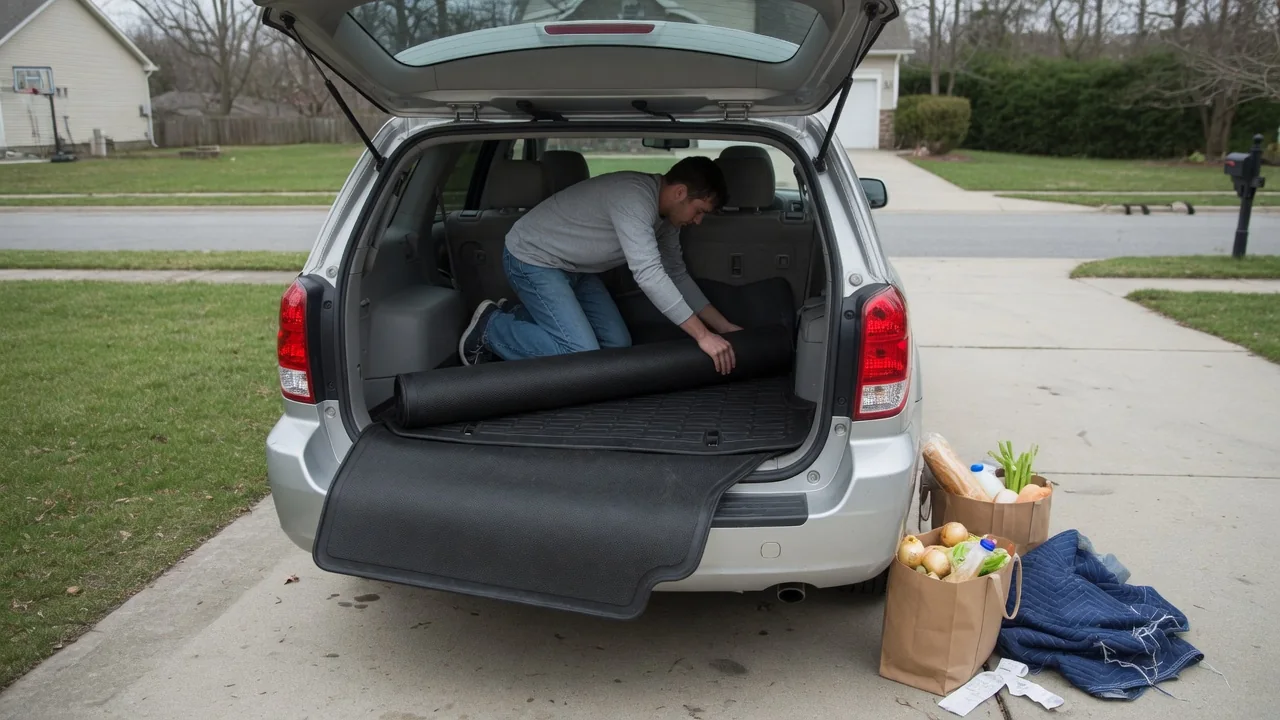
Learning how to keep a car's cargo floor from getting damaged starts with understanding what the surface actually is: usually a carpeted panel resting over a spare tire well, storage bins, or structural supports. That panel handles groceries easily but can dent, crack, or stain under concentrated loads, sharp edges, and trapped grit. A few habits protect it for years.
Check weight and shape
Weight alone rarely tells the whole story; how that weight meets the floor matters just as much. A bag of mulch spreads its mass across a wide area, while a jack stand, engine part, or furniture leg presses the same pounds into a spot the size of a coin. Many cargo floors are a molded or honeycomb board spanning an open cavity, so a point load can crease or punch through where a broad one would not. Laying a sheet of plywood under dense items spreads the force.
Before loading something heavy, lift the floor panel and look at what supports it. Some vehicles rest the panel on foam organizers or the spare tire, others on a few plastic ledges around the perimeter, and the difference changes how much the center can carry. The owner's manual and the door jamb placard list payload limits for the whole vehicle, and some manuals give a separate figure for the load floor or underfloor compartments. Placing heavy items forward, near the seatbacks and over the supports, reduces flex.
Protect contact points
Most cargo floor damage begins at edges and corners rather than flat surfaces. Lumber ends, metal toolbox feet, appliance corners, and bicycle pedals cut carpet fibers and gouge plastic trim when they slide during braking or cornering. Wrapping those points with moving blankets, cardboard, or foam pipe insulation keeps them from concentrating pressure. The rear sill and bumper top deserve the same attention, because dragging a load across the opening scuffs paint and scratches the scuff plate long before the item reaches the floor itself.
A fitted cargo liner or rubber mat adds a sacrificial layer that takes abrasion and spills instead of the factory carpet. Raised lips contain liquids, and a textured surface limits sliding, which is the motion that turns a hard corner into a scraping tool. Securing the load matters as much as cushioning it; tie-down rings, cargo nets, and straps hold items still so padding stays where it was placed. Tie-down locations and their ratings vary by vehicle, so checking the manual before relying on them for heavy objects is worthwhile.
Clean debris
Grit is an underrated cause of wear. Sand, gravel, and dried mud act like sandpaper once a box or cooler is set on top and shifted, grinding into carpet backing and scratching plastic or painted metal. Vacuuming the cargo area regularly, including the seams along the side trim and the gap behind the rear seats, removes that abrasive layer. Lifting a removable mat or liner and shaking it out prevents debris from collecting underneath, where it can rub unseen against the floor panel.
Moisture deserves equal attention. Wet gear, leaking containers, and road salt carried in on boots can soak through carpet to the panel and the metal floor below, encouraging odors, mildew, and eventually corrosion in the spare tire well. Blotting spills promptly and leaving the hatch or trunk open on a dry day helps the area air out. After hauling plants, firewood, or bagged soil, checking beneath the panel for dampness or stray material is a quick way to catch trouble before it sets in.
Everyday Use and Observations
Daily routines shape how a cargo floor ages. Sliding strollers, sports bags, and grocery crates in and out along the same path wears a track into the carpet near the opening, while pet claws fray fibers and scratch plastic. Lifting items rather than dragging them and using a washable cover for animals keeps that wear from accumulating. Folded seatbacks extend the load surface, but their backs are often thin carpet over a panel, so they benefit from the same padding as the main floor.
A quick look now and then reveals early signs worth acting on. A floor panel that sags, rocks, or sounds hollow in a new spot may have cracked or slipped off its supports. Flattened carpet, shiny rub marks, loose trim clips, and rattles over bumps all suggest that something has been pressing or shifting where it should not. Designs differ considerably between sedans, hatchbacks, SUVs, and pickups with bed floors, so what counts as normal flex on one vehicle may indicate a problem on another.
Limits and Next Steps
Protective layers have limits. A liner guards against scratches and spills but does not raise the floor's load capacity, and plywood spreads weight without changing what the supports or the vehicle's payload rating can handle. Loads that are very heavy, tall, or likely to shift under hard braking may be better suited to a trailer, roof system, or delivery service. Cargo should also stay clear of battery covers, underfloor electronics, and vents found in some hybrid and electric vehicles, which the manual identifies.
When damage has already occurred, the right response depends on what was affected. Worn carpet or a cracked removable panel is often replaceable as a separate part, though availability and fit depend on the model and trim. Dents in the metal floor, persistent dampness, rust in the spare well, or a hatch that no longer seals properly call for an inspection by a body shop or dealer service department. Confirming load ratings and approved accessories for the specific vehicle is the most reliable step before the next demanding haul.