How Tire Sipes Work
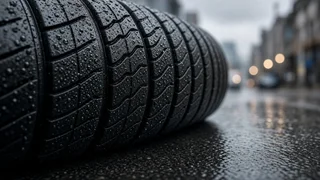
Tire sipes are the small, razor-thin cuts molded across a tread block that may look like cosmetic detailing but serve a serious mechanical purpose. When a tire rolls, these narrow slits open and close as they enter and leave the contact patch. Understanding how tire sipes work helps explain wet-road traction, light snow grip, tread flexibility, and even how a tire’s size, load index, speed rating, and inflation pressure alter that behavior. The performance also changes as tread depth wears down and the original sipe geometry becomes shallower.
Essential answer
Tire sipes create additional biting edges and small channels that clear water from the road surface. Each slit opens slightly under braking or acceleration forces, exposing a fresh edge that can dig into wet pavement or packed snow. The action is not a single sharp cut doing all the work; hundreds of sipes across the footprint work together to improve grip in conditions where a smooth tread block would slide.
The benefit is strongest on wet, slushy, or lightly snow-covered roads. Dry pavement traction comes mainly from the rubber compound and the main tread blocks, so sipes are not a universal traction upgrade. Their value also depends on proper inflation pressure because an underinflated tire can close the sipes unevenly and reduce the scrubbing or wiping effect that helps the contact patch find grip.
How it works
As a tire rolls, a tread block at the front of the contact patch compresses and a sipe closes, trapping water inside the narrow gap. Toward the rear of the footprint, the block lifts and the sipe opens, releasing that trapped water and allowing the rubber edge to contact the pavement. This repeated opening and closing is what gives sipes their squeegee-like or sponge-like cleaning effect on wet surfaces.
On snow, the mechanism shifts slightly. Snow packs into the open slits, and snow-to-snow friction helps the tire grip because snow tends to stick to itself better than rubber sticks to snow. This is why many winter tires use a dense sipe pattern; the design also supports the higher void area and softer compounds associated with cold-weather traction. The tire’s speed rating and load index still reflect the casing strength and heat limits, which are not improved by adding sipes.
Strengths, limitations and suitability
The main strength of siping is improved wet-braking and light-snow traction without a major redesign of the tire casing or a large increase in noise. Manufacturers can add more sipes to an all-season or touring tire to expand its usable envelope, and the driver notices more confidence on damp roads and in slush. The trade-off is often a slight reduction in dry-handling precision because heavily siped tread blocks can squirm or flex under hard cornering.
Sipes are most suitable for drivers in regions with frequent rain, light winter conditions, or mixed commuting where changing to dedicated winter tires is not practical. They matter less for a high-performance summer tire on dry pavement or for a heavy truck driven mostly on dry highways. The vehicle placard should still guide the correct tire size and inflation pressure, because changing those factors affects how the footprint loads and how effectively the sipes can do their job.
Procedure
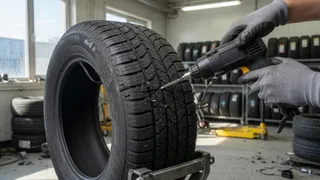
Inspecting sipe condition is part of a normal tread check. Use a tread depth gauge at several points across the tire, including inside the siped blocks, and compare the measurements. Shallow sipes disappear as the tread wears, but the tire may still meet a basic legal tread depth while losing much of its wet-weather advantage. Uneven wear across the shoulder or center can also indicate an inflation issue or alignment problem that changes how the sipes meet the road.
Use the vehicle placard to confirm the correct tire size, load index, and speed rating when replacing tires. Matching the original specifications preserves the drivetrain compatibility and the intended footprint behavior. If a replacement tire has a different sipe density or tread design, its wet-road personality may differ from the original, but the correct size and pressure remain the foundation for safe and predictable handling.
Diagnosing a problem
A driver who notices reduced wet traction or new hydroplaning may be dealing with shallow sipes rather than a simple tire-pressure fault. Water that is not channeled away leaves the tread blocks floating on a thin film, and the steering can feel light or unresponsive. Compare the siped area in the center and shoulder blocks with a known-good tire or the tire’s wear indicators; the inboard edge may visibly retain deeper slits while the center is nearly smooth.
The same symptom can also appear if the tires are oversized or underinflated for the wheel width, which distorts the footprint and prevents the sipes from opening in the correct sequence. Before assuming the sipes are a failed design, verify the pressure against the vehicle placard and check for uneven shoulder wear. If good tread depth remains but traction is still poor, the problem may be a hard compound, an incompatible tire category, or a mechanical issue that alters suspension load transfer.