How Much PAG Oil to Add to a Car AC System
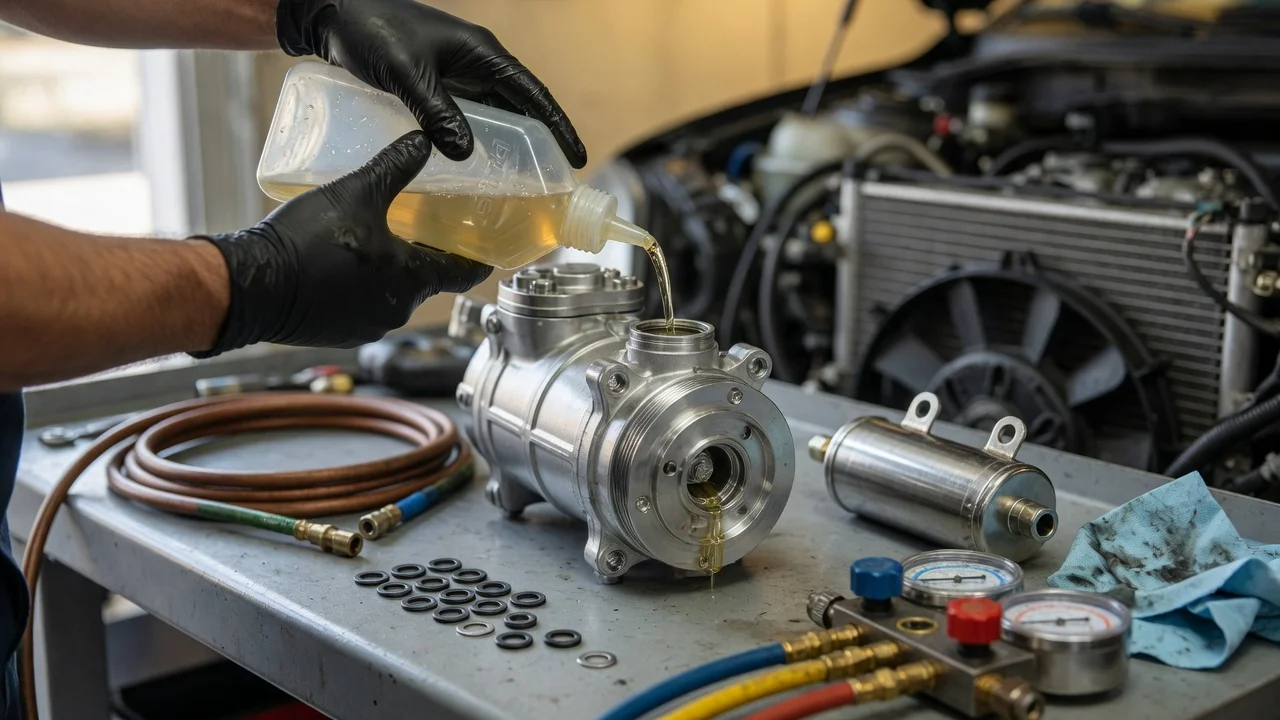
Direct Answer and Scope
There is no single universal amount. Total PAG oil capacity typically ranges from about 2 to 7 fluid ounces depending on the vehicle, compressor type and system design. On many late-model passenger cars, a fully empty and flushed system takes roughly 3 to 5 ounces, but the only safe target is the specification published for your exact model, year, engine and AC configuration. Adding the full system volume after replacing only one component will usually overfill the system.
When the Amount Changes
The required quantity depends on what was replaced and how much oil remains in the system. A new compressor may ship with a shipping charge of oil that must be drained and measured before installation. A condenser, evaporator, receiver-drier or accumulator replacement adds only the small amount trapped in that part, often one ounce or less. A full flush that removes old oil from all lines and components requires the total system capacity.
PAG Oil Viscosity
PAG oil is not one fluid. Common viscosities are PAG 46, PAG 100 and PAG 150, with some vehicle manufacturers specifying a dedicated or hybrid-specific PAG variant. Using the wrong viscosity can reduce lubrication at high temperature or impair refrigerant flow at low temperature. The viscosity code is part of the vehicle-specific AC specification, not an optional preference.
How Oil Is Distributed in a System
During operation, PAG oil circulates with the refrigerant and settles in the compressor, condenser, evaporator, receiver-drier or accumulator, and lines. The compressor normally holds the largest share. This is why adding the total capacity after a single part replacement is a common overfill error. It is also why a component replacement guide should list the replacement oil amount separately from the full system fill.
Typical Replacement Oil Amounts
Component replaced | Typical added oil | Notes; Compressor | 2 to 4 fl oz | Drain and measure old compressor oil; match removed amount plus any retained capacity loss; Condenser | 0.5 to 1 fl oz | Varies with core volume and vehicle line length; Evaporator | 1 to 2 fl oz | Often higher than condenser because of internal volume; Receiver-drier or accumulator | 0.5 to 1 fl oz | Small volume; system may lose more through evacuation; Hose or line set | 0.5 to 1 fl oz | Depends on length and diameter; Full flush and empty system | 2.5 to 7 fl oz | Use manufacturer total capacity only
Why Overfilling or Underfilling Causes Damage
Too much oil displaces refrigerant, reduces cooling performance and can cause liquid slugging that damages the compressor. Too little oil starves the compressor and can lead to scoring, seizure or premature bearing failure. Because the margin between correct and damaging oil volume can be as small as one ounce on some systems, measurement must be deliberate and documented.
Adding Oil Safely
Oil should be added in a clean, sealed environment using a dedicated oil injector or a measured charge through the service port, never poured open into a fitting. The system should be under vacuum before charging when possible. If you are recovering or evacuating refrigerant, record how much oil comes out with the recovery machine so it can be replaced. Do not rely on guesswork from the appearance of the old oil.
Finding the Correct Specification
The vehicle-specific total oil capacity and viscosity are listed in the factory service information, under the hood on an AC specification label, or in a professional AC database. A generic internet result is not a substitute. If the specification is missing or contradictory, state that the exact value is unconfirmed and avoid proceeding with a fill based on a similar model or engine.
When to Seek Professional Equipment
If the system has been open to atmosphere, contains air or moisture, or requires a full flush, a recovery machine, vacuum pump and accurate scale are needed. Refrigerant charge and oil charge must be matched to each other. A system that is correctly vacuumed but filled with the wrong PAG oil amount can still fail early, so accurate measurement matters more than the tool used to inject it.