How Is a Car Glass Dot Matrix Applied?
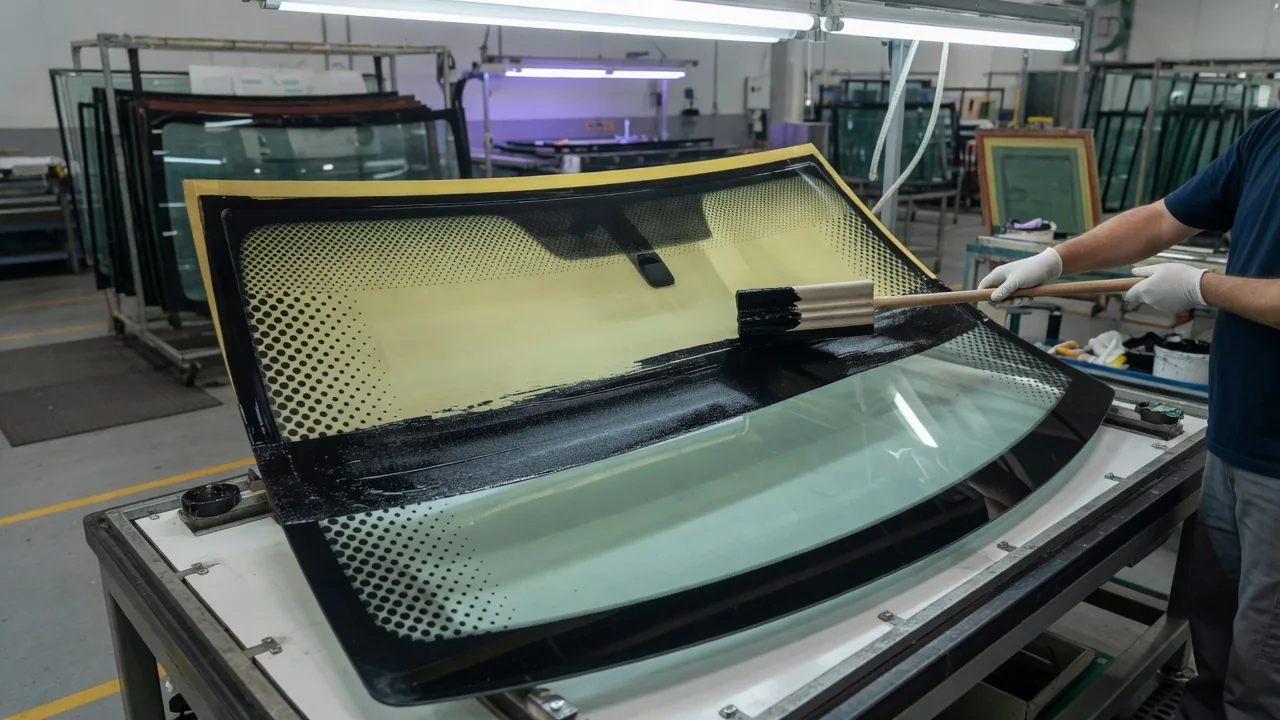
The band of black dots around the edge of a windshield is not a sticker or a coat of paint added after the glass is made. It is a ceramic enamel printed onto the glass during production and fused into the surface by heat. Knowing how a car glass dot matrix is applied explains why it looks the way it does, why it lasts as long as the glass, and why it cannot be scraped off or touched up later.
Ceramic printing
The material behind the black border is usually called frit. It is a ceramic enamel made of finely ground glass particles mixed with dark inorganic pigments, typically metal oxides, and suspended in an organic medium that turns the mixture into a printable paste. The pigments provide the opaque color, and the glass particles act as the binder. Because the binder is itself glass, the enamel can melt and fuse with the windshield surface instead of sitting on top of it like conventional paint.
In windshield dot matrix manufacturing, the paste is typically applied by screen printing while the glass is still flat. A fine mesh screen is blocked everywhere except the areas meant to be printed. It is placed over the cut and edge-finished glass, and a squeegee pushes the enamel through the open mesh. One pass carries the whole pattern: the solid outer band, the fade of dots, and any other printed areas such as the patch behind the rearview mirror. Some producers have also explored digital ceramic inkjet printing, which lays down the same type of material without a physical screen, but screen printing remains the familiar method.
After printing, the paste is dried so the glass can be handled. The decisive step comes when the glass is heated for bending, or for tempering in the case of many side and rear windows. At those temperatures the organic medium burns off and the glass particles in the enamel soften and fuse to the surface. On a laminated windshield the print is usually placed on an inner surface of the glass sandwich, most often the inside face of the outer ply. The finished layer then ends up sealed between the two sheets of glass and the plastic interlayer. Variants exist, and some glass carries enamel on the surface that faces the cabin instead.
Transition
The dot pattern is the transition between the solid black band at the edge and the clear viewing area. Instead of ending in a hard line, the coverage steps down through dots that usually get smaller or more widely spaced toward the center of the glass. This is the same halftone principle a printed photograph uses to create shades of gray from tiny dots of a single ink. The eye reads it as a gradual fade, so the edge of the opaque area looks less abrupt from inside the cabin and from outside the car.
The transition also serves manufacturing. Dark enamel absorbs heat differently from clear glass, so during bending a solid black area and the bare glass next to it can reach different temperatures. A sharp boundary between them can leave a line of optical distortion, sometimes described as lensing, where the glass shape changes slightly along the edge of the print. Breaking that edge into a graduated pattern of dots spreads the temperature difference over a wider zone and reduces the chance of a visible distortion line. Glass manufacturers set the dot sizes, shapes and spacing for each part, so patterns vary from one windshield design to another.
Durability
Because the enamel is fired rather than painted on, the printed layer becomes part of the glass surface. It does not peel, flake or fade the way an applied coating can, and ordinary cleaning products do not dissolve it. When the print sits on an inner surface of a laminated windshield, it is also shielded from wipers, road grit and ice scrapers, which further limits wear over the life of the glass.
That durability matters because the black band is functional, not just decorative. Windshields are bonded to the body with urethane adhesive, and that adhesive is vulnerable to ultraviolet light. The opaque solid band keeps sunlight from reaching the bond line, which helps the adhesive keep its strength over time. It also hides the adhesive bead and the edge of the body opening from view. Installers generally apply primer and adhesive to the printed area, so the enamel forms part of the bonding surface. The dots protect less than the solid band because they leave clear gaps between them. Their main jobs remain visual blending and heat management during forming.
Practical implications and limits
For owners, the main consequence is that the dot matrix is permanent. It cannot be removed, repaired or reprinted once the glass is made, and damage that compromises the windshield means replacing the glass rather than the print. Replacement glass from different producers may use a slightly different dot pattern, band width or shade of black while still fitting the opening correctly. Small visual differences like these are not, on their own, evidence of a fitment or quality problem. The exact specification for a given vehicle depends on its glass part number.
The printed area can also affect aftermarket work. Where the enamel sits on a cabin-facing surface, window film and adhesive accessories may not lie perfectly flat over the dots, which can leave a lighter or uneven-looking strip along the edge. When the vehicle maker places mounts for cameras, sensors or mirrors on a printed area, those mounts are designed around that surface, so any added item should follow the instructions for its own mounting location. Slight waviness near the dotted edge can be a normal by-product of forming the glass. How much is acceptable is set by the glass manufacturer's standards, not by a general rule an owner can apply at home.