How Is a Car Body Joined Together?
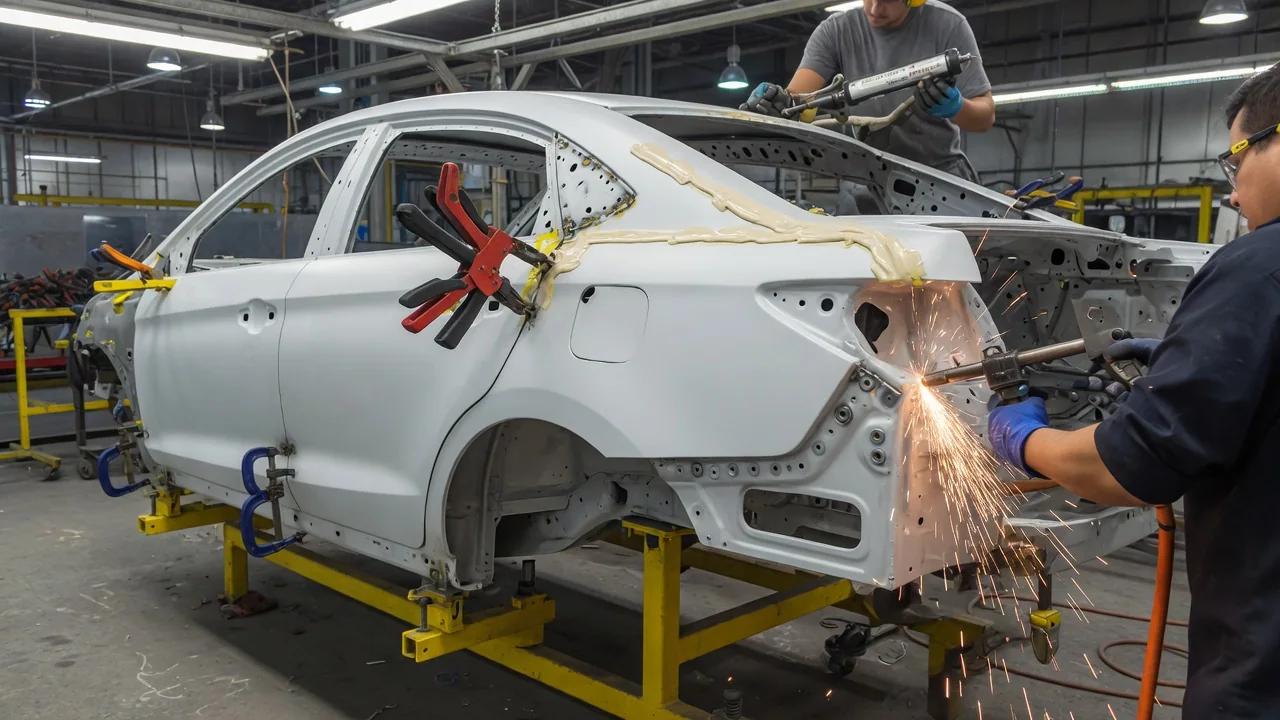
A modern car body is not one piece of metal but dozens of stamped panels, extrusions and castings locked into a single shell. If you have ever wondered how is a car body joined together, the short answer is a combination of welds, structural adhesives and mechanical fasteners, each chosen for the materials involved and the loads that particular joint must carry.
Joint types
Resistance spot welding remains the most common method on steel bodies. Two overlapping sheet flanges are clamped between copper electrodes, and a brief burst of current melts a small nugget that fuses them. Rows of these welds run along door openings, rocker panels and floor seams. Where access is limited to one side or a continuous seam is needed, manufacturers may use laser welding, laser brazing or conventional arc welding, with roof-to-side joints being a frequent laser application.
Structural adhesives, usually toughened epoxies cured in the paint ovens, are applied as beads between flanges and often combined with spot welds in a practice called weld bonding. Mechanical fasteners fill the remaining gaps: self-piercing rivets and flow-drill screws join aluminum or mixed materials that do not weld well together, while ordinary bolts hold fenders, hoods, doors and other panels meant to be removed. The exact mix differs considerably between a steel sedan and an aluminum-intensive truck or sports car.
Structural design
Most passenger cars use unibody construction, where the floor, pillars, roof rails and rocker sills form one load-bearing structure. Joining choices follow the load path. Spot welds handle shear forces along a flange well but concentrate stress at each point, so engineers add adhesive to spread loads across the whole seam. That continuous bond raises torsional stiffness, which helps handling and reduces squeaks, and it can improve how joints hold up under repeated fatigue loading over years of driving.
Crash behavior shapes the design too. Front and rear rails are meant to crumple in a controlled way, so their joints must stay attached while the metal folds, whereas the passenger cell uses very strong steels joined to resist deformation. Mixing materials adds another constraint: steel and aluminum in direct contact can corrode galvanically, so adhesives and sealers often double as an insulating layer between them. Body-on-frame trucks differ again, with the cab bolted through mounts onto a separate welded frame.
Repair implications
Because the factory joining method is part of the structure, collision repair has to respect it. Automakers publish body repair procedures that specify where a panel may be sectioned, which joints must be welded, and where rivets and adhesive replace the original welds. Some high-strength steels lose their properties when overheated, so a manufacturer may restrict or prohibit certain welding or straightening techniques in those areas. A method that suits one model can be wrong for another, even within the same brand.
Bolted panels such as fenders, hoods and doors are comparatively simple to replace, which is one reason they are attached that way. Welded and bonded parts like quarter panels, rocker sills and pillars demand cutting, careful alignment on measuring equipment, and restored corrosion protection inside the new seams. Aluminum repair typically calls for dedicated tools and a separated work area to avoid contamination. These requirements help explain why two dents of similar size can lead to very different repair plans and estimates.
Everyday Use and Observations
Evidence of the joining methods is easy to find once you know where to look. Open a door and pull back the weatherstrip slightly, and small round dimples spaced along the flange show the spot welds. Similar rows appear around the trunk opening and under the hood along the strut towers and radiator support. Fender bolts are visible along the top edge of the engine bay, and beads of seam sealer cover many panel overlaps to keep water out of the joint.
Other joints stay hidden. Structural adhesive sits between flanges, and the smooth roof seam on many cars may conceal a laser weld or brazed joint beneath trim or paint. On aluminum-bodied vehicles, the dimples may be replaced by rivet heads with a slightly different shape. Uneven panel gaps, sealer that looks hand-applied, missing weld dimples or fender bolts with disturbed paint can suggest earlier body work, though none of these signs proves anything without closer inspection by someone familiar with that model.
Limits and Next Steps
A general overview can only go so far, because every body is engineered as a specific system. The number of welds, the adhesive locations, the steel grades and the fastener types vary by manufacturer, model and even production year. Looking at visible seams tells you what methods were used on the surface but not the strength of the material underneath or the condition of a bonded joint. Rust creeping from a seam or a creak over bumps deserves a professional look rather than guesswork.
Structural joining is not a sensible home project. Welding near airbags, wiring, fuel components or high-voltage battery systems carries real hazards, and an incorrect joint can change how the car protects occupants in a crash. If your vehicle needs body repair, ask the shop whether it follows the manufacturer's published procedures and has the equipment for the materials in your car. When buying used, a pre-purchase inspection that includes the body structure offers more confidence than a visual check of the paint alone.