How accident reconstruction testimony uses collision evidence
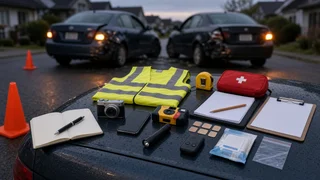
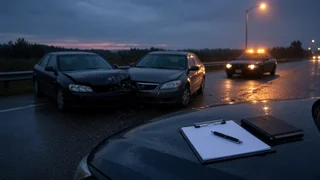
Accident reconstruction testimony explains how physical collision evidence is translated into a coherent account of a crash for a court or claims process. It focuses on the automotive details that survive after a collision, including damage patterns, tire marks, and data from event recorders. The goal is to use verifiable observations and established engineering principles to address sequence, speed, and driver actions. This overview covers what such testimony is, how it differs from ordinary witness accounts, and why the underlying evidence must remain traceable from the scene to the report.
Essential answer
Accident reconstruction testimony is the presentation of expert conclusions based on collision evidence. Instead of relying only on memory, the reconstructionist interprets physical signs such as crush depth, glass dispersal, scuff marks, and final rest positions. These observations are evaluated through automotive and physics principles to create a supported explanation of how a crash likely occurred. The testimony’s value comes from connecting each conclusion to an identifiable piece of evidence, so the reasoning can be examined and challenged.
The subject is distinct from a witness statement because it depends on physical data and applied methodology rather than personal perception. A witness may remember brake lights or a turn signal, while a reconstructionist works from the original recording of marks on the roadway or deformation in a door structure. The scope is therefore limited by what collision evidence was preserved. If vehicle identification, incident time, or record retention questions are unresolved, the testimony must acknowledge those limits instead of treating a partial record as complete.