Commercial Vehicle Collision Evidence and Investigation
The Short Answer
A commercial vehicle accident investigation is the process of establishing what happened in a crash involving a truck, bus or other vehicle operated for business, and why. It covers the same physical evidence as any collision, such as vehicle damage, road marks, debris and witness accounts. It also draws on a layer of records that ordinary passenger vehicles rarely generate: engine and safety-system data, electronic logs of driving hours, driver qualification files, maintenance histories, cargo documents and post-crash drug and alcohol testing results.
Two qualifications change the picture. First, much of this evidence is held by the motor carrier or stored inside the vehicle, and some of it can be overwritten, repaired away or discarded in the normal course of business. Second, the exact obligations depend on how the vehicle is classified, whether it operates in interstate or intrastate commerce, and which state the crash occurred in. Federal motor carrier rules set a baseline across the US, but states add their own requirements and procedures.
How It Differs From a Passenger Car Crash Investigation
In a typical car crash, the investigation often centers on the police report, photographs, statements and the vehicles themselves. Commercial vehicle investigations go further because the vehicle, the driver and the operating company are all subject to federal safety regulation administered largely by the Federal Motor Carrier Safety Administration (FMCSA). That regulatory framework creates documents that can show not only how the crash unfolded but also whether rules on driving time, vehicle maintenance, driver qualification and load securement were followed beforehand.
Larger vehicle mass and longer stopping distances make speed, braking and following distance central questions. More electronic data sources are usually present, from engine control modules to fleet telematics and camera systems. The driver's work history is documented through hours-of-service records and qualification files. A company, not just an individual, is usually involved, which brings in fleet policies, dispatch practices and maintenance programs. Multiple parties may share responsibility, including the carrier, a shipper or loader, a maintenance provider or a parts manufacturer. Federal rules can require specific post-crash steps, such as drug and alcohol testing and recording the crash in the carrier's accident register.
What Counts as a Reportable Commercial Vehicle Accident
Under federal motor carrier regulations, an "accident" has a defined meaning. Broadly, it is an occurrence involving a commercial motor vehicle operating on a highway that results in a fatality, an injury requiring immediate medical treatment away from the scene, or disabling damage that requires a vehicle to be towed. Crashes meeting that definition trigger carrier recordkeeping obligations and can feed into the carrier's safety record. Minor incidents that fall outside it may still be investigated by police, insurers or the company, but the federal reporting consequences differ.
Who Investigates
Several parties often run separate investigations at the same time, each with a different purpose. Their findings can overlap or conflict, so it helps to know who is looking at what.
Law enforcement: documents the scene, issues citations and prepares the crash report. Some states have specialized commercial vehicle enforcement units that conduct roadside inspections after serious crashes. The motor carrier: reviews the incident internally, often with a safety manager, and notifies its insurer. Insurance adjusters: assess liability and damages for each party they represent. Accident reconstruction specialists: engineers or trained investigators retained to analyze the physics and timeline of the crash. Attorneys: gather and preserve evidence when injury or significant property damage raises the prospect of a claim. Federal and state regulators: may conduct a compliance investigation of the carrier after a serious crash. The National Transportation Safety Board investigates a limited number of significant highway crashes, typically those with broader safety implications.
Key Categories of Evidence
Scene and Physical Evidence
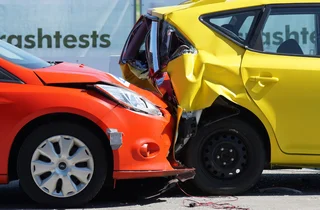
Physical evidence is the starting point for any reconstruction. Tire marks, gouges in the pavement, final rest positions, debris fields and fluid trails help establish direction of travel, points of impact and approximate speeds. Damage patterns on each vehicle indicate the angle and severity of the collision. Road conditions, signage, sight lines, lighting and weather at the time also matter. Much of this evidence disappears quickly once the scene is cleared, roads are cleaned or the weather changes, which is why photographs, video and measurements taken early carry significant weight.
Electronic Vehicle Data
Modern trucks can carry several separate data sources, and what is available varies by manufacturer, model year, engine, installed equipment and fleet configuration.
Engine control module (ECM): the engine's computer, which on many heavy trucks can record data around sudden deceleration events or hard braking, such as vehicle speed, brake application, throttle position and clutch use. The specific parameters and recording triggers depend on the engine maker and software. Electronic logging device (ELD): records driving time and duty status to document compliance with hours-of-service rules, along with location and engine data tied to those records. Telematics and fleet management systems: may log GPS position, speed, harsh braking or acceleration events and route history. Camera systems: forward-facing and driver-facing cameras, where installed, can capture the moments before and during a crash. Advanced driver assistance systems: collision mitigation, automatic emergency braking and lane departure systems may store event information, depending on the system. Airbag and restraint modules: present in some commercial vehicles and capable of recording crash-related data, depending on the vehicle.
Retrieving this data usually requires specialized tools and trained personnel, and improper download or continued vehicle operation can alter or overwrite stored events. For that reason, investigators typically document the vehicle's condition and secure the relevant modules before the truck returns to service or goes in for repair.
Driver Records
The driver's records help answer whether fatigue, qualification gaps or impairment may have played a role. Hours-of-service records show how long the driver had been on duty and driving before the crash. Supporting documents such as fuel receipts, toll records, delivery paperwork and dispatch messages can corroborate or contradict those logs. The driver qualification file, which carriers are required to keep, contains items such as the driver's application, motor vehicle record, road test or equivalent, and medical certification. Training records and any prior incidents or violations may also be relevant.
Post-Accident Drug and Alcohol Testing
For drivers who hold a commercial driver's license and operate vehicles subject to federal testing rules, post-accident testing is required in certain situations, including any crash involving a fatality and crashes where the driver receives a citation and someone is injured with treatment away from the scene or a vehicle must be towed. Federal rules set time windows for this testing, with a shorter window for alcohol than for controlled substances. When a required test is not performed in time, the carrier is expected to document why, and the absence of a test can itself become an issue in the investigation.
Maintenance and Inspection Records
Mechanical condition is a frequent question in truck crashes, particularly involving brakes, tires, lighting, steering and coupling devices. Carriers are required to systematically inspect, repair and maintain their vehicles and keep records of that work. Relevant documents include driver vehicle inspection reports, periodic inspection records, repair orders, parts invoices and any roadside inspection reports from before the crash. A post-crash mechanical inspection of the vehicle, ideally before repairs are made, can confirm or rule out equipment failure.
Cargo and Load Documents
Load weight, distribution and securement affect braking, handling and rollover risk. Bills of lading, weight tickets, loading instructions and securement records can show what the vehicle was carrying and how it was loaded. Where a shipper or third party loaded a sealed trailer, those documents may help determine who controlled the load. Hazardous materials shipments add their own documentation and response requirements.
Witnesses and Communications
Statements from drivers, passengers, bystanders and first responders provide context that data alone cannot. Phone records may be examined when distraction is suspected, since federal rules restrict hand-held mobile phone use and texting by commercial drivers. Communications between the driver and dispatch can also show schedule pressure or instructions given before the crash.
Evidence Overview at a Glance
Evidence type | What it can show | Main preservation concern; Scene marks and debris | Impact point, direction, approximate speed | Lost when the scene is cleared or weather changes; Vehicle damage | Collision angle and severity | Altered by repair, salvage or scrapping; ECM and safety-system data | Speed, braking and throttle before impact | Overwritten by continued operation or improper download; ELD and telematics | Driving time, location, speed history | Routine data retention periods and system purges; Camera footage | Visual record of the event and driver behavior | Loop recording or automatic deletion; Driver qualification and testing records | Licensing, medical status, impairment testing | Incomplete files or missed testing windows; Maintenance records | Mechanical condition and repair history | Normal record disposal schedules; Cargo documents | Load weight, distribution, securement | Paperwork held by multiple parties; Witness statements | Sequence of events and conditions | Memory fades and contact details are lost
Why Early Preservation Matters
Timing is often the deciding factor in what an investigation can establish. Federal rules require carriers to retain certain records for set periods, but those periods are finite, and electronic systems may overwrite data far sooner. Vehicles are repaired and returned to service, salvage yards dispose of wreckage, and businesses near the crash site may record over surveillance footage within days or weeks.
In serious crashes, parties expecting a claim commonly send a preservation request, sometimes called a spoliation letter, asking the carrier and others to retain specific vehicles, data and documents. Spoliation means the destruction or alteration of evidence relevant to a dispute. Courts in many states can impose consequences when evidence is destroyed after a party knew or should have known it would be needed, though the standards and remedies vary by jurisdiction.
How Reconstruction Ties the Evidence Together
Accident reconstruction combines physical measurements, vehicle data and witness accounts into a consistent timeline. Reconstructionists may use scene mapping, laser scanning or drone photography, then apply physics principles to estimate speeds, braking distances, perception-reaction time and the point at which a collision became unavoidable. Electronic data can anchor these calculations, while physical evidence helps confirm that the recorded data is consistent with what happened on the road. Where sources disagree, explaining the discrepancy becomes part of the analysis.
Common Causation Questions
Was the driver within hours-of-service limits, and do supporting records match the logs? Was speed appropriate for the road, traffic, load and conditions? Did brakes, tires, lights and steering function as required? Was the cargo within weight limits and properly secured? Was the driver qualified, medically certified and unimpaired? Did distraction, including mobile phone use, play a role? Did the actions of other road users, road design or work zones contribute? Did company policies, dispatch schedules or training practices create unsafe pressure?
What This Means for You
If you are trying to understand a crash involving a commercial vehicle, the key takeaway is that the most informative evidence is often not visible at the scene. It sits in the truck's electronics, the carrier's files and records held by third parties, and some of it has a limited lifespan. Anyone involved in a serious truck or bus collision should focus first on safety and medical care, then on documenting what they can: photographs of the vehicles and scene, the carrier name and identifying numbers displayed on the truck, names and contact information for witnesses, and the responding agency and report number.
Because regulations, record retention requirements and evidence rules vary by vehicle type, operation and state, the specific steps that apply to a given crash depend on its circumstances. For crashes involving injury or significant damage, consulting an attorney or insurance professional familiar with commercial vehicle claims is a common next step, particularly where prompt evidence preservation may be needed.