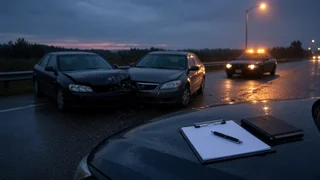
What to Include in a Car Accident Documentation Kit
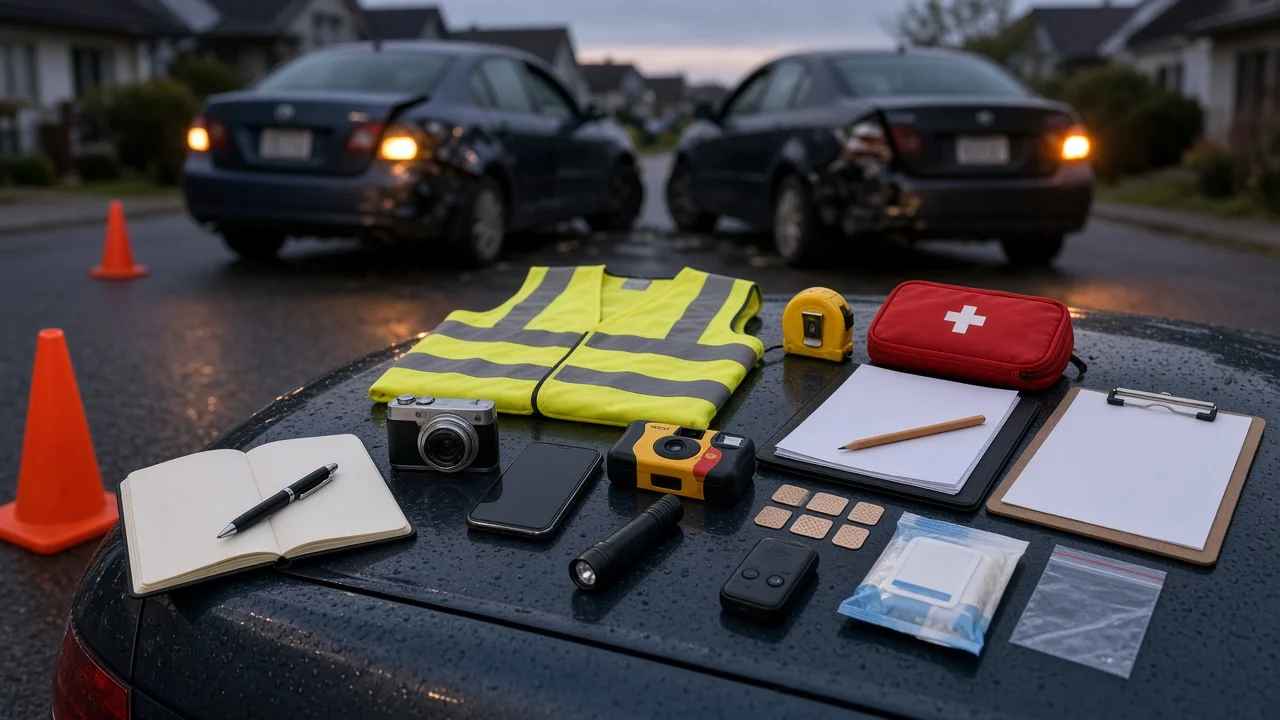
A car accident documentation kit is a small set of records and tools you keep in your vehicle so you can capture accurate information after a collision. These are details you may need later for an insurance claim, a police report or a dispute about what happened. Its job is evidence collection. It does not replace a roadside emergency kit, which handles breakdowns and first aid, but the two often share space in the same bag.
The Short Answer: What the Kit Should Contain
At minimum, the kit should let you identify yourself and your coverage, record the other party's details, photograph the scene and make yourself visible to traffic while you do it. Requirements for carrying documents, reporting crashes and moving vehicles vary by US state, so check your state's rules and your insurance policy before relying on any general checklist.
Copies of your vehicle registration and proof of insurance, unless your state requires originals or accepts digital proof; Your insurer's claims contact details and your policy number, written down in case your phone is unavailable; A pen or pencil and a small notepad; pencils still work in cold weather; A pre-printed accident information form with blanks for the details listed below; A phone with a charging cable or a charged power bank for photos, video and calls; A disposable or compact camera as a backup if your phone is damaged or dead; A flashlight for photographing damage and reading documents at night; Reflective warning triangles or road flares, plus a high-visibility vest; An emergency contact card listing next of kin and any relevant medical information; A waterproof pouch or folder to keep the paperwork together and legible
How It Differs From a Roadside Emergency Kit
A roadside emergency kit deals with the vehicle and the people in it: jumper cables, a tire inflator, first aid supplies, water and blankets. A documentation kit records facts. Visibility gear, such as triangles, flares and a vest, belongs to both because it protects you while you gather information. Many drivers keep a single bag with both sets of items, which works well as long as the paperwork stays dry and easy to find.
What the Kit Does for You After a Collision
After a crash, stress and adrenaline make it easy to forget details or record them inaccurately. A prepared form prompts you for each item in order, and photos taken at the scene preserve vehicle positions, damage and road conditions before anything is moved or cleaned up. This record supports your account when you talk to an insurer or a police officer and reduces reliance on memory.
Information Your Accident Form Should Prompt You to Record
Date, time and exact location, including the street names, nearest intersection or mile marker, and direction of travel; The other driver's name, phone number and driver's license number; The other driver's insurance company and policy number; Plate number, make, model and color of each vehicle involved; Name of the vehicle owner, if different from the driver; Names and contact details of passengers and witnesses; The responding officer's name, badge number, agency and report number, if police attend; Weather, lighting, road surface and traffic control such as signals or signs; A brief factual description of what happened and a simple sketch of vehicle positions
Using the Kit at the Scene
Before you start, keep the kit somewhere reachable from the driver's seat, such as the glovebox or a door pocket, rather than buried in the trunk. Safety comes before documentation at every step.
1) Check for injuries. If anyone is hurt, or you are unsure, call emergency services (911 in the US) before doing anything else. Do not move an injured person unless they face immediate danger. 2) Make the scene visible. Turn on hazard lights, put on the high-visibility vest, and set out triangles or flares if it is safe to walk near traffic. State laws differ on whether to move vehicles out of travel lanes after a minor crash. If staying in place is unsafe, move to safety first. 3) Photograph before vehicles are moved, where it is safe. Take wide shots of the whole scene, then each vehicle from several angles, close-ups of the damage, plate numbers, skid marks, debris, road signs and lighting conditions. Use the flashlight at night. 4) Exchange information using your pre-printed form. Ask to photograph the other driver's license and insurance card if they agree, and confirm the details match the vehicle. 5) Collect witness details promptly, because witnesses often leave before police arrive. 6) Stick to facts. Describe what happened without guessing about causes or discussing fault. Fault is determined later by insurers, police or courts. 7) Contact the police if your state requires a report for the type of crash involved, or if the other party is uncooperative, uninsured or appears impaired. Record the report number. 8) Notify your insurer within the timeframe your policy sets, and keep all photos and notes together in one place.
Completion check: before leaving the scene, confirm you have the other party's identity, insurance and vehicle details, photos of every vehicle involved, and, where applicable, a police report number. If any item is missing, note why on your form.
Strengths, Limitations and Who Benefits Most
The main strength of a documentation kit is consistency. It gives you the same prompts every time, regardless of how shaken you feel, and the paper backups keep working when a phone battery fails. It is inexpensive to assemble from ordinary items, although no pricing or product test data was available for this guide.
The limitations are practical and legal. The kit only helps if it is up to date, so an expired insurance card or old policy number undermines it. It cannot make an unsafe scene safe to document; on a highway or in poor visibility, staying protected may mean recording less. It also does not provide legal advice. If injuries, significant damage or disputed fault are involved, consider consulting an attorney or your insurer about next steps. Dashcam footage can add useful evidence, but recording and audio-consent rules vary by state, so check local law before relying on it.
The kit suits every driver, and it is especially worthwhile for new and teen drivers who have not been through a collision, people who drive for work or rideshare, households sharing several vehicles, and anyone who regularly drives in unfamiliar areas.
Keeping the Kit Current
Review the kit whenever your insurance renews or your registration changes. At the same time, replace used or expired flares, test the flashlight, recharge the power bank and refresh the blank forms. A quick check a few times a year keeps the kit ready for the moment you need it.