How a car door latch mechanism works
A car door latch mechanism is the mechanical assembly that keeps a closed door secured to the body until the handle or actuator releases it. Understanding this system helps owners interpret stiffness, rattles, or electronic locking behavior without guessing. The latch works with the striker, hinges, rods, cables, and lock actuator to manage closure, security, and occupant access in everyday use.
Essential answer
The essential answer is that a car door latch mechanism is a spring-loaded rotating or sliding catch that engages a striker mounted on the door opening. In most passenger vehicles, closing the door drives the latch around the striker, and a pawl locks the catch in place. The assembly converts door motion into a secure mechanical connection that resists opening until the handle linkage moves the pawl.
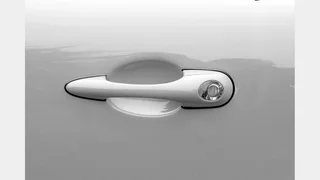
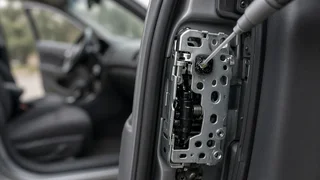
This mechanism is not the same as the visible exterior handle or the lock cylinder. It is the hidden body-side or door-side component that does the actual holding. Diagrams of a door latch car door lock mechanism typically show the catch, pawl, release lever, return spring, and connecting rods. The latch also interacts with child safety locks, power lock actuators, and interior cable releases.
How it works
When the door swings shut, the striker enters a throat in the latch. The striker pushes the rotating catch through a first or second stage, while the pawl drops into a notch to prevent the catch from rotating back. The first stage may hold the door partially closed, and the second stage produces the familiar fully closed position. Spring tension keeps the pawl engaged until a deliberate release input arrives.
Pulling an interior or exterior handle moves a rod or cable that pivots the pawl away from the catch. The catch then rotates free and releases the striker, allowing the door to open. In power locking systems, an actuator moves a locking lever that either connects or disconnects the handle linkage from the pawl. This explains why a locked door may not open from the outside even though the latch itself remains mechanically sound.
Strengths, limitations and suitability
The rotary latch design is compact, reliable, and able to tolerate repeated slamming because the hardened striker and catch spread localized loads. The multi-stage engagement also gives predictable door positioning and helps compress the weather seal for reduced wind noise and water entry. Its buried location protects critical pivots from direct weather, though dirt and dried grease still reach the mechanism over time.
The main limitation is that the latch depends on correct alignment, clean springs, and free-moving rods or cables. A slightly sagging hinge or worn striker bushing can change engagement angle and produce hard closing or partial latching. For owners who want durable, low-maintenance operation, the system suits conventional side doors well, but misalignment or a damaged release cable usually requires service rather than a simple external adjustment.
Procedure
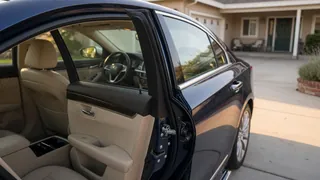
Begin inspection by opening the door and looking for visible debris, cracked plastic covers, or a loose striker attached to the door opening. While the door is open, use a screwdriver or similar tool to rotate the latch catch into its closed position, then pull the relevant handle or operate the interior release to confirm that the pawl releases. This check can identify whether resistance comes from the latch or from handle linkage.
Adjustment and replacement procedures vary by vehicle because mounting fasteners, rod routing, and actuator connectors differ. The general sequence is to disconnect the battery if an electrical actuator is involved, remove the door trim panel carefully, and disconnect rods, cables, and wiring connectors before unbolting the latch. Manufacturer instructions are required for torque values, weather barrier resealing, and any airbag-related precautions around the door.
Diagnosing a problem
If a door bounces open or will not stay closed, the latch may be reaching only the first stage because of striker misalignment, a failed return spring, or a dry catch that does not rotate fully. A door that will not open from the outside but opens from the inside often points to a disconnected outside handle rod, a locked actuator, or a broken clip in the exterior linkage rather than a seized latch.
A power lock that sounds weak or does not move may indicate a failing actuator, poor electrical connection, or binding lock lever. Since some fault codes for door latch or lock actuator circuits are manufacturer-dependent, a stored code should be treated as evidence for diagnosis, not proof that a specific part has failed. If the door cannot be opened safely by normal controls, stopped use and professional diagnosis are appropriate.