How to Lubricate a Car Door Latch Mechanism
A stiff, noisy, or reluctant door latch can make everyday driving feel worn and neglected. More importantly, a dry mechanism works harder, accelerates wear on moving surfaces, and may eventually bind when you need secure closure. Lubricating the latch is a low-cost service task that restores smooth operation, protects against corrosion, and reduces strain on the handle, cable, and actuator. The job is straightforward on most vehicles, but using the correct product and applying it to the right moving parts matters more than spraying generously at the visible area.
Direct answer
Lubricate a car door latch by first clearing the accessible claw, rotor, and surrounding plate of hardened grease and grit, then applying a small amount of a suitable lubricant to the moving contact points and cycling the mechanism several times. The goal is to coat the sliding and pivoting surfaces, not to flood the electrical connector or fill the latch body with liquid. White lithium grease, a dedicated spray lubricant, or a light penetrating lubricant followed by grease can work depending on how contaminated the assembly has become.
The most effective approach is to combine two pulses of action. Start with a cleaner or light spray to soften old residue, work the handle and interior release while the door is open, then add a modest film of heavier lubricant to the striker engagement area and hinge points. Wipe away excess from painted surfaces and weather seals, because some lubricants can attract dirt or stain trim. If the latch remains noisy or catches after this, inspect alignment and wear rather than simply adding more lubricant.
How to proceed
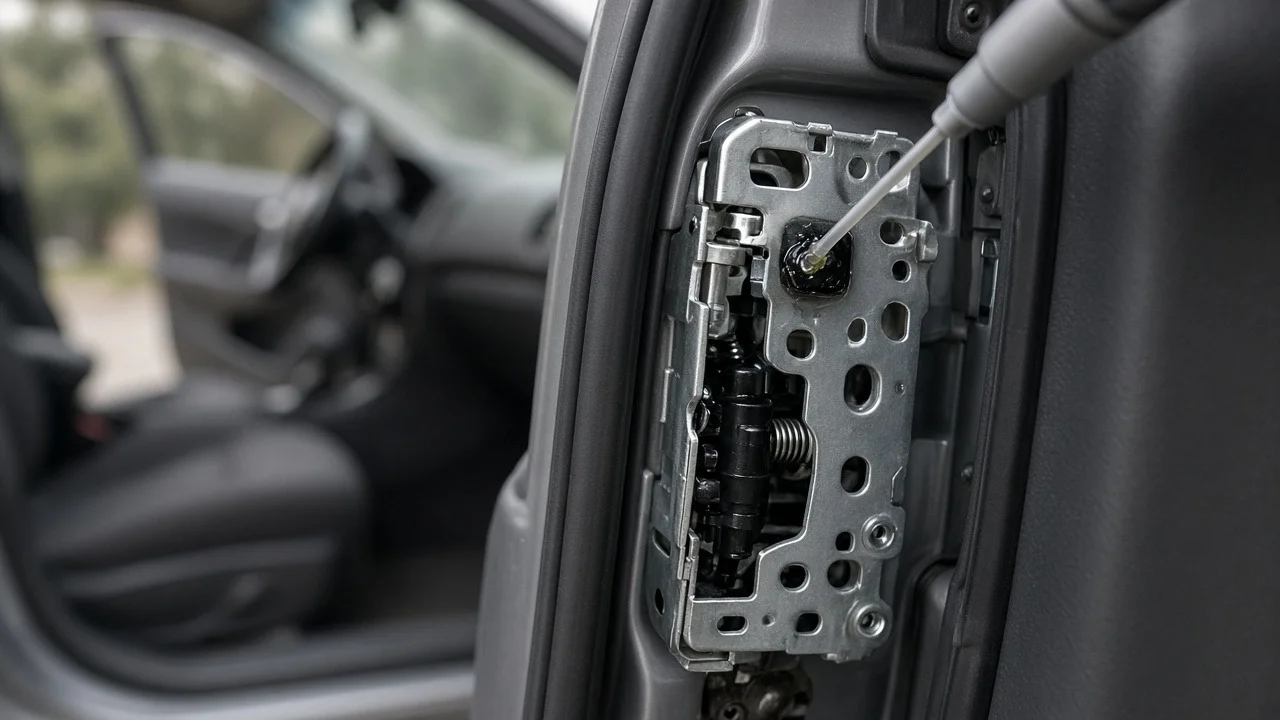
Begin by preparing the work area and opening the door fully so the latch is exposed on the edge of the door shell. Have a clean rag, a small brush or cotton swab, and the lubricant ready. Use the brush to remove visible dirt and caked grease from the claw opening and the surrounding striker contact area. A short burst of an aerosol cleaner or light penetrating spray can soften stubborn deposits; keep the spray off painted panels and avoid directing a strong stream at weather seals or wiring boots near the actuator.
Apply the primary lubricant sparingly to the rotating claw, the pawl that holds it closed, and any visible pivot points. Spray or smear a light film, then use the handle or the interior release to cycle the latch several times while the door remains open. Use a screwdriver wrapped in cloth or another clean tool to gently move the claw if you need to simulate the striker entering the latch, but keep fingers clear of the closing mechanism. After cycling, wipe away excess lubricant and close the door twice to confirm the striker enters smoothly and the door releases without extra effort.