Car door latch mechanism replacement
A door latch that refuses to close, release, or signal the interior light can turn a routine drive into a safety headache. Car door latch mechanism replacement becomes necessary when the rotating claw, interlocking pawl, connecting rods, or power actuator no longer hold the door against its striker. Because a latch coordinates cabin security, crash containment, and theft deterrence, understanding its failure helps owners distinguish a simple adjustment from a worn assembly and plan an appropriate repair.
Essential answer
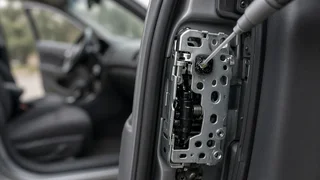
Replacing a car door latch mechanism means removing the worn or broken latch assembly from the door cavity and installing a compatible unit that engages the body-mounted striker. This part is not just a handle linkage; it contains the spring-loaded claw that wraps around the striker and the pawl that holds it closed. Symptoms such as a door bouncing open, requiring repeated slams, or failing to unlock with the power switch often point to internal wear, cracked plastic cams, or a failed actuator rather than a bent exterior handle.
A complete replacement usually requires confirming vehicle fitment, detaching the interior trim panel and water shield, disconnecting the actuating rods or electrical connector, and transferring accessories such as the lock cylinder or cable from the old assembly. Although cleaning and lubricating can temporarily restore a sluggish latch, replacement is the practical cure when the mechanism sticks, freewheels, or no longer returns to the closed position. A fault code or warning light should be treated as diagnostic evidence, not proof that one particular component alone has failed.