What Is a Soft-Close Door Mechanism?
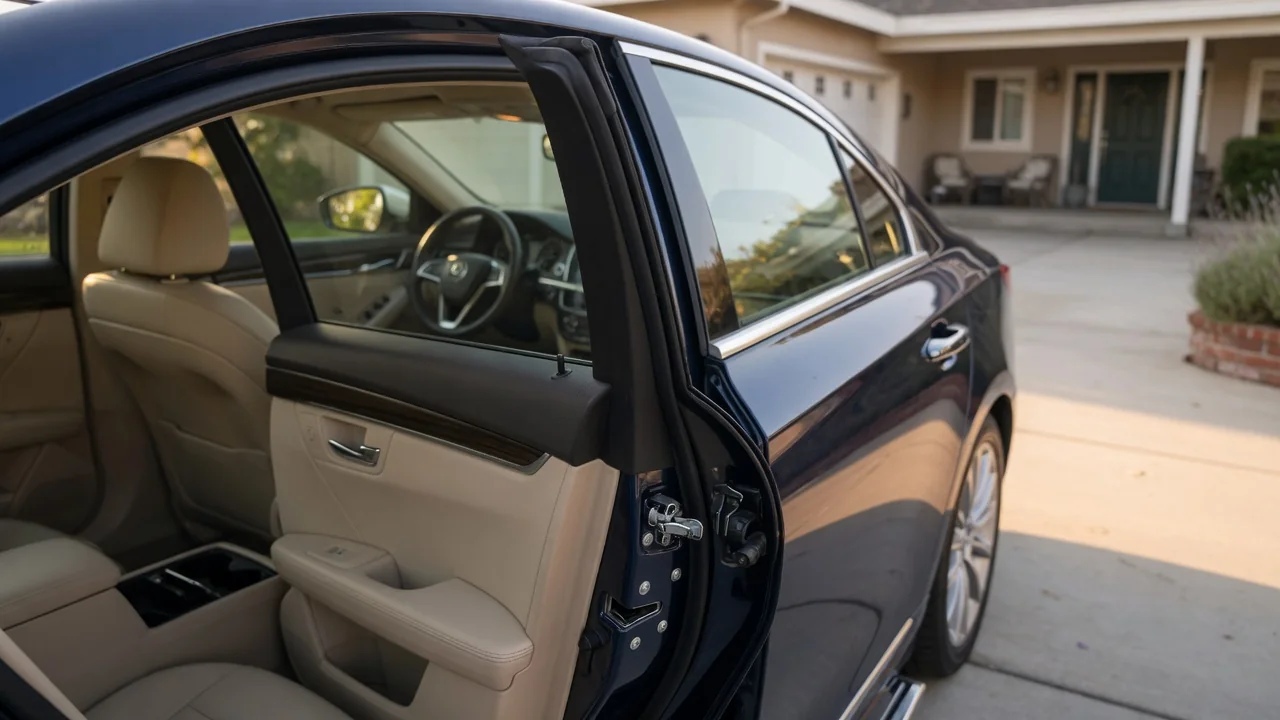
What is a soft close door mechanism? It is a powered assist built into a vehicle's door latch that finishes the last few millimeters of closing for you. Instead of slamming the door, you push it gently until the latch catches its first position, and a small electric motor then pulls the door fully shut against the weather seals, quietly and with consistent force.
Motor and latch
A conventional door latch has two catch positions on the striker: a partial, or secondary, position that keeps the door from swinging open, and a fully latched primary position. A soft-close system adds a sensor that detects when the latch has reached that first position. Once it does, a compact electric motor, usually working through a reduction gear and often a cable or lever, rotates the latch claw the rest of the way until the door sits fully latched.
What you notice from outside is a short pause, a faint whirring sound, and the door drawing itself inward until it sits flush with the body. The motor may be housed inside the latch assembly or mounted separately in the door and connected by a cable, depending on the manufacturer. Some vehicles apply the same principle to the trunk lid or liftgate, where the term power cinching is common. Layout, sound, and pull-in speed differ from one model to the next.
Obstruction
Because the motor pulls with real force over a short distance, anything caught in the gap deserves attention. The cinching action starts only after the latch has caught its first position, which means the opening is already narrow, but a fingertip, a seat belt tongue, a coat hem, or a child's hand can still be in the way. Not every system senses resistance and reverses the way many power windows do, so the door should never be treated as self-protecting.
How a particular vehicle responds to a blockage varies. Some designs monitor motor current or latch travel and stop when the pull takes too long, leaving the door partially latched and triggering a door-ajar warning on the instrument panel. Others simply complete the stroke. The owner's manual is the right place to confirm what your model does. A practical habit is keeping hands on the outer panel or handle rather than the door edge, and checking that belts and clothing are clear before pushing the door closed.
Maintenance
The mechanism lives inside the door, where it is exposed to moisture, dust, and temperature swings, so basic care focuses on what surrounds it. Keeping the latch opening and striker free of grit, making sure door drain holes are not blocked, and keeping weather seals clean and supple all reduce the load the motor works against. A swollen, sticky, or misaligned seal makes the final pull harder, and a striker that has shifted can prevent the latch from reaching the position that triggers the motor.
Lubrication deserves caution, because the wrong product can attract dirt or affect plastic gears and electrical contacts; the manufacturer's service information specifies what, if anything, should be applied. Signs worth noting include a slower or louder pull, a grinding or clicking noise, a door that cinches on some days and not others, or a door-ajar light that stays on. Weak battery voltage can also affect operation. Any stored fault code is a starting point for diagnosis, not proof that the motor or latch has failed.
Everyday Use and Observations
In daily driving, the feature changes how you close the door more than anything else. A light push until the latch clicks once is enough; the mechanism handles the rest. Slamming is unnecessary and adds needless shock to the latch and motor. The benefit is most obvious in tight parking spaces, on a slope where the door resists closing, or with tightly sealed modern cabins where trapped air pushes back against a gently closed door and leaves it half latched.
Passengers unfamiliar with the system often swing the door hard out of habit, so a quick word helps. Listen and watch during normal use: each door should pull in with a similar sound and take about the same time, and the panel gaps should look even once it is shut. Cold weather may make the action seem slower as seals stiffen. On some vehicles only certain doors have the feature, and it may be part of an option package rather than standard equipment.
Limits and Next Steps
A soft-close mechanism is not a power door. It does not swing the door from wide open, and it will not act unless the door is pushed far enough for the latch to catch its first position. It cannot compensate for a sagging hinge, a bent door, or a badly adjusted striker either. If the motor stops working, the latch normally still functions like a conventional one, so the door can be closed with a firmer push, though that behavior should be confirmed for the specific vehicle.
When a door stops pulling itself in, start with simple observations: whether the fault affects one door or several, whether it is constant or intermittent, and whether any warnings appear. That information helps a technician separate a wiring, sensor, or control issue from a mechanical one. Because the latch is a safety component that holds the door shut in a collision, and door panels often sit near side airbag parts, internal repairs are best left to a qualified shop with model-specific procedures.