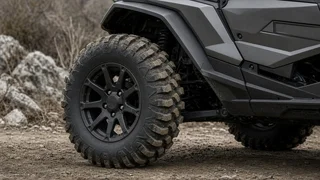
Honda Talon and Pioneer Wheel Offset

Wheel offset does more than change how a Honda Talon or Pioneer 1000 sits; it moves the tire contact patch relative to the suspension centerline and alters steering feel, scrub radius, and fender clearance. The Talon is a sport-focused side-by-side, while the Pioneer 1000 is built around utility and trail work, so the same offset can produce different results on each machine. Before choosing a wheel, owners need to connect offset to rim width, diameter, bolt pattern, and the available clearance around the suspension and bodywork.
Essential answer
Honda Talon wheel offset positions the rim mounting face away from the true centerline of the hoop. A lower or zero offset pushes the tire outward, while a higher positive offset pulls the assembly inward. This relationship works with rim width because offset alone does not describe the full package: a wide wheel with positive offset can still increase track width compared with a narrow factory wheel. For the Talon, outward placement is often discussed for stability, but it also changes leverage on suspension components and the way the tire arcs through travel.
The Honda Pioneer 1000 wheel offset conversation is usually more conservative because owners carry loads, tow, or run enclosed cabs where a tire that stands too far out can contact bodywork, mud flaps, or the bed supports under compression. Matching offset to the factory geometry keeps the steering axis closer to the tire center, which preserves lighter effort and predictable return. When the offset moves the centerline outward, the tire may strike the fender opening at full lock or with the suspension compressed, so clearance checks must include both static fit and dynamic movement.