Hitch Receiver, Ball Mount and Trailer Ball: Parts Explained
Direct answer and scope
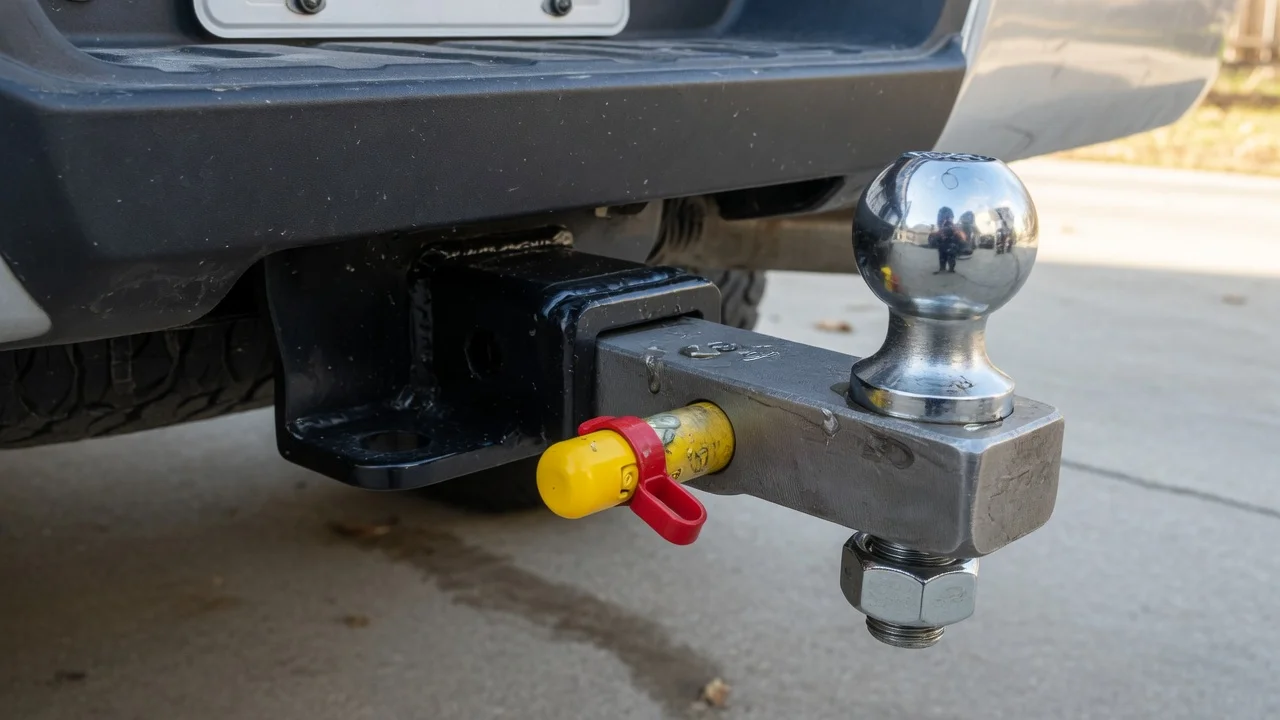
A trailer hitch ball and receiver are not the same part. The receiver is the square tube mounted to the vehicle frame. The ball mount is the removable drawbar that slides into the receiver. The trailer ball is the rounded steel sphere bolted or welded to the ball mount, and it is the piece the trailer coupler locks onto. The receiver accepts the ball mount, and the ball mount accepts the trailer ball. Terminology varies by region and vehicle class, but on light-duty trucks, SUVs and crossovers these three components are usually separate and serviceable.
Hitch receiver
The hitch receiver is the fixed structure attached to the vehicle. It is commonly a square steel tube opening at the rear of the vehicle. In North America, Class III and Class IV receivers for light trucks and SUVs typically have a 2-inch by 2-inch opening. Smaller vehicles may use a 1.25-inch by 1.25-inch receiver. The receiver contains a cross pin hole. A hitch pin or locking pin passes through that hole to hold the ball mount in place.
Receiver capacity is not a single universal number. It is defined by the receiver class and by the vehicle manufacturer’s tow rating, whichever is lower. A receiver may be labeled for a maximum gross trailer weight and a maximum tongue weight. Tongue weight is the downward force the trailer places on the ball. Exceeding the receiver rating or the vehicle rating can damage the frame or affect steering and braking.
Ball mount
The ball mount is the removable part that slides into the receiver. One end is the shank that fits the receiver tube. The opposite end is a flat platform with one or more holes for attaching the trailer ball. The platform has rise or drop. Drop is the vertical distance from the top of the receiver opening down to the ball platform. Rise is the opposite. Selecting the correct drop or rise helps the trailer ride level when connected.
Ball mounts are rated for gross trailer weight and tongue weight. A ball mount rated below the trailer weight can bend or fail. The shank diameter must match the receiver size. Do not use an adapter to fit a 2-inch shank into a 1.25-inch receiver unless the adapter is explicitly rated for the intended load and allowed by the vehicle and receiver manufacturer.
Trailer ball
The trailer ball is the spherical metal component the trailer coupler closes around. Common ball diameters are 1-7/8 inch, 2 inch and 2-5/16 inch. The required diameter is stamped on the trailer coupler. Using the wrong diameter can allow the coupler to detach. The ball has a threaded shank that passes through the ball mount platform and is secured by a nut and lock washer. Some balls are welded to specialty drawbars, but bolted balls are the common serviceable design.
Ball capacity is stamped onto the top or side of the ball. It includes a maximum trailer weight and sometimes a maximum tongue weight. A 2-inch ball is often rated around 6,000 to 8,000 pounds gross trailer weight depending on the shank diameter and material, but this varies by product. A 2-5/16-inch ball may be rated for higher weights. The ball rating, ball mount rating and receiver rating must all meet or exceed the loaded trailer weight.
How the parts fit together
The installation sequence is receiver first, then ball mount, then ball. Insert the ball mount shank into the receiver, align the cross pin holes and install the pin. The trailer ball then bolts through the selected hole in the ball mount platform. The trailer coupler sits over the ball and is latched closed. Safety chains and a trailer light connection are separate requirements for towing on public roads.
Choosing the right combination
Select the trailer ball diameter from the coupler stamping. Select the ball mount from the receiver opening size, the required rise or drop and the loaded trailer weight. Confirm the receiver class on the vehicle. Compare the lowest of the three capacity ratings: receiver, ball mount and ball. The usable rating is the lowest number. Material uncertainty around the exact capacity applies to unbranded or modified components and to older vehicles where the factory receiver label may be illegible.
Common confusion
A hitch receiver is sometimes called a trailer hitch. A ball mount is sometimes called a drawbar or hitch bar. A trailer ball is sometimes called a hitch ball or tow ball. The phrase trailer hitch ball and receiver can refer to the complete connection system, but the individual parts are not interchangeable. A receiver without a ball mount cannot hold a trailer ball, and a ball mount without a receiver has no vehicle attachment.
Inspection points
Check the receiver for corrosion, cracking around the frame mounting points and wear in the square tube. Check the ball mount for bending, cracks and an elongated pin hole. Check the trailer ball for wear, a loose nut or a reduced shank diameter. A worn ball can allow excessive coupler movement. Replace any component whose rating is no longer legible or whose condition is visibly degraded.