How Hertz Car Sales Works and What to Check Before You Buy
Direct Answer
Hertz car sales is the used-vehicle retail channel operated by the rental company. It offers former daily rental, rideshare, and fleet vehicles directly to consumers, typically at fixed no-haggle prices. The scope includes in-person retail locations, a buy-online home delivery option, and a limited return or exchange window. The main qualification that changes the answer is that most inventory consists of high-utilization rental units rather than privately owned trade-ins, so condition history and maintenance documentation matter more than they would with a single-owner used car.
What Hertz Car Sales Inventory Typically Includes
The inventory skews toward late-model sedans, compact SUVs, and midsize SUVs from mainstream brands, because those vehicles dominate rental fleets. It is common to see Chevrolet, Nissan, Toyota, Ford, Kia, Hyundai, and similar volume models. Higher trims, specialty performance vehicles, and long-range electric vehicles appear less often. Model year, powertrain, trim, and market can change standard equipment, driver-assistance features, and remaining factory warranty coverage, so each listing must be read against the specific vehicle identification number.
Condition and History Considerations
Former rental vehicles tend to accumulate mileage faster than privately owned cars of the same age, but they also tend to receive scheduled maintenance through fleet service programs. The tradeoff is that cosmetic wear such as bumper scuffs, stone chips, interior trim marks, and more heavily used cargo areas is more likely. Rental use also means multiple drivers with different habits, which may increase wear on brakes, tires, seat upholstery, and suspension components relative to mileage alone.
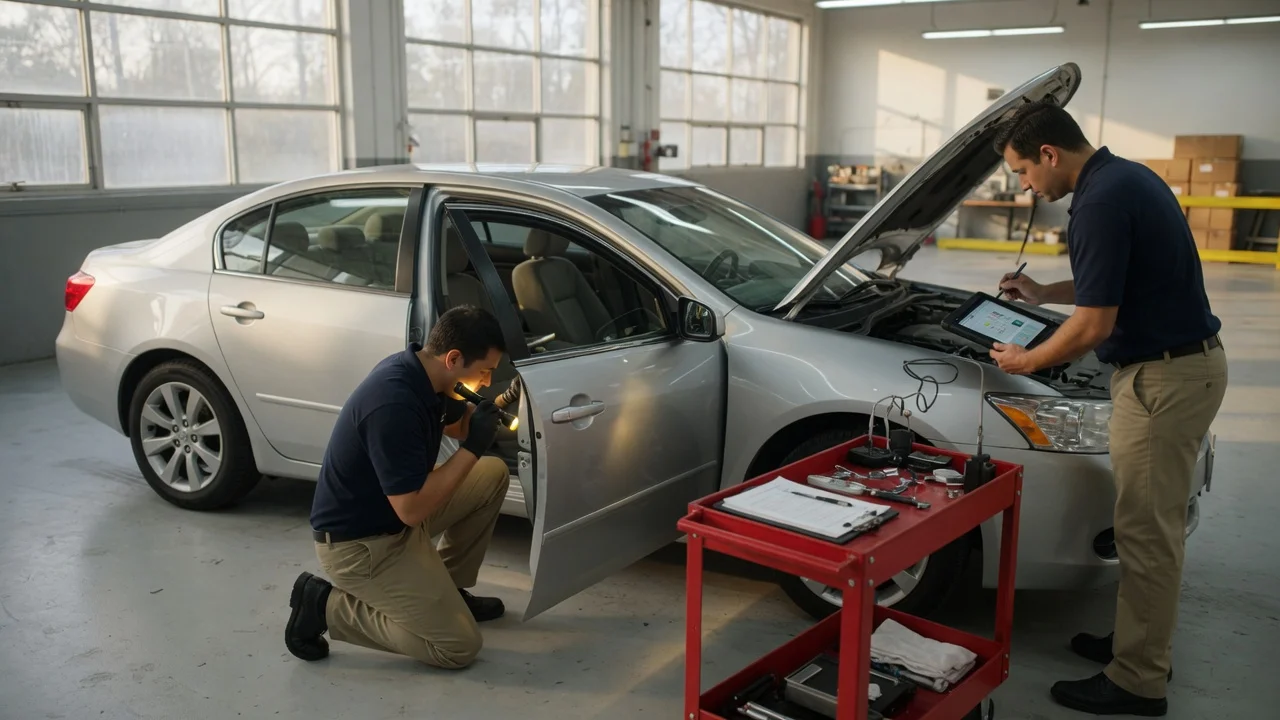
A supported buying decision should include a pre-purchase inspection by an independent mechanic, even when the seller provides a vehicle history report. The inspection should focus on brakes, tires, suspension, fluid condition, underbody damage, and evidence of prior body repair. Buyers should request service records and confirm whether the manufacturer's remaining warranty transfers, because some coverage may be reduced or voided for former commercial or rental service depending on the automaker and market.
Pricing, Fees, and Purchase Process
Hertz positions its used cars at no-haggle prices that often undercut comparable dealer-listed retail units, but the advertised price is not the total transaction cost. Buyers should expect a documentation or dealer fee, taxes, title and registration charges, and potentially a reconditioning fee. Financing may be arranged through Hertz or outside lenders. The buy-online path can include a limited return or exchange period in some markets, which reduces but does not remove the risk of buying without a physical inspection.
The direct comparison point should be the out-the-door price against comparable used vehicles at franchised dealers, independent lots, and private sales. A lower list price can be offset by higher fees, shorter remaining tire or brake life, or missing features. Because specification, warranty, and condition vary by unit, the strongest next step is to compare a specific Hertz vehicle identification number with equivalent local listings rather than relying on the program's general reputation.
Warranty and Post-Sale Protection
Remaining factory warranty coverage follows the car in most cases, but former rental use may affect certain coverage exclusions or the start date of the warranty period. In markets where Hertz offers a limited exchange or return window, the terms are time- and mileage-limited and do not cover damage or modifications made after delivery. Extended service contracts may be offered at the point of sale, but their value depends on the provider, covered components, deductible, and exclusions.
Who Should Consider a Hertz Used Car
A Hertz car sale can make sense for a buyer who prioritizes a late-model vehicle at a lower initial price and is willing to accept cosmetic wear, higher mileage, and a shorter remaining tire or brake life as part of the tradeoff. It is less suitable for a buyer who wants a pristine interior, complete service documentation, or the lowest long-term maintenance risk. The decision should be based on a specific vehicle inspection, an out-the-door price comparison, and a realistic reading of condition history rather than the rental brand alone.