Choosing a Harbor Freight Tire Changer
The short answer
A Harbor Freight tire changer can make sense if you change tires occasionally at home, mostly on common passenger, trailer or utility wheels, and you are willing to trade time and effort for lower upfront cost. It is a weaker fit if you work on low-profile, run-flat or very stiff tires, on expensive alloy wheels you cannot risk scratching, or on enough tires that speed and repeatability matter. In those cases, a shop-grade powered machine or simply paying a tire shop is usually the more practical choice.
Two conditions change that answer most: whether your wheel diameter and width fall inside the range the specific changer is rated for, and whether you also have a way to balance the wheels afterward. A tire changer only removes and mounts tires; it does not balance them.
No product specifications, prices or test results were supplied for this article, so the guidance below explains what to verify rather than quoting figures. Check the current product listing, manual and in-store unit for the exact model you are considering.
Match the changer to how you will use it
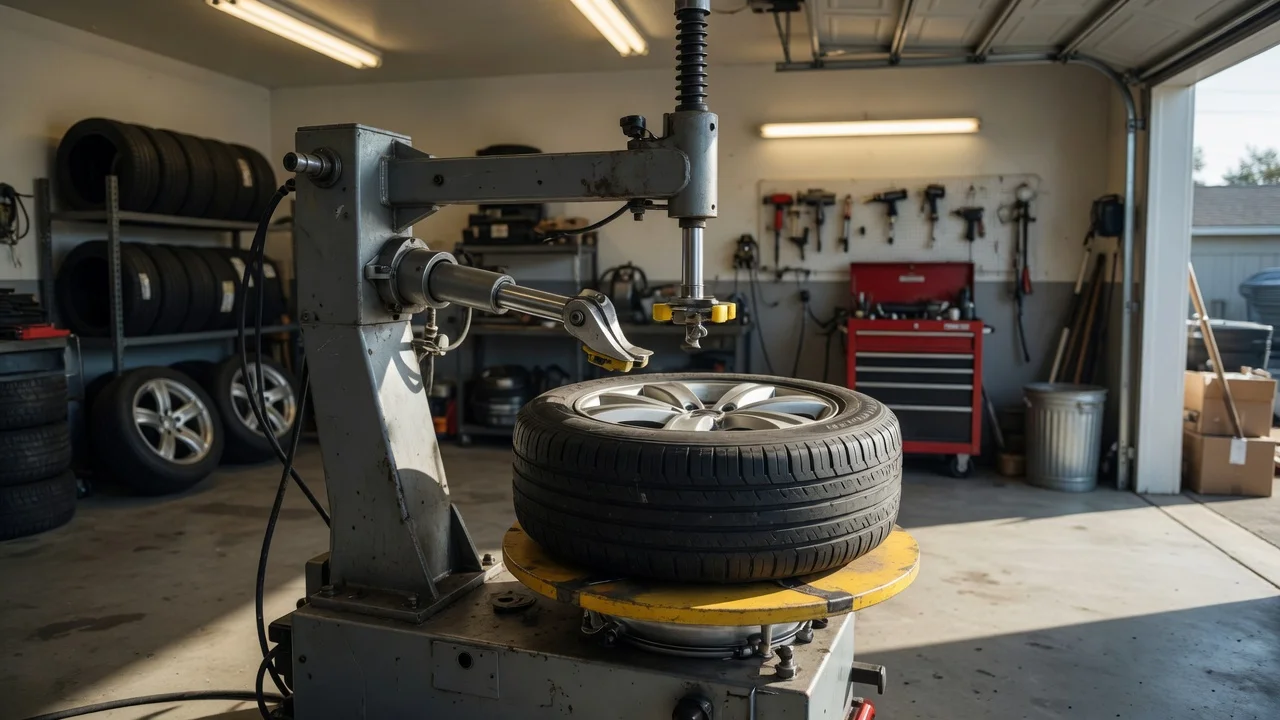
Tire changers sold for home use are often manual: a stand with a bead breaker (a lever or press that pushes the tire bead off the wheel's sealing edge) and a center post where you lever the tire on and off with a bar. Powered changers rotate the wheel for you and typically handle tougher tires with less effort, but they cost more, need more floor space and may need a suitable power supply and compressed air. Confirm which type the Harbor Freight unit you are looking at is before comparing it with anything else.
A manual changer tends to suit: occasional tire swaps on a small number of vehicles; trailer, mower, ATV or older passenger-car wheels with flexible sidewalls; owners who already have a balancer or a shop willing to balance mounted wheels. A manual changer tends to struggle with: low-profile tires with short, stiff sidewalls; run-flat tires; large-diameter truck or SUV wheels; frequent, back-to-back tire jobs. Motorcycle wheels often need a dedicated motorcycle changer or adapters, because their centers and rim profiles differ from car wheels. Check the listing rather than assuming a car-wheel changer will fit.
What to check before you buy
Wheel size and center-hole fit
Find the rated wheel diameter and width range in the listing or manual and compare it against every wheel you plan to service, including spares and seasonal sets. Also confirm how the wheel is held on the center post and whether it accommodates your wheels' center bore and lug pattern. A wheel that sits loosely or off-center is harder to work and more likely to be damaged.
Tire type
Note the tire construction, not just the size. Low-profile and run-flat tires need far more force at the bead and are a common reason home changers fall short. If most of your tires fall into those categories, the cheaper changer may not save money once frustration, damaged beads or a second trip to a shop are counted.
Wheel finish and TPMS sensors
Steel mounting bars and clamping points can scratch painted or machined alloy wheels. Check whether rim protectors or plastic-tipped tools are included or available, and budget for them if not. If your vehicle has a tire pressure monitoring system (TPMS, sensors usually mounted inside the wheel at the valve stem), learn where to position the bead breaker and bar so you do not crush the sensor, and plan for service kits or replacement valve parts.
Mounting, space and assembly
Many manual changers are meant to be bolted to a solid floor so the base does not tip or walk while you lever. Check the manual's mounting requirements and whether your garage floor can take anchors. If you cannot bolt it down, ask whether a mobile base or plate is an option and whether that compromises stability. Inspect the boxed or display unit for missing hardware, poor welds or bent parts before leaving the store.
Bead seating and safety
Seating the bead means inflating the tire until it snaps onto the wheel's sealing edges. You will need an air compressor and, for stubborn tires, possibly a bead seater. Never exceed the maximum bead-seating pressure printed on the tire sidewall or in the tire maker's guidance, keep your body clear of the tire while inflating, and stop if the bead does not seat as expected. If you are not comfortable with this step, a tire shop is the safer option.
Warranty, returns and parts
Read the current return window and any warranty or protection plan terms for the specific item. Check whether replacement parts such as mount heads, bead breaker pads or bars are sold separately, since wear parts determine how long the tool stays usable.
Total cost, not just the sticker price
The changer's price is only part of the cost of doing tires yourself. When you compare against shop fees, list every item you would need to buy and every recurring cost.
Cost item | Why it matters | How to verify; The changer itself | Upfront cost; may vary with promotions or member pricing | Note the price, currency, date and whether a coupon or membership was required; Wheel balancer | Mounted tires still need balancing for a smooth ride | Price a balancer or ask local shops what they charge to balance wheels you bring in; Air compressor and bead seater | Needed to seat beads and inflate tires | Check whether you already own suitable equipment; Rim protectors, lubricant, valve stems | Protect wheels and make mounting easier | Add consumables to your per-job cost; TPMS service parts | Sensors may need seals, nuts or replacement | Check what your vehicle's sensors require; Old tire disposal | Many areas charge disposal fees | Ask local recyclers or retailers about fees; Shop mount and balance | The alternative you are comparing against | Get written quotes from local shops for your tire size
When comparing prices, treat online or shelf prices as advertised figures, not what you will necessarily pay. Record the market, date, currency and what is included, and compare like with like: a shop quote that includes balancing and disposal should be weighed against your full DIY cost, not the changer alone.
Reading reviews and specs carefully
Harbor Freight has sold tire changers under more than one house brand and model number over time, and listings can change. When reading owner reviews or videos, confirm the item number and version match the one you are considering, and that the reviewer's wheels and tires resemble yours. A good result on small trailer tires says little about performance on low-profile car tires.
Choosing your next step
Buy a Harbor Freight changer if your wheels fit its rated range, your tires have reasonably flexible sidewalls, you can bolt it down, and you have a plan for balancing. Consider a more capable powered changer if you service many tires or regularly handle low-profile, run-flat or large wheels. Use a tire shop if you change tires only a few times a year, have expensive alloy wheels or TPMS sensors you do not want to risk, or lack the space and compressor to do the job safely.