Choosing a Harbor Freight Tire Inflator
The short answer
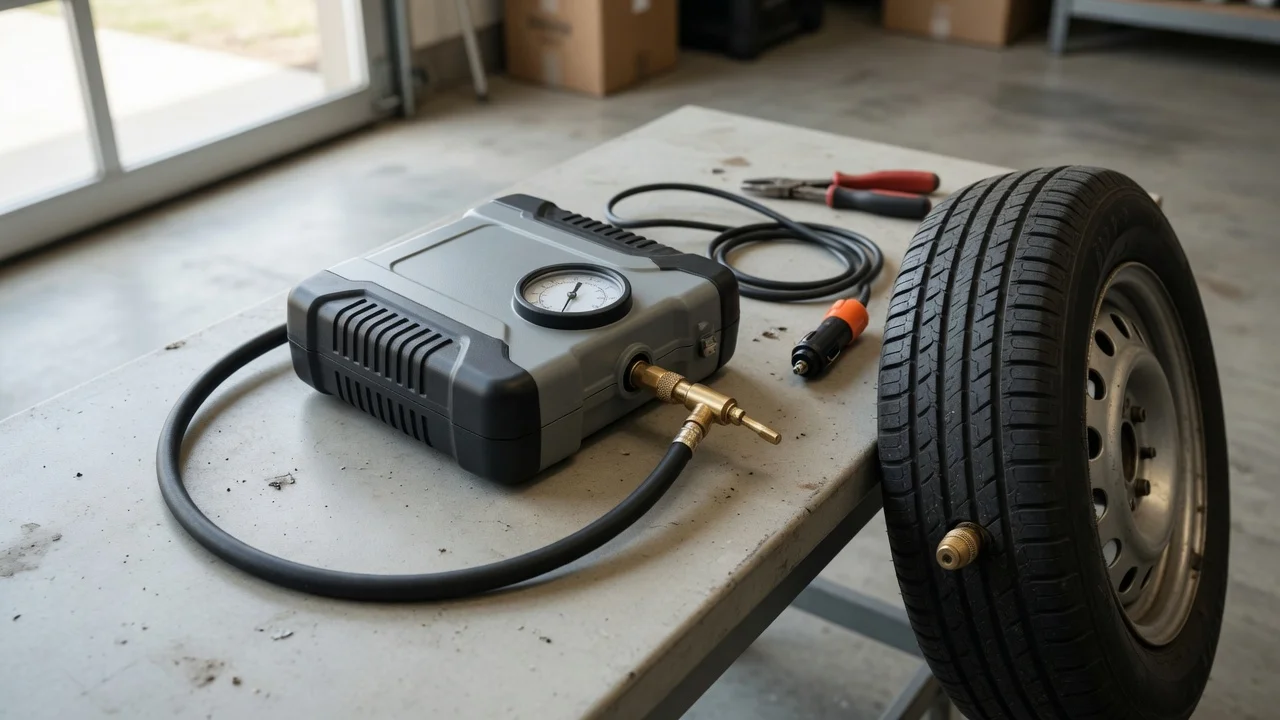
The right Harbor Freight tire inflator depends mostly on how you will power it and what tires you need to fill. For routine top-ups on a passenger car, a portable unit is usually the practical choice. That means either one that plugs into the vehicle's 12-volt accessory socket or a cordless model that runs on a rechargeable tool battery. Look for one that can be set to a target pressure and shuts off automatically. If you already own a shop air compressor, an inflator attachment with a built-in gauge may be all you need, because the compressor supplies the air. Larger light-truck tires, frequent use or roadside emergencies change the answer, as explained below.
This guide covers the decision factors only. No current prices, model numbers, specifications or test results were available for it. Check those details on the product listing or in store before you buy.
Understand the main inflator types
12-volt plug-in inflators: these draw power from the vehicle's accessory socket, so they work wherever the car is. Cord length and the socket's power limit both matter. Cordless inflators: these run on a removable rechargeable battery and need no cord or running engine. They are convenient for garage use and for bikes or sports equipment, but the battery must be kept charged. Air-compressor inflator attachments: these connect to a separate shop compressor by hose. They do not make air themselves. Their job is to control and measure the fill.
What to check before you buy
Your tires' required pressure
Find the recommended cold tire pressure on the placard in the driver's door jamb or in the owner's manual. Do not use the maximum pressure molded into the tire sidewall. That figure is a limit, not a target. Make sure the inflator's rated maximum pressure comfortably exceeds your target, especially for light-truck tires, which often run higher pressures than passenger-car tires.
Tire size and fill speed
Large truck, SUV and off-road tires hold far more air than compact-car tires. A small inflator that handles a quick top-up on a sedan may take much longer to refill a large tire from low pressure, such as after airing down for off-road driving. Fill speed figures vary in how they are measured. Compare them only when they use the same units and test conditions.
Duty cycle
Duty cycle is how long a compressor can run before it must cool down, often stated as minutes on and minutes off or as a percentage. It matters if you plan to fill several tires in one session or inflate large tires. Check whether the product listing states a duty cycle. If it does not, treat the inflator as suited to short top-ups.
Gauge, presets and automatic shutoff
A digital display with a preset pressure and automatic shutoff reduces the risk of over- or under-filling. Built-in gauges can drift, so it is sensible to confirm the result with a separate tire pressure gauge you trust, at least the first few times you use a new inflator.
Valve and accessory compatibility
Cars and trucks use Schrader valves, and nearly every automotive inflator fits them. If you also want to inflate bicycle tires with Presta valves, balls or inflatables, check which nozzle adapters are included. Also check whether the chuck clamps on or screws on. Screw-on chucks hold securely but can let a little air escape when you remove them.
Power source practicalities
12-volt models: confirm the power cord and air hose together reach all four tires on your vehicle. Some manufacturers advise running the engine during use to avoid draining the vehicle battery, so check the instructions. Cordless models: confirm whether the battery and charger are included or sold separately. If you already own batteries from the same tool platform, the bare tool may be the better value. If not, the battery and charger can add substantially to the cost. Compressor attachments: confirm that the fitting matches your compressor's coupler type and that the compressor can deliver the pressure you need.
Total cost and price comparisons
When comparing prices, note the date, the currency and exactly what is included, such as the battery, charger, adapters and carrying case. Retail tool prices can vary between regular shelf prices, promotional or coupon prices, and membership pricing. Treat a remembered or advertised price as a starting point, not a guarantee. Also review the warranty terms and return policy for the specific item, since these can differ by product and change over time.
Matching the inflator to your use
Occasional top-ups on a car or small SUV: a 12-volt or cordless portable inflator with a preset and auto shutoff is usually sufficient. Keeping an inflator in the vehicle for emergencies: a 12-volt model avoids relying on a charged battery. Store it with any adapters it needs. An inflator is not a substitute for repairing or replacing a damaged tire. Large light-truck tires or airing back up after off-roading: prioritize a higher pressure rating, a stated duty cycle and stronger fill performance over compact size. Home garage with an existing air compressor: an inflator attachment with an accurate gauge may meet your needs without buying a second compressor. Already invested in a cordless tool battery platform: a bare cordless inflator on that platform is often the most convenient option.
Information gaps to resolve
This guide does not include current model names, prices, rated pressures, fill rates, duty cycles or independent test results for Harbor Freight's inflators, because none were supplied. Before you commit, compare those figures on the current product listings for the specific models you are considering. Confirm that they use the same units and measurement conditions, and check them against your vehicle's door-jamb pressure specification and tire size.