Choosing an OBD2 Scanner at Harbor Freight
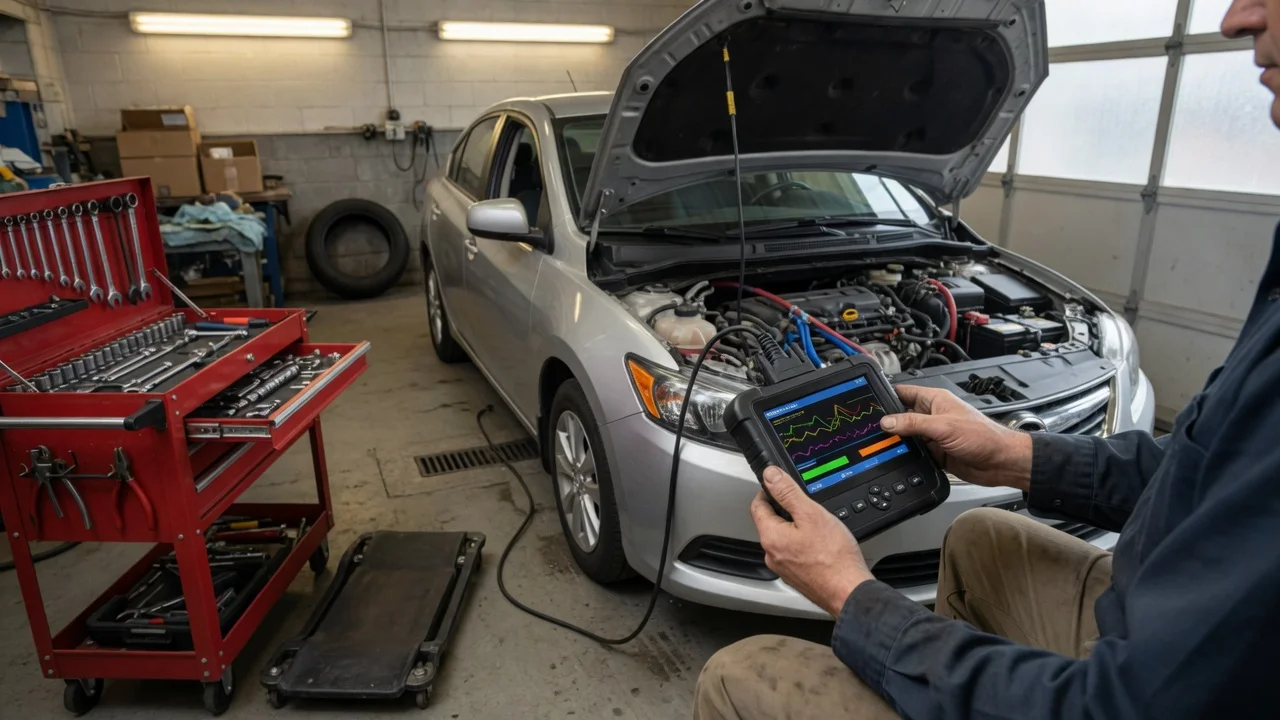
The essential answer
A Harbor Freight OBD2 scanner can be a reasonable low-cost choice for reading basic engine fault codes, viewing a limited set of live data, and clearing a check engine light. The qualification that materially changes the answer is coverage depth: these tools are entry-level code readers or simple scan tools, not professional bidirectional diagnostic platforms. If your goal is to identify a common emissions-related fault on a 1996-or-newer gasoline vehicle, the right Harbor Freight unit can do the job. If you need active tests, module coding, advanced manufacturer data, or coverage beyond engine and basic emissions systems, a more capable scanner from another category is likely required.
What an OBD2 scanner at Harbor Freight can realistically do
OBD2, or on-board diagnostics generation two, is the standardized diagnostic system found on gasoline vehicles sold in the United States from the 1996 model year onward. A basic scanner connects to the vehicle's data link connector and communicates with the engine control module using the OBD2 protocol. The most dependable capability in this price range is reading and clearing diagnostic trouble codes, often abbreviated DTCs. These are the standardized codes that turn on the check engine light when the vehicle's monitoring system detects a fault.
Because the OBD2 standard is shared across mainstream vehicles, a basic scanner does not need proprietary software to retrieve common powertrain codes. The same code reader can usually query emissions monitors, show whether the monitors are ready for an inspection, and display a modest selection of live engine data such as coolant temperature, engine speed, and short-term or long-term fuel trim. These are the functions that matter most for a quick diagnosis of a typical check engine light.
How to compare the available options
When choosing between Harbor Freight OBD2 scanners, compare the options on shared decision criteria rather than focusing only on the display size or carrying case. The most important comparison points are code coverage, live-data capability, supported protocol set, update method, and screen readability.
Code coverage — confirm whether the unit reads generic powertrain codes only or also supports a broader set of manufacturer-specific codes; broader coverage typically costs more and is not guaranteed across all makes. Live data — check whether the scanner shows numeric live values or only reads and clears codes; live data is useful for confirming whether a sensor is responding. Protocol support — most basic tools cover the common OBD2 protocols, but a vehicle owner should still verify compatibility with the specific model year. Update method — some inexpensive scanners have no practical update path, which can leave gaps on newer vehicles. Screen and controls — a backlit display and simple button layout matter when using the tool under the dash or in low light.
The decision should follow the actual repair need. For an owner who wants an inexpensive way to see why the check engine light came on and then confirm that the fault is cleared, a basic code reader is the preferable option. For a DIY owner who plans to watch live sensor values while testing components, a unit with live-data display is worth the extra cost. For advanced diagnostics, programming, or coverage of systems such as ABS, airbags, transmission modules, or body controllers, a Harbor Freight code reader is not the right tool and a more advanced scan tool should be considered.
Specification cautions and material gaps
Exact model names, prices, and technical specifications at Harbor Freight change by season, store, and region, so claims about a specific current model require checking the advertised specification at the time of purchase. The guidance above is based on what entry-level OBD2 scan tools as a category can support, not on benchmark tests of a particular stock-keeping unit. If a precise comparison between two current models is required, the advertised protocol list, code library description, return policy, and update availability should be confirmed directly for each unit because those details materially affect everyday usefulness.