Haldex Coupling on the Freelander 2: Identifying Your Unit
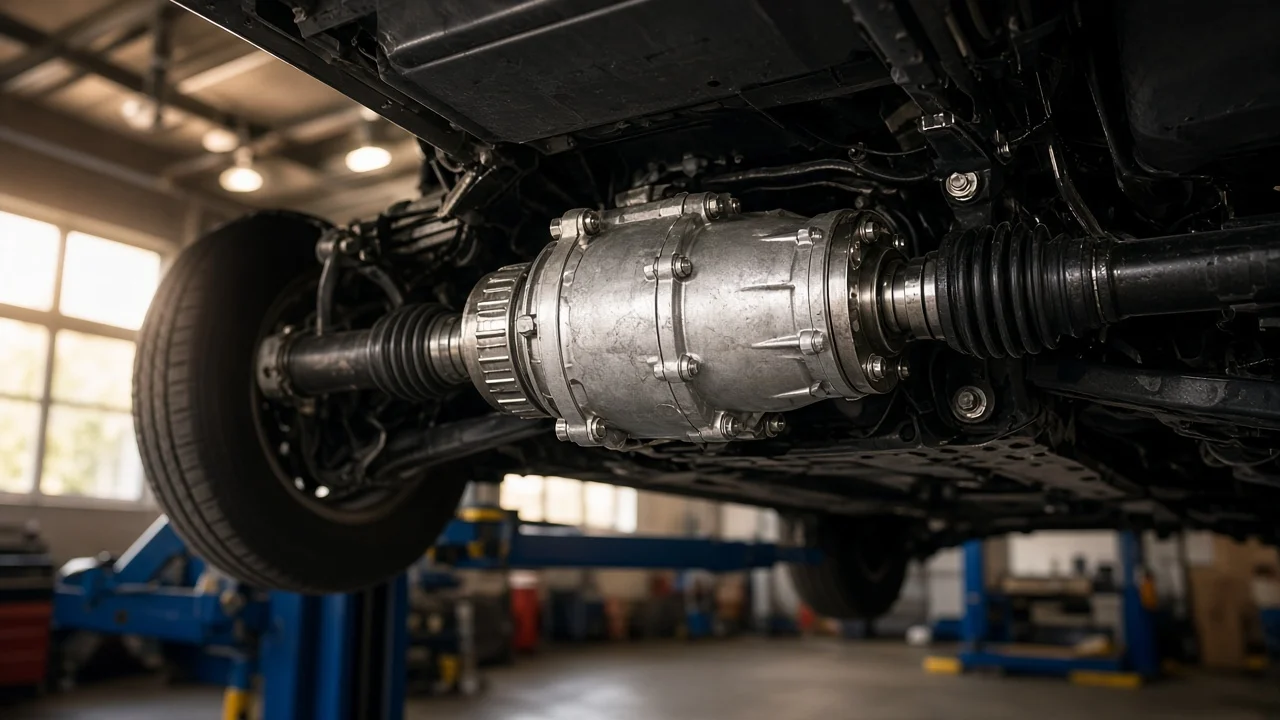
The Haldex coupling is the part of the Freelander 2 driveline that decides how much torque reaches the rear wheels. The model, sold as the LR2 in North America, uses this electronically controlled clutch on its all-wheel-drive versions. Parts and service details can still differ by model year and build. Before you order a pump, controller or fluid, confirm which unit your vehicle carries and whether the coupling is really at fault.
The Short Answer: What the Freelander 2 Uses
Most all-wheel-drive Freelander 2 and LR2 models use a Haldex coupling that is widely described as a fourth-generation design. It is built into the rear drive unit, just ahead of the rear differential, at the end of the propshaft. It works with the power transfer unit at the front of the car to send drive rearward when needed. For buying parts, the generation label is only a starting point. Fitment depends on the exact part installed, so use the vehicle identification number, model year, engine, transmission type and the markings on the rear drive unit together. Two-wheel-drive versions, such as the eD4 offered in some markets later in production, have no rear drive unit and no Haldex coupling.
To check whether your car has one, look underneath at the rear axle area. On all-wheel-drive cars you will see the propshaft running back to a housing in front of the rear differential. An electric pump, a small control module and a wiring connector are mounted on that housing. That assembly is the coupling. Any identification label or part number stamped on it is more reliable than a generic listing that only names the model.
How the Coupling Works
Inside the coupling is a wet multi-plate clutch between the propshaft and the rear differential input. An electric pump builds hydraulic pressure, and the control module decides how hard the clutch plates are clamped. When the plates are released, the car drives mainly through the front wheels. As clamping force rises, more torque goes to the rear axle. The module adjusts this using information shared over the vehicle network, such as wheel speeds, throttle input, steering and the selected Terrain Response mode. If the pump cannot build pressure, the vehicle usually behaves like a front-wheel-drive car and may show a four-wheel-drive warning.
The coupling has its own fluid compartment, separate from the rear differential oil, and its own fluid specification. Old or contaminated coupling fluid is often linked to pump problems, because sludge and wear debris can restrict the pump and affect clutch behavior. Do not mix up or substitute the coupling fluid and the differential oil. The correct product and quantity for your build should come from vehicle-specific service information.
What Changes the Answer
Production period matters. Over the model's life, pumps, controllers and software were revised, and original part numbers were superseded. Two cars that look identical may therefore take different replacement parts. Drivetrain configuration matters too. The rear drive unit must be correct for the front power transfer unit and the rest of the driveline, so a complete used unit should be matched by part number, not by appearance or by the generation name alone. Haldex couplings of a similar generation were used by other manufacturers, but mounting, wiring and calibration are not automatically interchangeable.
The symptom itself also changes the answer. A four-wheel-drive warning, front-wheel spin on slippery surfaces or no drive at the rear axle can all point toward the coupling. The same signs can also come from a wheel speed sensor, low battery voltage, wiring faults or a network communication problem, so a symptom does not confirm a failed part. Keep the coupling separate from the gearbox in your diagnosis. Harsh, delayed or erratic shift behavior is a transmission matter, not a Haldex fault. Clunks, vibration or whining can also involve the propshaft, its support bearing, the rear differential or the power transfer unit.
What the Owner Can Do
Start by recording the vehicle identification number, model year, engine and transmission type. A parts supplier or dealer needs this to confirm fitment. Then review the service history. Look for any coupling fluid changes, pump or controller replacements and earlier rear drive unit work, and note the mileage of each. A car with no record of coupling fluid service tells you something different from one with regular fluid changes and a recent new pump.
Under the car, look for fluid leaks around the coupling and differential and for damaged or corroded wiring at the pump connector. Also check for anything that appears to have struck the housing. Note when the warning or loss of rear drive happens: from cold, after a long drive, only in one Terrain Response mode or at random. Then have the diagnostic codes read with a scan tool that can communicate with the all-wheel-drive control module. A basic engine code reader may show nothing even when the driveline module has stored faults. Bring the codes, your notes and the history to whoever carries out the repair.
Limitations and Next Step
This guide cannot confirm the part number, fluid quantity or software level for your specific vehicle. Those depend on the build and on supersessions that only vehicle-specific catalogs and service information can resolve. The repair options run from a fluid service to replacing the pump, the controller, the coupling or the whole rear drive unit. Which one makes sense depends on a confirmed diagnosis, not on the most common failure reported for the model.
If the codes are unclear, if the fault returns after a pump or fluid service, or if noise or vibration comes with the warning, go to a workshop with dealer-level diagnostics for Land Rover. They can test pump operation, read live data from the coupling module and check that any replacement unit is correctly matched and configured. A car with a coupling fault usually still drives in front-wheel drive. Even so, leaks, unusual noises or vibration should be inspected promptly rather than left until the next service.