What Is a Haldex Coupling and How Does It Work?
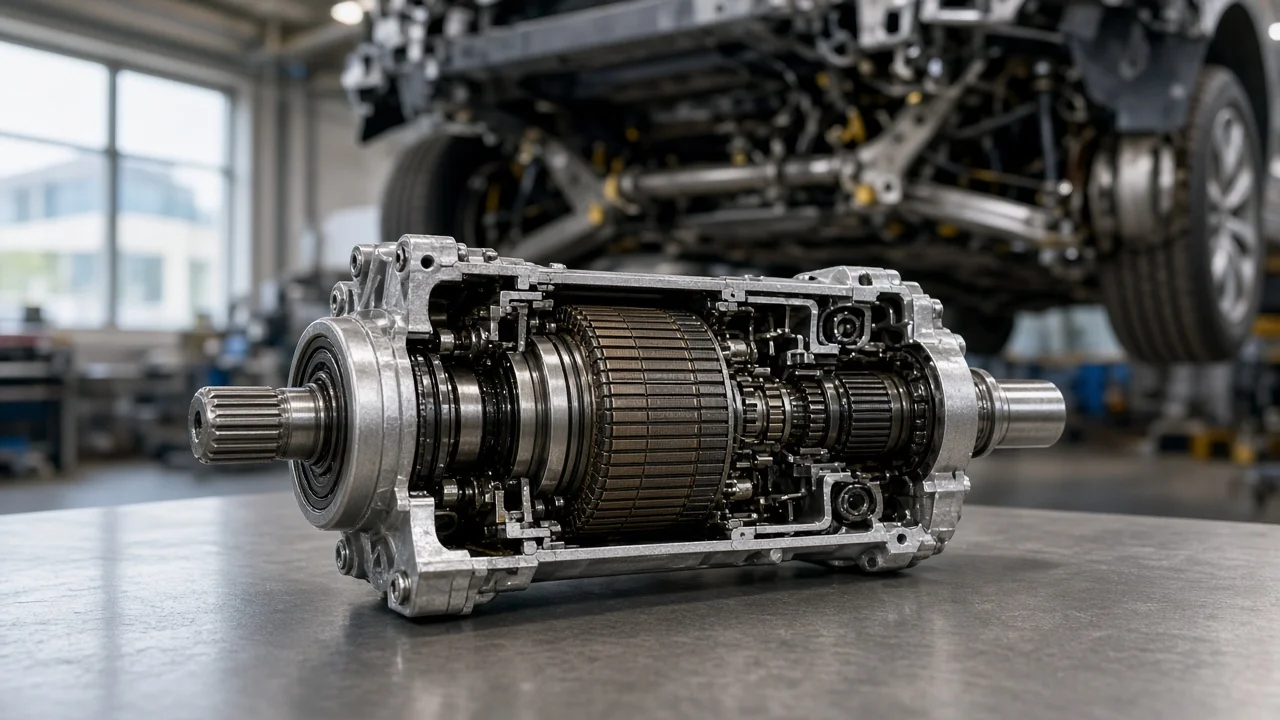
If your all-wheel-drive car has a transversely mounted engine, its rear axle may be engaged by a Haldex coupling rather than a full-time center differential. Knowing what this unit does helps you understand its service needs, warning messages and traction complaints. This guide explains what the coupling is, how it decides when to drive the rear wheels, what changes its behavior, and what an owner can reasonably check before paying for repairs.
What a Haldex Coupling Is
A Haldex coupling is an electronically controlled, hydraulically actuated multi-plate clutch that links the front-driven part of an on-demand all-wheel-drive system to the rear axle. It is usually mounted just ahead of the rear differential, at the end of the driveshaft. When the clutch pack is open, the car drives mainly through the front wheels. As the clutch is clamped, an increasing share of torque passes to the rear. The design was developed by the Swedish company Haldex and later continued under BorgWarner. It has been used on many transverse-engine vehicles, including Volkswagen Group models from Volkswagen, Audi, Skoda and SEAT, as well as some Volvo, Saab and Land Rover models. Fitment differs by model, year, engine and market, so not every all-wheel-drive version of a given car uses the same unit.
Two distinctions matter. First, the coupling is not a differential: it allows speed difference between the axles by controlled slipping, not by gearing. Second, it is separate from the gearbox. Whether the car has a manual, a conventional automatic or a dual-clutch transmission, the coupling has its own housing, its own fluid and its own control unit.
How the Coupling Sends Power to the Rear Axle
The driveshaft turns the input side of the coupling, while the output side drives the rear differential. Between them sits a stack of friction and steel plates running in fluid. A hydraulic piston presses this stack together. With little pressure, the plates slip and the rear wheels receive little drive. With more pressure, the plates grip and more torque reaches the rear. A control module decides how much pressure to apply using information shared over the vehicle network, such as wheel speeds, engine torque, throttle position, steering angle and the status of the brake and stability systems.
Early versions generated hydraulic pressure mechanically from the speed difference between the front and rear of the driveline, so they reacted after the front wheels had already begun to slip. Later versions use an electric pump to pressurize the system in advance, which lets the coupling engage before slip occurs, for example when pulling away hard from a stop. The control unit can also reduce clamping force when full engagement would be unhelpful, such as during ABS braking or in tight low-speed turns where locked axles would cause binding.
Generations and Conditions That Change the Behavior
Haldex couplings have gone through several generations since the late 1990s, and the generation fitted to your car changes how it works, how it is serviced and how it is diagnosed. The first three generations were mainly reactive. The fourth generation introduced the electric pre-charge pump and more predictive control. The fifth generation relies more directly on the electric pump to set clamping pressure and dropped some hydraulic components used in earlier designs. Some generations have a replaceable filter and others do not, and fluid specification and fill procedure can differ between them. Software calibration also varies by manufacturer and model, so two cars with similar hardware may distribute torque differently.
Operating conditions matter as well. Tires with mismatched rolling circumference, from uneven wear, different brands or a temporary spare, make the front and rear turn at slightly different speeds, which the coupling must constantly accommodate. This can add heat and stress and may trigger fault messages. Selectable drive modes, towing with one axle on the ground and running the car on a two-wheel dynamometer can all interact with the system, and the owner's manual or service information should be followed for each case.
What Owners Can Check and Do
Start by identifying exactly what you have. The VIN, the owner's manual and the service history together tell a shop the model year, the coupling generation and the transmission type, which determine the correct parts, fluid specification and procedure. Coupling fluid is not the same as engine oil, automatic transmission fluid or dual-clutch gearbox fluid, and using the wrong product can cause problems. Many owners are unaware the coupling needs fluid service at all, so a car with incomplete records may be due for inspection.
Typical signs that warrant a check include an all-wheel-drive warning message, the car behaving like front-wheel drive on snow or wet grass, binding or clunking in tight turns, and unusual noise from the rear of the car. Harsh or slipping gear changes are a matter of shift behavior and point toward the transmission rather than the coupling. A generic OBD-II reader may show only engine codes, so use a scan tool that can communicate with the all-wheel-drive control module to read its diagnostic codes and, where supported, live data such as pump activation. A code identifies a circuit or condition, not a confirmed failed part.
Repair options range from a fluid and filter service or cleaning a restricted pump intake, through replacing the pump, wiring or control module, to overhauling or replacing the coupling itself. Contaminated fluid restricting the pump is a frequently reported cause on some generations, but the same symptoms can come from wheel speed sensors, connectors, mismatched tires or the rear differential. Diagnosis should come before buying parts.
Limitations and When to Get Professional Help
This explanation is general. Service intervals, fluid quantities, filling procedures, which may require a scan tool or a specific vehicle position, and diagnostic routines are defined by the manufacturer for each VIN, and they change between generations and model years. Seek professional help if a warning message persists, if you hear grinding or clunking from the rear, or if stored codes point to the pump, pressure or control module. A useful next step is to gather your VIN, service records and any stored codes, then take the car to a shop experienced with that brand's all-wheel-drive systems so the fault can be confirmed before repair options are chosen.