How to Choose a Graco Click Connect Car Seat Base
If you are shopping for a Graco Click Connect car seat base, usually as a second base for another vehicle or as a replacement, the most important point is that the base must be approved for your specific Graco infant car seat. Matching "Click Connect" branding alone does not guarantee that. The infant seat's manual and labels list which bases it may be used with, and that list is what decides compatibility. After that, choose based on how the base installs in your vehicle, the features that make a correct installation easier, and the base's condition and expiration date.
The short answer
Buy a base that your infant seat's manufacturer instructions name as compatible, that has a clear expiration date well in the future, and that fits securely in the seating position you plan to use. A new base bought from a reliable retailer is the safest choice. A used base is only reasonable if you know its full history. If you cannot confirm compatibility from the infant seat's manual or labels, contact Graco with your seat's model number and manufacture date before you buy.
What Click Connect means, and what it does not
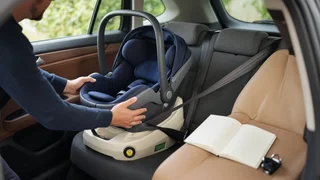
Click Connect is Graco's name for the attachment system that lets a compatible infant carrier click into a car seat base or a compatible stroller. The base stays installed in the vehicle and the carrier lifts in and out. That convenience is the reason many families buy an extra base for a second car.
Graco has sold several infant seat lines and base designs over the years. Some bases work with more than one seat line, and some do not. Bases can also differ in their weight ratings, installation features and recline settings. For that reason, treat the Click Connect name as a starting point and confirm the exact pairing in the infant seat's instructions.
What to check before you buy
1) Compatibility with your infant seat
Find the model number and date of manufacture on the label of your infant carrier, which is usually on the underside or back of the shell. Then check the manual for its list of approved bases. Compare that list against the model number of the base you are considering, not just the product name in a listing. If the manual and a retail listing disagree, follow the manual.
2) Weight and height limits
A base may have a different rated range from the carrier, and the lower of the two limits applies to the combination. Check the limits printed on both labels. Also check the base's limit for installing with the lower anchors, which is separate from the overall rating. That limit often depends on the combined weight of the child and the seat. Once it is exceeded, the instructions will tell you to install the base with the vehicle seat belt instead.
3) Expiration date and manufacture date
Car seats and bases have a useful life set by the manufacturer, because plastics and other components degrade over time. Look for the expiration date or useful-life statement on the base itself, which may differ from the date on your carrier. When you buy a second base for a carrier you already own, a base that expires well before the carrier does will need replacing sooner.
4) Condition and history, especially for used bases
A base that has been in a crash may need to be replaced even if it looks undamaged, depending on the manufacturer's crash-replacement guidance. With a secondhand base, you usually cannot verify its history. Before considering one, confirm all of the following:
The seller can state that the base has never been in a crash. The labels with the model number, manufacture date and expiration are present and readable. The base has no cracks, stress marks, missing parts or frayed lower anchor straps. The base is not subject to an unresolved recall. The instructions are available, either the printed manual or a confirmed digital copy for that exact model.
If any of these points is uncertain, a new base is the better purchase.
5) Recall status and registration
Check the base's model number and manufacture date against current recall information before buying, whether the base is new or used. After purchase, register the base with the manufacturer so you are notified about any future recall. A second base needs its own registration even if you have already registered the carrier.
6) Fit in your vehicle
A compatible base can still fit poorly in a particular vehicle. Steeply sloped seat cushions, firm side bolsters, a raised center hump, buckle positions and limited space behind the front seat can all affect fit. Before relying on a base, make sure of the following:
The seating position you plan to use has lower anchors, or a seat belt that can be locked, if you intend to use the belt. The vehicle owner's manual permits a child restraint in that position. Some center seats do not allow lower anchor use, or do not allow borrowing anchors from the outboard positions. The base can reach the recline angle shown on its indicator for your child's size. The carrier, once clicked in, leaves the front seat clearance that both the vehicle and seat instructions require. If the base has a load leg, the floor beneath it is suitable. Some vehicles have under-floor storage compartments where the manufacturer advises against using a load leg.
Some retailers let you test-fit a floor model. If that is not possible, buy where returns are straightforward in case the base will not install securely.
Choosing between base types
Graco has offered bases that differ mainly in how they help you get a tight, correctly angled installation. Exact features vary by model and year, so check the specific base. The broad trade-offs look like this:
Base style | What it adds | Best suited to; Standard base | Lower anchor connectors, a seat belt path and a recline adjustment | Budget-conscious buyers who are comfortable tightening a belt or anchor strap and locking a seat belt correctly; Base with built-in belt lock-off (for example, SnugLock-style designs) | A clamp or panel that holds the vehicle belt tight, so you depend less on the vehicle's belt locking mechanism | Vehicles without convenient lower anchors, center seating positions, and anyone who finds belt installs hard to get tight; Base with load leg or other anti-rotation feature | A leg that braces against the vehicle floor to limit forward rotation in a crash | Parents who want the added feature and have a vehicle floor that the instructions say is compatible
If you mostly move the carrier between two similar vehicles, choosing the same base model for both keeps the routine consistent. If one vehicle has an awkward seat or no usable lower anchors in your preferred position, a base with a belt lock-off is often worth the higher cost for that car.
Installing the base correctly
A correct restraint installation matters more than which base you buy. Read both the base's instructions and the child restraint section of your vehicle owner's manual first. Then follow these steps:
Choose the seating position and confirm that the vehicle permits a rear-facing child restraint there. Set the base's recline adjustment so the level indicator shows the correct range for your child's weight, with the vehicle parked on level ground. Choose one installation method, either lower anchors or the vehicle seat belt. Do not use both at the same time unless the base's instructions specifically allow it. For lower anchors, attach both connectors to the vehicle anchors, then press down firmly on the base while pulling the strap tight. For a seat belt installation, route the belt through the rear-facing belt path marked on the base. Buckle it, then lock it using the base's lock-off or the vehicle's locking retractor, as the instructions direct. Remove slack while pressing down on the base. If the base has a load leg, extend it until it rests firmly on the floor and its indicator confirms correct contact. Check the installation: holding the base at the belt path, it should not move more than the amount the instructions allow, usually described as about an inch side to side or front to back. Click the carrier in, then pull up on it to confirm it is latched. Recheck the level indicator with the carrier attached.
Rear-facing infant bases in the US generally do not use a top tether, and you should not improvise one. Use a tether only if the base's manufacturer instructions describe it.
Harness fit is part of the system
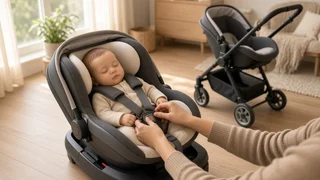
The base secures the carrier, but the carrier's harness secures your child. Every time you use the seat, check that the harness straps come from at or below your child's shoulders for rear-facing use. Make sure the chest clip sits at armpit level, and that you cannot pinch a horizontal fold of strap at the collarbone. Bulky coats under the harness can create hidden slack, so place blankets over the buckled harness instead.
When to get help
Stop and get help if the base will not tighten to within the allowed movement, if you cannot reach the correct recline angle, if your vehicle's belts or anchors behave differently from what the instructions describe, or if you are unsure whether a seating position is permitted. A certified child passenger safety technician can check your installation in person and show you how to repeat it. Many communities offer these checks through hospitals, fire departments or local safety programs.
Is an extra base worth buying?
Many Graco infant seats can also be installed without a base using the vehicle seat belt, which suits occasional rides, taxis or travel. Check whether your carrier allows this and how the belt must be routed. A second base makes most sense when the carrier regularly rides in more than one vehicle, because a base left installed and checked in each car avoids rushed reinstallations, which are a common source of errors. If the second vehicle is used only rarely, a properly done baseless installation may be enough.
Pre-purchase checklist
The base model is listed as compatible in your infant seat's instructions. The base's weight and height limits, including its lower anchor limit, cover your child's expected growth. The expiration date suits how long you will need the base. The base has no crash history, recall issues or missing labels and parts. The base type suits your vehicle's anchors, belts, seat shape and floor. You can return it if it will not install securely. You will register the base and keep its instructions with it.