Choose a Graco Click Connect 30 car seat base

The short answer
A Graco Click Connect 30 base is worth buying if you already own, or plan to buy, a Graco infant car seat that the manufacturer lists as compatible with that base, and if the base installs securely in your specific vehicle. Two conditions change the answer. First, compatibility is set by Graco, not by the shared Click Connect name, so confirm it in the infant seat's manual or on its labels before buying. Second, a base you cannot install tightly at the correct angle in your vehicle is not suitable, however well it suits the seat.
Some details could not be confirmed for this guide: current prices, exact weight and height limits, expiration periods, and an official list of compatible seat models. Each section below notes where you need to check the product labels, the manual or the retailer.
What the base does and why people buy a second one
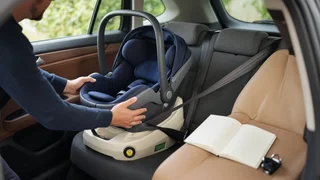
An infant car seat base is installed in the vehicle and stays there. The rear-facing infant seat, sometimes called the carrier, clicks onto the base and lifts off, so you can carry the baby without reinstalling the seat each trip. Click Connect is the name Graco uses for the attachment system between its compatible infant seats and their bases.
Most people looking at a standalone base already have the infant seat, which usually comes with one base. An extra base lets a second vehicle carry the same infant seat without reinstalling a base each time. Whether that is worth it depends on how often the seat moves between vehicles and how confident each driver is about reinstalling a base correctly.
What to check before you buy
Compatibility with your infant seat
Find the model name and model number on your infant seat's label, then check its manual for the bases approved for use with it. Do not assume that any base with Click Connect branding fits any Graco infant seat. Also note that the number in a seat's name does not, on its own, confirm compatibility. If the manual and the retailer's listing disagree, or the listing does not name your seat, contact Graco with your seat's model number and date of manufacture before buying.
Fit in your vehicle
Fit depends on the vehicle's model year, body style and seating position. Before buying, read the child restraint section of your vehicle owner's manual. Check which seating positions have lower anchors, whether the center seat can be used with lower anchors or only with the seat belt, and whether any position is off-limits for a child restraint. Seat cushion slope, the buckle's position and how the seat belt locks can all affect whether a base installs tightly and at the right angle.
Front-to-back space also matters. A rear-facing infant seat on its base takes up room behind the front seat, so check the space available in the position you plan to use, particularly in smaller vehicles.
Installation method
Infant bases are generally installed with either the vehicle's lower anchors or its seat belt. In the US, the lower anchor system is called LATCH, which stands for Lower Anchors and Tethers for Children. Infant bases are usually installed with the lower anchors or the seat belt, not both at once, unless the manual says otherwise. Lower anchors have a weight limit that counts the child and the restraint together. Check the base's labels and manual for that limit and for when to switch to a seat belt installation. If a vehicle has no usable lower anchors in the position you need, confirm the base supports a seat belt installation and that the instructions for it are clear to you.
Condition, age and history
This check matters most when buying used or open-box. Car seats and bases carry a manufacture date and usually an expiration date or a stated useful life. Find both on the labels or in the manual, and avoid a base that is expired or close to it. Do not use a base that has been in a crash, has missing or unreadable labels, or comes without instructions you can verify, unless the manufacturer confirms it is still usable. A private seller's history usually cannot be verified. That makes a used base a higher-risk purchase than a new one, even when it looks fine.
Recalls and registration
Using the model number and manufacture date from the label, check the manufacturer and the US National Highway Traffic Safety Administration for any recall affecting that base. After buying, register the base with the manufacturer so you are notified of future recalls. A used base whose model number or date you cannot read cannot be checked this way.
Price and total cost
No confirmed pricing was available for this guide. When comparing listings, note the retailer, the date, whether the price is advertised or what someone actually paid, and whether shipping and tax are included. Compare the cost of an extra base against your alternatives. For a vehicle used only occasionally, installing the infant seat without a base may be an option if the seat's manual permits it. If several drivers will use the base, a session with a car seat technician may be worth adding to the cost.
How to choose and confirm the right base
1) Record your infant seat's model name, model number and date of manufacture from its label. 2) Check the infant seat's manual for the bases approved for it, and confirm the base you are considering is one of them. 3) Read your vehicle owner's manual to find the positions with lower anchors and any restrictions on child restraints. 4) Decide whether you will install with lower anchors or the seat belt, and confirm the base's instructions cover that method in your seating position. 5) For a used or open-box base, check the manufacture date, expiration, labels and recall status before paying. 6) Install the base following the base manual and the vehicle manual together. Then adjust the recline until the angle indicator shows the correct range for your child. 7) Check tightness at the belt path. Widely used US guidance is that the base should not move more than about an inch side to side or front to back when pulled there. Confirm the test described in the manual. 8) Click the infant seat onto the base, check that it is locked by pulling up on the handle area as the manual describes, and confirm it releases correctly.
The installation is finished when the angle indicator reads in range, the base passes the movement check at the belt path, the infant seat latches and releases as the manual describes, and nothing in either manual's warnings applies to your seating position.
When to stop and get help
Stop and get help if any of these apply: the base will not tighten enough to pass the movement check, the recline indicator will not reach the correct range, the base and vehicle manuals conflict, the infant seat does not latch firmly, or you cannot confirm the base is compatible, unexpired and free of recalls. A certified Child Passenger Safety Technician can check the installation in your vehicle, and Graco's customer support can answer compatibility questions using your model numbers. Do not use a seat or base you cannot install correctly.