Glow Plug Relay Repair: Diagnosis, Options and Verification
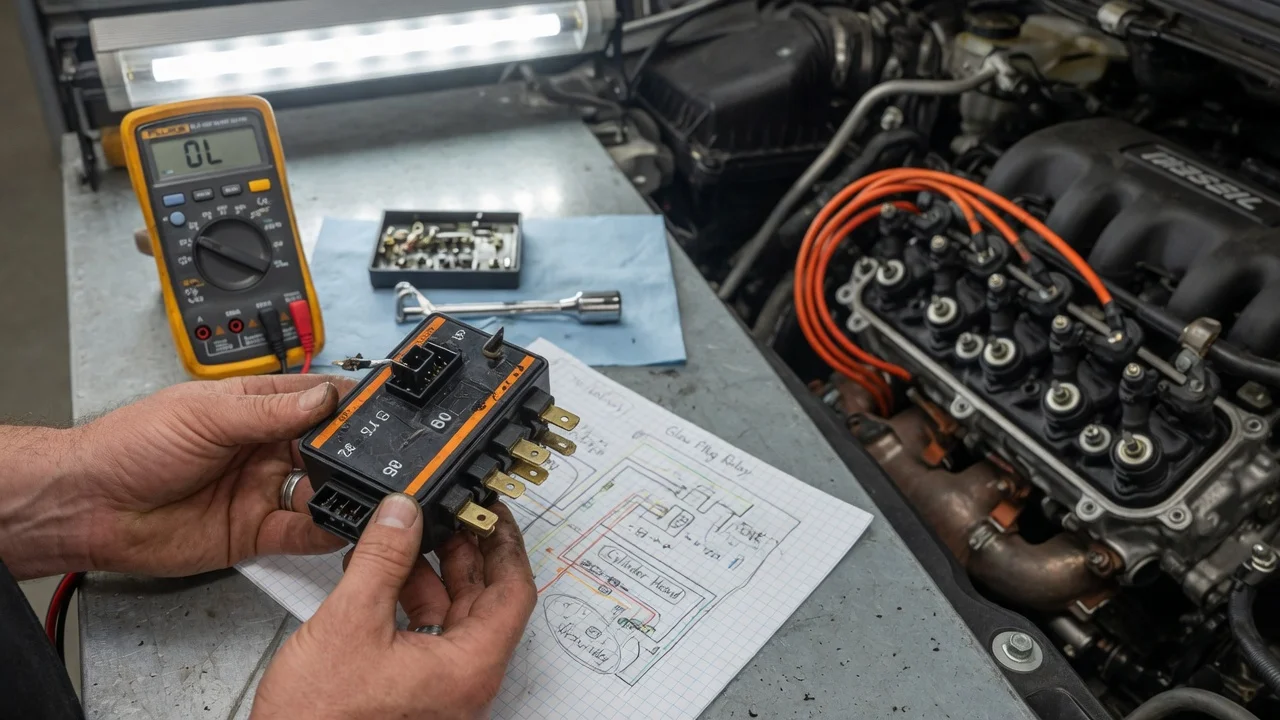
A glow plug relay switches the heavy current that preheats a diesel engine's combustion chambers before and after a cold start. When it fails, the engine may crank for a long time, smoke white or refuse to start in cold weather. Weak batteries, worn glow plugs and fuel supply problems cause the same symptoms, so repair the relay only after testing points to it. This guide covers confirmation, scope, repair choices and verification.
Confirm the fault before repair
Start with the symptom pattern. A failed relay typically affects cold starts far more than warm ones. Expect long cranking below freezing, heavy white smoke and rough running for the first minute. The glow indicator may stay on, flash or never light. Many diesel vehicles also store a code. Generic code P0380 points to the glow plug heater circuit and P0670 to the glow plug module control circuit. On systems with per-plug monitoring, P0671 through P0678 identify individual cylinder circuits. A code names a circuit, not a part, so treat it as the starting point for measurement.
The deciding evidence is electrical. With the key on and the engine cold, check the control side first: the engine computer or timer must command the relay, and a scan tool can often display this as a glow command. Then check the power side by measuring voltage at the glow plug feed during the preheat cycle and comparing it with battery voltage. If the command is present but there is no output, or there is a large voltage drop across the relay, the relay is the likely fault. A missing command points upstream. If output is present but current is low on a DC amp clamp, suspect the plugs or their wiring rather than the relay.
Rule out look-alike causes. Slow cranking from a weak battery or poor ground produces the same hard start. Several fuel problems also mimic preheat failure: waxed or gelled diesel, a restricted fuel filter, air entering the supply side, a weak fuel pump, low fuel pressure on a common-rail system, or injectors with excessive leak-back. Any of these can lengthen cranking. A scan tool can compare desired and actual rail pressure during cranking, which separates fuel faults from a glow fault without opening any lines. Anti-gel additives may help prevent waxing in fresh fuel. They are not a proven fix for an existing restriction or for any glow circuit fault.
Define the repair scope
Identify which preheat design the vehicle uses before buying parts. Older diesels often use a simple relay, sometimes with a separate timer, that powers all plugs through one bus bar. Newer engines commonly use a glow plug control module that pulses current to each plug and monitors every circuit. It also keeps the plugs energized after start to reduce smoke and noise. Engine configuration matters as well. A four-cylinder and a V8 diesel route their feeds differently, and some layouts split the plugs between banks or modules. Model year, engine code and calibration can change the correct part even within one model line, so match the part by vehicle identification rather than by appearance.
Next, establish how far the damage extends. A relay rarely fails without a cause. A shorted glow plug, chafed harness or corroded connector can overload the contacts, and replacing the relay without finding that cause invites a repeat failure. Inspect the main feed, the fusible link or high-current fuse, and the ground connections. Check connector pins for heat discoloration and examine the plug terminals. Record the resistance or current of each plug so the repair covers every damaged component, not just the one that stopped working first.
Compare repair options
True adjustment rarely applies here, because the relay timer or engine software sets preheat timing. If a manufacturer has released updated preheat calibration, installing it is a dealer or specialist software task. Component repair suits damage outside the relay itself. Examples include cleaning and re-terminating corroded connectors, replacing a melted terminal, repairing a chafed feed wire, or replacing a blown high-current fuse once the short is found. These fixes are inexpensive, but they leave the condition of the relay's internal contacts unknown, so testing after the repair still matters.
Replacement is the normal answer for a confirmed failed relay or module, because most units are sealed and not designed to be opened. A simple relay is usually a plug-in or bolt-on swap. Some control modules require coding, initialization or fault clearing with a capable scan tool after installation. Use a specialist when the module needs programming, when seized glow plugs must come out of an aluminum cylinder head, or when a plug tip has broken off inside the head. A forced extraction that goes wrong can mean removing the head, which costs far more than the relay. Avoid permanent jumper bypasses. Holding the plugs on continuously can overheat them, swell their tips and damage the engine or harness.
Requirements and limits
Basic relay replacement needs a digital multimeter, a DC amp clamp rated for the circuit, hand tools, insulated terminal tools and the factory wiring diagram for the vehicle. Service information matters because relay location, connector pinout, fuse rating and expected plug resistance or current vary by engine. A scan tool that reads glow command, glow status and fuel rail pressure turns guesswork into measurement. Without the wiring diagram and specifications, there is nothing reliable to compare your readings against.
Safety limits are firm. The preheat circuit carries high current, so disconnect the battery before unplugging or unbolting the relay, and keep metal tools away from the bus bar and feed terminals. Glow plugs reach extreme temperatures within seconds, so let them cool before touching or removing them. Fuel system pressure is a separate hazard. Common-rail diesel systems hold very high pressure, and a leak can inject fuel through skin. Do not loosen high-pressure lines or injectors to bleed or test the system. Leave any leak check on the high-pressure side to a technician with the correct equipment and procedure. If the job extends to plug extraction, module coding or injector diagnosis, hand it to a diesel specialist.
Verify the outcome
Clear stored codes, then let the engine cold-soak, ideally overnight, before judging the repair. On the next cold start, confirm that the glow indicator behaves normally and that the scan tool shows the preheat command. Voltage at the plug feed should be close to battery voltage while preheat is active. Measure total circuit current, or per-plug current where accessible, and compare it with the readings recorded before the repair. Over several cold starts, confirm that no codes return and that the engine starts promptly with only brief white smoke.
Document the codes found, the measurements before and after, the part number installed and any coding or initialization performed. That record speeds up future diagnosis and supports a warranty claim if the new part fails early. If hard starting continues while the preheat circuit works, move on to other causes instead of replacing more electrical parts. Check the battery and cranking speed, then the fuel filter and supply side for restriction or air. Next, check fuel pump output, rail pressure during cranking and injector leak-back, followed by a compression test. Persistent faults involving high-pressure fuel components or internal engine wear call for professional diesel diagnosis.