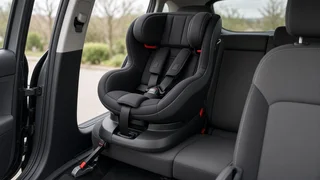
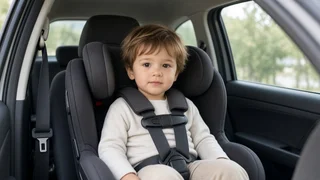
Forward-Facing Car Seat Harness Strap Placement
The Short Answer
In a forward-facing car seat, the harness straps should come out of the seat back at or just above the child's shoulders. This is the opposite of rear-facing, where the straps should be at or just below the shoulders. If you have just turned a convertible seat around, check the strap height again, because the slot that was right for rear-facing is often too low for forward-facing.
This general rule applies to forward-facing seats with a built-in five-point harness. It does not cover booster seats, which use the vehicle's own seat belt. Your car seat's instruction manual has the final say. Some seats state which slots or headrest positions are allowed for forward-facing use, and some require particular slots.
Why Strap Height Differs by Direction
In a frontal crash, a forward-facing child's body moves forward into the harness. When the straps start at or slightly above the shoulders, they hold the torso back against the seat and limit how far the child moves forward and down.
Straps set well below the shoulders on a forward-facing seat can let the shoulders move forward more and can push down on the spine. In a rear-facing seat the child moves back into the shell instead, which is why the rule is reversed there.
How to Check Strap Placement
Seat the child fully back in the car seat, with their bottom and back against the shell. Look at where each strap comes out of the seat back. It should be level with the top of the shoulder or the next position above it. If the seat has a no-rethread harness, raise or lower the headrest until the straps sit at the right height. If it uses separate slots, rethread the straps through the right slot following the manual. Buckle the harness and tighten it until you cannot pinch any slack in the webbing at the child's collarbone. This is often called the pinch test. Slide the chest clip to armpit level, so it sits across the breastbone and not over the belly or up at the neck. Check that the straps lie flat, without twists, from the shoulder to the buckle.
Related Points That Affect the Answer
Thick coats and bulky clothing can make the harness seem snug when it is not, because the padding compresses in a crash. Many child passenger safety guides recommend buckling children in regular clothing and putting a coat or blanket over the harness.
Strap height is also one of the limits that tells you when a child has outgrown the harness. When the child's shoulders sit above the highest harness position allowed for forward-facing use, they have outgrown it, even if they are still under the weight limit. Height and weight limits, along with any shell-height rule, differ between seat models and are printed on the seat's labels and in its manual.
Installing the seat correctly in the vehicle is a separate step from harnessing the child. Forward-facing harnessed seats are usually installed with either the lower anchors or the vehicle seat belt, plus the top tether. Lower-anchor weight limits and tether anchor locations depend on the car seat and the vehicle, so check both manuals.
What This Guide Does Not Cover
This article covers the general placement rule only. It does not list slot heights, harness weight limits or headrest settings for any brand or model, because those vary by seat and production year. For model-specific details, use the car seat's manual and labels. A certified child passenger safety technician can check the installation and harness fit in person.