Position a child car seat chest clip
The short answer: at armpit level, centered on the chest
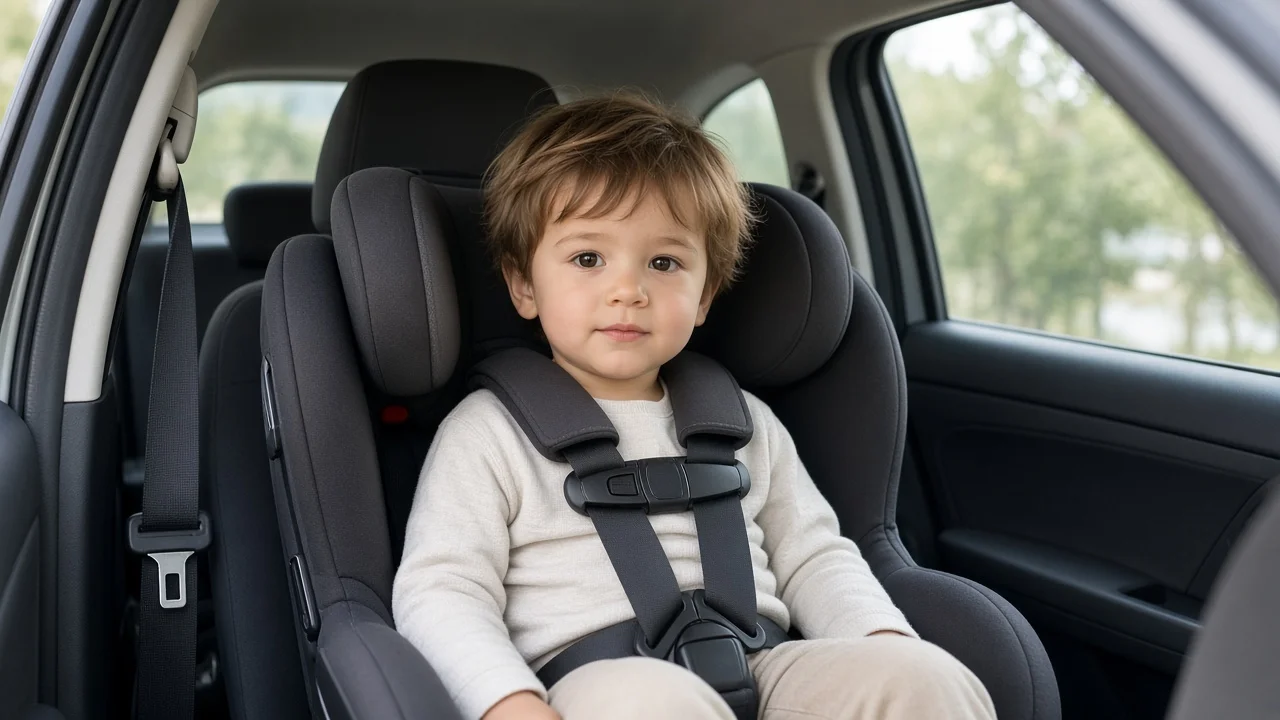
On a harnessed child car seat, the chest clip should sit in the middle of the child's chest, level with the armpits, after the harness is buckled and tightened. Child passenger safety guidance in the US gives this placement, and it is the usual instruction in car seat owner's manuals. If your seat's manual says something different, follow the manual.
What the chest clip does
The chest clip is the plastic piece that joins the two shoulder straps across the child's chest. It is often described as a pre-crash positioner. Its job is to keep both shoulder straps in place over the shoulders. It is not the part that holds the child in a crash. The harness straps, the buckle and the seat itself do that work. The clip only helps if the straps are already in the correct position and snug.
Why placement matters
Too low: When the clip slides down toward the belly, the shoulder straps can spread apart and slip off the shoulders. It also places a hard plastic part over the soft abdomen. Too high: When the clip rides up toward the neck, it can press against the throat or chin. At armpit level: The straps stay on the shoulders and the clip rests over the breastbone. The breastbone is a firmer area than the abdomen or neck.
How to position it, step by step
1) Seat the child with their back and bottom flat against the car seat. 2) Check that the harness straps are flat and not twisted. 3) Fasten the buckle between the legs first. 4) Tighten the harness until it is snug. With general guidance's pinch test, you should not be able to pinch a horizontal fold of strap at the collarbone. 5) Fasten the chest clip, then slide it up or down until it sits at armpit level. 6) Recheck the clip after any adjustment, because tightening or loosening the harness can move it.
Qualifications that change the answer
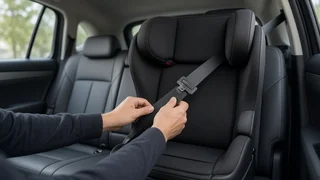
Harnessed seats only: Chest clips are found on rear-facing and forward-facing harnessed seats. Belt-positioning boosters use the vehicle's seat belt and do not have a chest clip. The manual comes first: Car seat makers set instructions for their own products. The armpit-level rule is the common guidance, but the specific seat's manual and labels are the final authority for that model. Clip position is not harness fit: A correctly placed clip does not fix a loose harness, straps at the wrong height, or twisted webbing. Strap height depends on whether the seat faces the rear or the front. Check it against the manual separately. Bulky clothing: Thick coats or snowsuits can make the harness seem snug when it is not. They can also push the clip out of position. Many car seat makers and safety organizations advise against using them under the harness.
What this guide cannot confirm
No model-specific evidence was available for this article. That means there are no clip designs, measurements, test results or brand instructions for particular car seats here. The guidance above reflects general, widely published principles for harnessed child seats in the US. For a specific seat, check its manual and labels. A certified child passenger safety technician can inspect the installation and harness fit in person.