Ford Focus 1.6 TDCi Glow Plug Relay Location
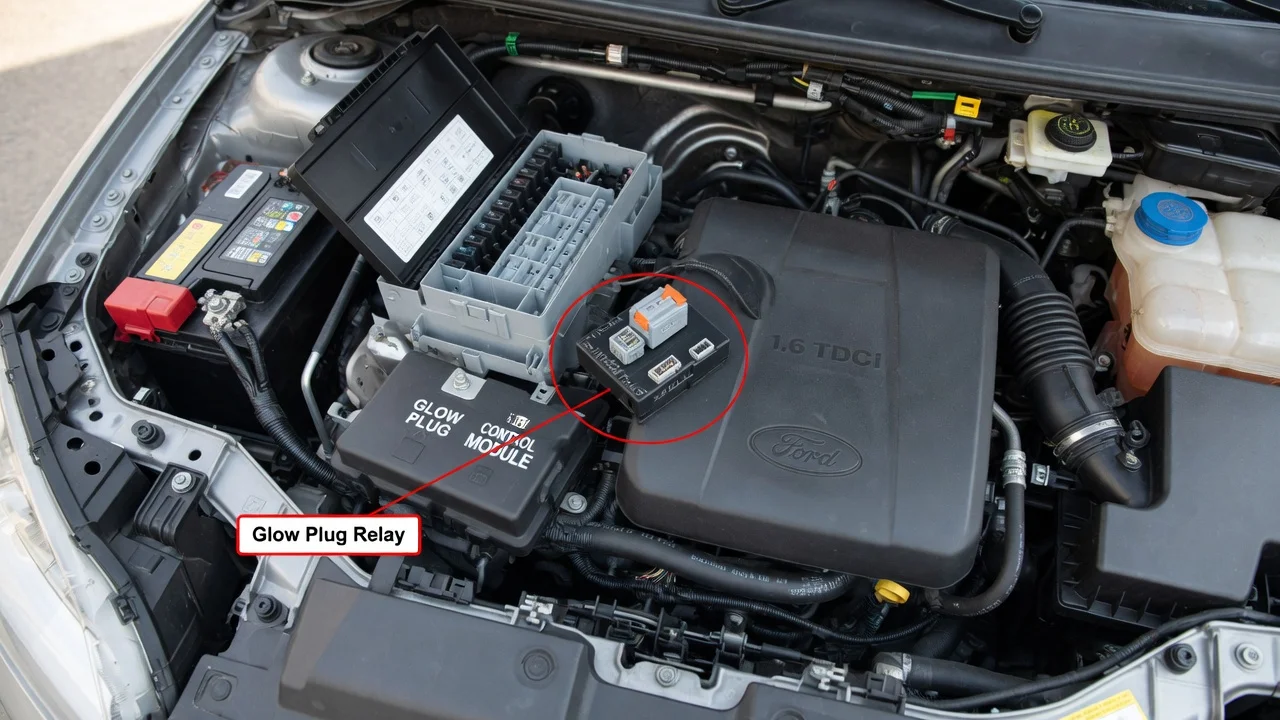
On a Ford Focus with the 1.6 TDCi diesel, the glow plug relay is a small control unit that switches heavy current to the four glow plugs for cold starts. Owners usually look for it after a hard cold start, a flashing coil light or a glow plug fault code. This guide covers where it is normally mounted, how to confirm the location on your own car and what to check before buying parts.
Where the glow plug relay is usually found
On most Focus 1.6 TDCi cars, the glow plug relay, often listed in parts catalogs as a glow plug control module, is commonly reported to sit low on the battery side of the engine bay. It is mounted beneath the battery and battery tray area, attached to the inner wing or chassis rail. Reaching it typically means removing the battery, the battery tray and sometimes part of the air intake ducting. It is a compact box with a multi-pin connector and a heavier power feed, not a standard cube relay plugged into a fuse box.
Treat that location as the first place to look, not a guarantee. Model year, market, steering side and production changes can move brackets and harness routing, so confirm the position by tracing the wiring as described below. The fuse protecting the relay supply is a separate component and may be in the engine bay fuse box, so finding the fuse does not mean you have found the relay.
How the glow plug system works
A diesel engine relies on the heat of compressed air to ignite the fuel. When the engine is cold, the cylinder head and walls absorb much of that heat, so each cylinder has a glow plug that heats the combustion chamber area. The engine control module decides how long to pre-heat, based mainly on coolant temperature, then commands the glow plug relay. The relay switches battery current to all four plugs, which together draw far more current than the control module could handle directly.
Many versions keep the plugs energized briefly after the engine fires. This after-glow phase smooths the cold idle and reduces white smoke and emissions while the engine warms. The relay can report faults back to the engine control module, which is why a failed plug or relay may set a code and light the coil-shaped warning lamp even when the car still starts in mild weather. On a warm engine the system barely operates, so faults show up most on cold mornings.
What changes the answer
Generation matters. The second-generation and third-generation Focus both used 1.6 TDCi engines, but engine versions, emissions equipment and bracket layouts differ between them and across facelifts. Power variants and cars fitted with a diesel particulate filter can have different harness routing. Right-hand drive and left-hand drive cars share the basic engine configuration but not always every engine bay component position. Related models using the same engine family may place the module elsewhere, so information from a sister vehicle is a clue rather than confirmation.
Operating conditions change what you will notice. In warm weather a weak glow system can go unnoticed, while in cold weather a single dead plug or a relay that switches intermittently can cause long cranking, a misfire on one cylinder and smoke until the engine warms. A battery whose voltage drops heavily during cranking can mimic a glow plug fault, so check battery condition as part of the same assessment.
How to find and check it on your car
The most reliable way to confirm the location is to follow the wiring. Locate the glow plugs in the cylinder head, beneath the intake and injector area, each with its own connector. Trace that harness back from the plugs and it will lead you to the relay. Before unbolting anything, let the engine cool and disconnect the battery negative terminal. The relay carries heavy current and its main feed may be live even with the ignition off, and glow plugs and nearby parts can be hot enough to burn.
Once the relay is visible, look for corrosion at the connector, a burnt or loose power terminal, chafed wires and signs of water entry, which are common problems for parts mounted low near the battery. A scan tool that reads Ford engine codes is the next step. Glow plug circuit codes such as P0380 or module control codes such as P0670 point you toward the right circuit, and some tools can command the relay for a test. A multimeter can confirm whether voltage reaches the plug connectors during pre-heat and whether each plug's resistance matches the specification for your engine. Replace the relay only after these checks, not on suspicion.
Work carefully because the common-rail fuel system sits close to the glow plugs. The injector pipes and fuel rail run at extremely high pressure and can hold pressure after shutdown. Do not loosen high-pressure fittings to gain access or to bleed the system, because a high-pressure diesel leak can penetrate skin and cause serious injury. Removing or testing the glow plug relay does not require opening the fuel system.
When the relay is not the problem
If the relay, wiring and plugs test correctly but the engine still starts poorly, the cause is likely on the fuel side or in mechanical condition. A blocked or waxed fuel filter, air entering the low-pressure supply, a weak fuel pump, worn injectors returning too much fuel, or a rail pressure sensor reporting incorrectly can all cause long cranking. A capable scan tool can show requested and actual fuel pressure during cranking, which helps separate fuel delivery problems from glow faults. A visual leak check for wet diesel around the filter housing and low-pressure lines is a safe first step. Fuel additives are sometimes promoted for hard starting, but they are not a proven repair for a failed glow circuit or a worn injector.
Limitations and next step
This guide describes the usual layout and a method to confirm it, not a vehicle-specific service procedure. Because positions can differ by build date and market, note the exact model year and engine code, then confirm with a Ford workshop manual or wiring diagram for that build before ordering parts. Part numbers also vary, so match a replacement to your vehicle identification number rather than to the engine size alone.
Get professional help if reaching the relay means removing intake or structural parts you are unfamiliar with, if fault codes involve rail pressure or other fuel system circuits, if diesel is leaking from high-pressure components, or if you find heat damage at the connectors. A workshop with Ford diagnostic software can run actuator tests on the glow system and read fuel delivery data, which helps avoid replacing good parts.