Ford Check Engine Light: Causes and Diagnostic Next Steps
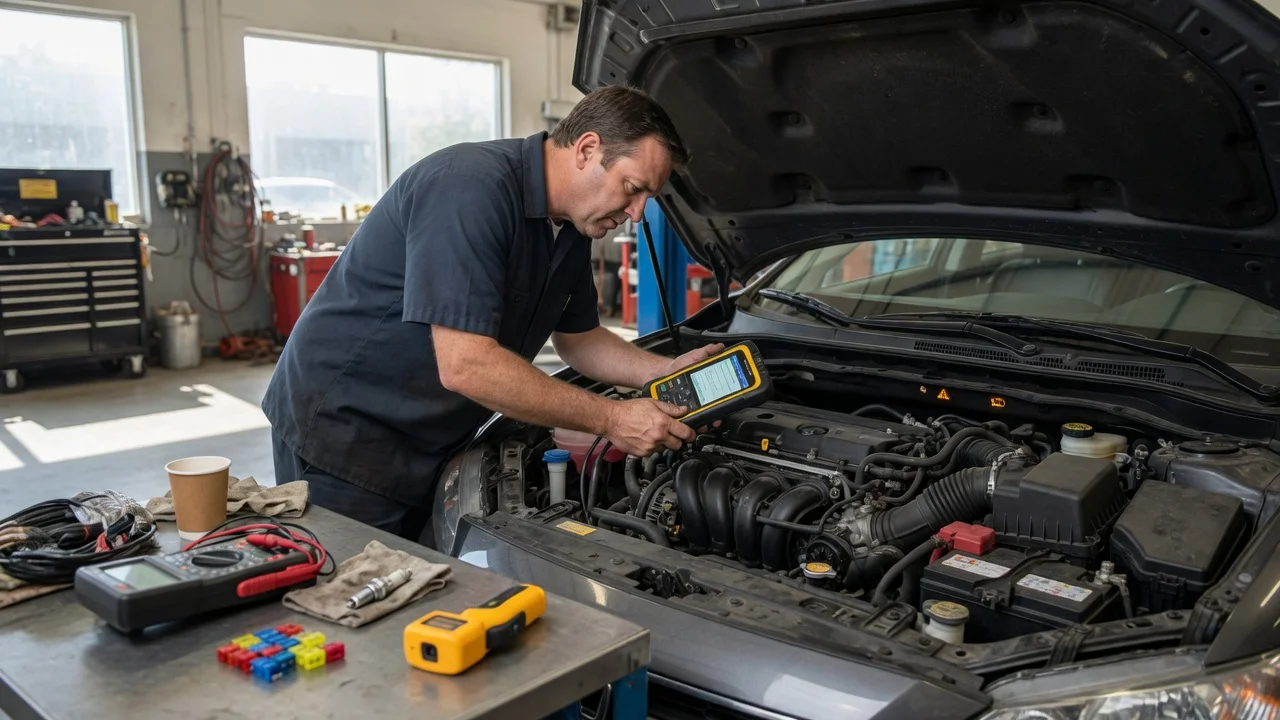
What the Ford check engine light means
The check engine light is the onboard diagnostic system's way of telling you that the engine or emissions control system has recorded a fault. On Ford vehicles, the light may appear as an engine-shaped icon, as the words Service Engine Soon, or as Check Engine. A steadily illuminated light usually means the vehicle can continue to be driven carefully while you arrange diagnosis, provided there are no other warning signs. A flashing check engine light is different: it indicates a condition that can damage the catalytic converter, often a severe misfire. Ford owner materials generally direct the driver to reduce speed, avoid hard acceleration, limit towing and have the vehicle inspected as soon as possible in that situation.
Common causes
A check engine light does not identify a failed part by itself. It is a request to retrieve the diagnostic trouble code, or DTC, stored in the powertrain control module. The code points to a circuit or system where the module saw an implausible signal. The repair may involve a sensor, connector, wiring, vacuum line or mechanical condition rather than the named component. Be especially cautious about replacing a part solely because its name appears in the code description.
Loose, damaged or unseated fuel filler cap, which can allow evaporative emissions pressure to escape; Worn or contaminated oxygen sensors or faults in their circuits; Ignition misfires related to spark plugs, ignition coils, connectors or wiring; Faults in the evaporative emissions system, including purge valves, vent valves, hoses or leaks; Mass airflow sensor contamination or circuit faults; Catalytic converter efficiency faults; Vacuum leaks affecting fuel trim; Low battery voltage, an aging battery or poor ground connections on some models
Model year, engine and emissions system design can change which of these causes is most likely. A code that points to a lean condition, for example, may come from a vacuum leak, low fuel pressure or a contaminated airflow sensor depending on the vehicle.
First checks before pulling codes
Note whether the light is steady or flashing. Tighten the fuel filler cap until it clicks and check the cap and filler neck for cracks or debris. Check for any recent fueling, battery disconnection or service work that could explain the light. Listen for misfires, rough idle, hissing vacuum leaks or unusual noises. Look for obvious loose connectors, cracked hoses or signs of damage around the engine bay.
These checks can catch simple causes, but they do not replace code retrieval. If the light is flashing, avoid prolonged driving and have the vehicle inspected promptly. If the vehicle overheats, loses power severely, stalls or shows other warnings at the same time, stop driving and arrange professional diagnosis.
How to check Ford diagnostic codes
Ford vehicles from model year 1996 onward support the OBD-II diagnostic standard. The 16-pin diagnostic connector is usually found beneath the dashboard on the driver's side, but its exact position can vary by model and generation. An inexpensive OBD-II scanner or a compatible interface with a diagnostic app can read stored and pending codes, along with freeze frame data showing the conditions when the fault occurred unless the module has cleared it.
A basic reader retrieves the alphanumeric code, such as a P0171 for a lean condition on bank 1. That code still needs interpretation because it describes a measured fault condition, not the replacement part. A scan tool with live data is more useful: it can show fuel trims, sensor voltages, coolant temperature and misfire counters while the engine runs.
Diagnostic next steps
Read all codes and note whether they are current, pending or permanent. Check freeze frame data for engine temperature, engine speed and fuel trim values recorded at the time of the fault. Clear codes only after recording them and only where local regulations and your repair plan permit. Drive the vehicle through a representative cycle and see which code returns first. Inspect the affected circuit before replacing a sensor, valve or other named part.
A returning code is more useful than a stored code because it shows the fault is currently reproducible. Some Ford vehicles use manufacturer-specific codes beyond the generic list; a basic reader may show only the generic portion or may require enhanced Ford coverage for full data.
When to seek professional diagnosis
A shop with access to Ford-specific diagnostic information can combine the code, freeze frame data, live data and wiring checks to isolate the cause. That is the practical boundary for many repairs: some faults require guided pinpoint tests, a smoke machine for evaporative leaks, an oscilloscope for circuit checks or a scan tool capable of module tests and relearn procedures. If the light is flashing, if multiple unrelated codes appear, if the same fault returns after a simple repair, or if the vehicle is under warranty, professional diagnosis is the safer next step.
What we can and cannot conclude from a code
This article does not list a single cause for every Ford check engine light because the onboard system does not provide that answer without vehicle-specific testing. Specifications, connector locations and diagnostic procedures also vary by model year and powertrain. Where a concrete value or procedure matters, consult the applicable Ford workshop information or owner manual for the exact vehicle. Treat any stored code as evidence to investigate, not proof that a specific component has failed.