How to Flush a Car Coolant System
What a Coolant Flush Involves
A coolant flush removes old antifreeze, rust particles, scale and other deposits from the engine cooling system, then replaces the fluid with fresh coolant mixed to the correct concentration. This differs from a simple drain-and-fill, which only replaces the fluid in the radiator and leaves contaminated liquid in the engine block and heater core. The exact procedure varies by vehicle model year, engine type and cooling system design, so it is important to check the owner's manual or a model-specific service manual for the recommended coolant specification, capacity and bleed procedure before starting.
Preparation and Tools
Work only when the engine is completely cold. Coolant is toxic to people and animals, and opening a hot pressurized system can cause serious burns. Wear chemical-resistant gloves and eye protection, and keep pets and children away from the work area. Collect all used coolant in a clean drain pan and dispose of it at a recycling center or approved hazardous-waste facility. Typical tools and supplies include:
Drain pan with enough capacity for the system volume; Pliers or a screwdriver for hose clamps and drain plugs; Funnel; Distilled water for flushing and mixing; New coolant of the type specified for the vehicle; A flush kit or chemical cleaner if recommended for the system condition; Rags for spills
Step-by-Step Flush Procedure
Place the vehicle on level ground, set the parking brake and open the hood. If the vehicle has an underbody shield covering the radiator drain area, remove it first. Set the cabin heater control to maximum heat, which opens the heater core valve on many vehicles and allows fluid to circulate through that part of the system.
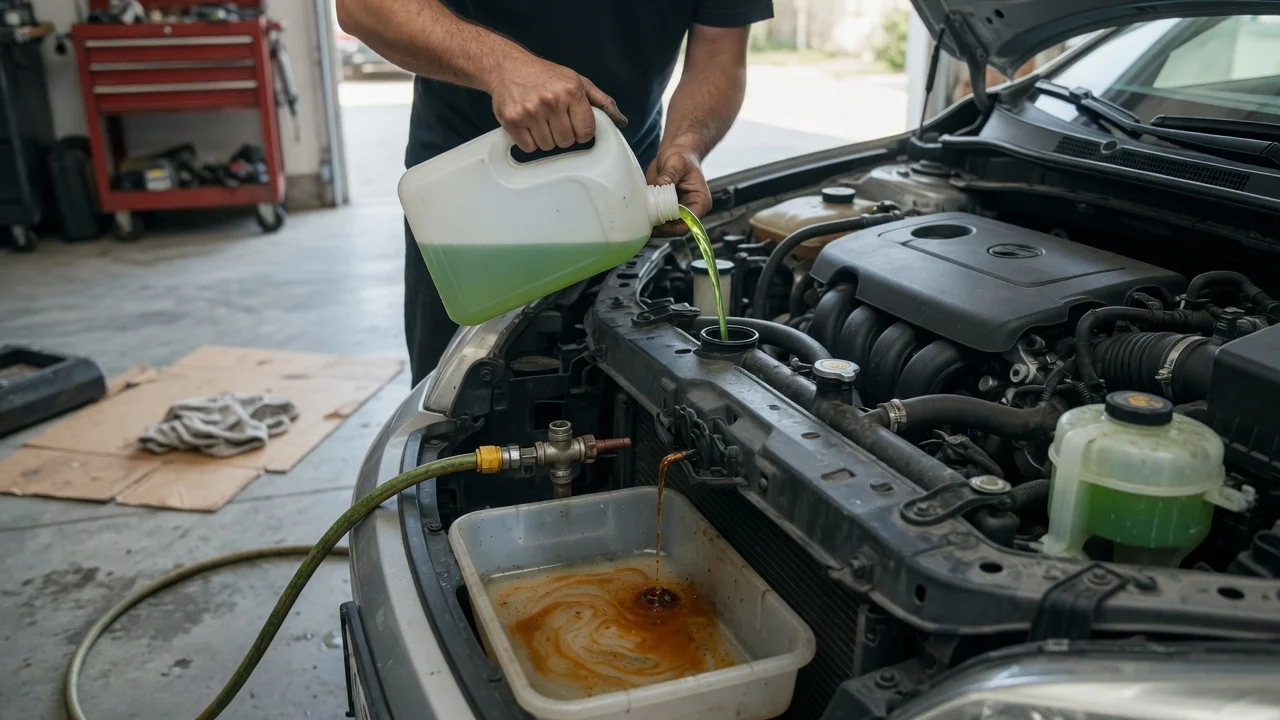
Position the drain pan under the radiator drain valve or lower radiator hose. Open the radiator pressure cap slowly only after confirming the engine is cold. On systems with a pressurized expansion tank, open the cap on the tank if it is the designated fill and pressure point. Then open the radiator drain valve, or remove the lower radiator hose by loosening its clamp and twisting the hose free. Let the old coolant drain completely.
If the drained fluid is heavily rusted or contaminated, a flush treatment may help. Follow the product instructions exactly, because some cleaners require the engine to idle for a set time with water before draining again. Otherwise, fill the system with clean water, run the engine briefly with the heater on, then turn it off and drain the water. Repeat until the drained water runs mostly clear.
Close the drain valve or reinstalled the lower radiator hose. Mix the new coolant with distilled water in the ratio specified by the vehicle manufacturer or the coolant maker. Commonly this is a 50/50 mix, but some coolant products are sold premixed and some vehicles call for a different ratio. Fill the system slowly through the radiator or designated expansion tank.
Bleeding and Completion Check
Air pockets can prevent proper circulation and cause overheating. Many vehicles have a bleed screw on a coolant hose, thermostat housing or another high point in the system. If present, open it while filling until coolant seeps out without bubbles, then close it. Check the manual for a specific bleed or vacuum-fill procedure. Start the engine with the heater on and let it reach operating temperature while watching the temperature gauge. Top up the coolant level as air works out, then install the cap.
After a final cool-down, confirm the coolant level is at the correct mark in the expansion tank or radiator. Check underneath for leaks at the drain valve and hoses. A proper flush leaves the coolant clean, the heater producing warm air, and the engine holding normal operating temperature. If the system repeatedly loses coolant, overheats, or shows oil in the coolant or coolant in the oil, stop driving and have the vehicle inspected by a professional, because those signs can indicate a failed head gasket or another internal fault rather than a maintenance need.