Fleetguard Restore Coolant System Cleaner: What It Does and When to Use It
Direct answer
Fleetguard Restore is a heavy-duty cooling system cleaner designed to be added before a flush. Its main purpose is to loosen and suspend scale, rust, gel, oil residue and silicate dropout so those contaminants can be drained out with the old coolant. The cleaner is not a leave-in additive, and it is not a replacement for fresh coolant. The result depends heavily on the condition of the cooling system and how closely the flushing procedure is followed.
What Fleetguard Restore is meant to remove
The product targets deposits that reduce heat transfer or block coolant passages. Those deposits commonly include corrosion scale on cylinder liners and radiator tubes, rust particles from iron components, silicate gel that can form when incompatible coolants are mixed, and oily films left by a failed oil cooler or head gasket leak. A cleaner cannot repair a mechanical leak or reverse severe blockage, but it can help strip surface contamination before new coolant is installed.
Where it fits in a flush
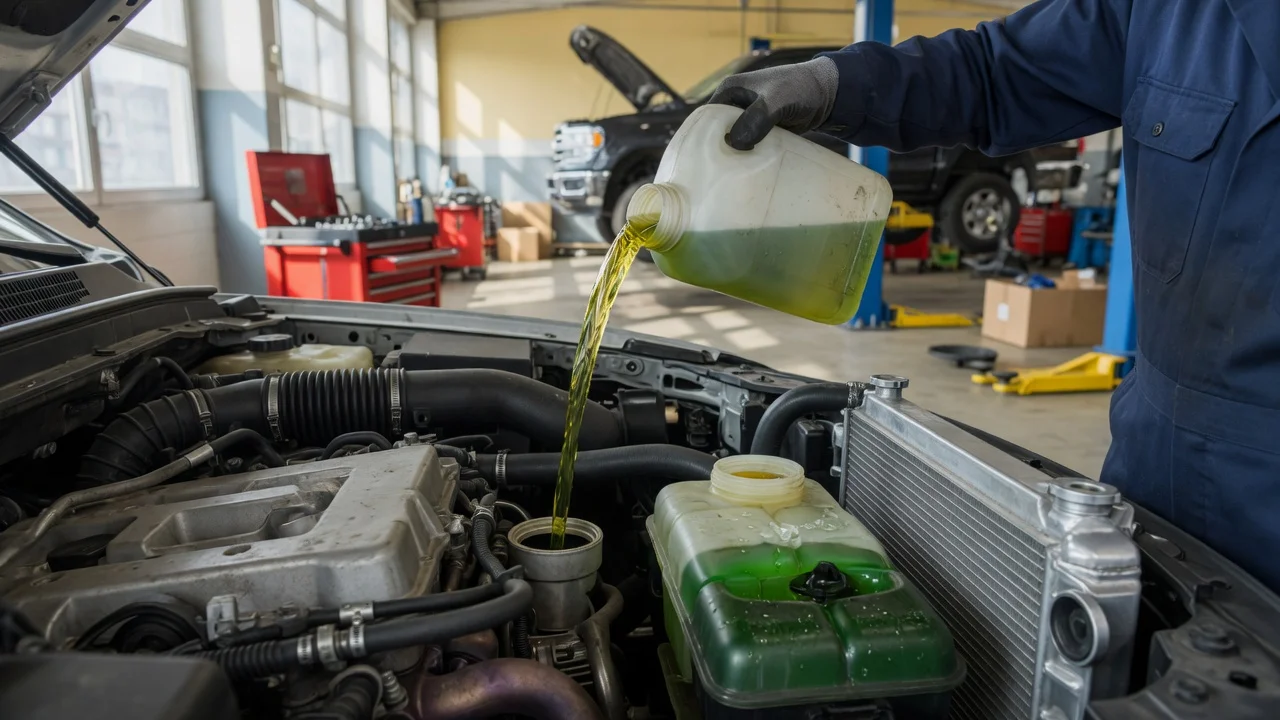
Fleetguard Restore is normally used as one step in a full cooling system service. The typical sequence is to drain the existing coolant, refill with clean water and the cleaner, run the engine to operating temperature for the time specified for the vehicle or product application, drain again, rinse with clean water until the drained water runs clear, then refill with the correct coolant mixed at the recommended ratio.
Compatibility and engine condition
The cleaner is aimed primarily at heavy-duty diesel cooling systems, such as commercial trucks and equipment, rather than light-duty passenger cars. Matching the cleaner to the engine type, coolant chemistry and existing contamination matters. A heavily scaled system may shed enough material during cleaning to temporarily reduce flow or expose weak spots. If the cooling system is already leaking, severely corroded, or has known internal damage, cleaning may make the condition more visible instead of fixing it.
What the supplied information does not confirm
Specific dilution ratios, run time, temperature requirements and exact vehicle coverage are not supplied here. Those details vary by application and should be confirmed for the specific engine, coolant type and service manual before use. The available evidence also does not provide measured cleaning performance, before-and-after test data, or long-term outcomes for particular engines.
Practical buying and use considerations
Use this product only if the cooling system has contamination that a plain water flush cannot remove. Before buying, check that the cleaner is appropriate for the engine and that the planned disposal of drained cleaner and rinse water meets local requirements. If the contamination source is an internal leak, such as a failing oil cooler, address that repair first or the new coolant will become contaminated again.