Flashing Check Engine Light: What to Do and Whether to Drive
Direct answer
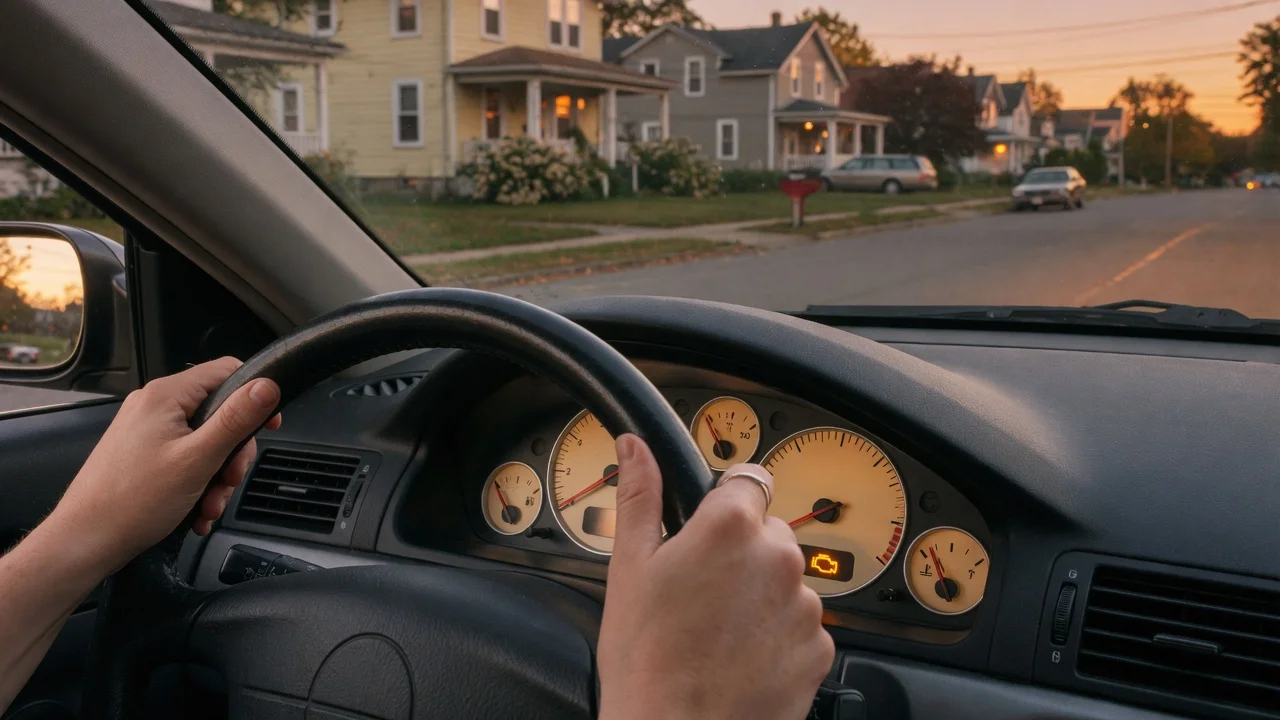
A blinking check engine light is a more urgent warning than a light that stays on steadily. It typically means the engine is misfiring badly enough that unburned fuel is entering the exhaust, which can overheat and damage the catalytic converter. In most vehicles, you should stop driving hard or towing immediately, reduce load, and have the vehicle inspected as soon as possible. Brief, very low-speed travel to a safe stopping place or nearby repair facility may be acceptable, but continued driving is not recommended.
What a blinking light means
A steady check engine light indicates a stored fault that usually still allows normal or near-normal driving. A flashing or blinking light means the engine control module has detected a condition severe enough to require immediate attention, most commonly a persistent misfire. The flashing behavior is intended to warn the driver that continued operation may cause additional damage.
How the warning works
The engine control module monitors crankshaft speed, cylinder firing, fuel delivery, and exhaust sensors. When it identifies repeated misfires, it illuminates the malfunction indicator lamp. If the misfire rate is high enough to put the catalytic converter at risk, the light is commanded to flash instead of remaining steady. The flashing signal is separate from the stored diagnostic trouble codes that identify the affected cylinder or system.
Common causes
A flashing check engine light can be caused by several conditions. The exact cause cannot be identified from the light alone and should be confirmed with a diagnostic scan.
Ignition system faults, including worn spark plugs, failed ignition coils, or damaged ignition wires; Fuel delivery problems, such as a restricted injector or low fuel pressure; Engine mechanical faults affecting compression in one or more cylinders; Sensor or wiring faults that disturb fuel or spark control; Severe intake or vacuum leaks in some systems
Whether you should drive
The flashing light is a signal to stop placing heavy load on the engine. Avoid hard acceleration, high speeds, towing, and steep grades. If the vehicle is shaking, losing power, or producing a strong fuel smell, stop and have it towed. A short drive at gentle throttle to a safe location or nearby shop may be possible, but the risk of catalytic converter damage increases the longer the condition continues.
Immediate steps
Reduce speed and avoid hard acceleration. Pull over safely if the engine is running roughly or the vehicle is shaking. Check for obvious signs such as a loose fuel cap or unusual smells, but do not attempt repairs while the engine is hot. Have the stored diagnostic trouble codes read to identify the affected cylinder or system. If the light continues flashing or performance is poor, have the vehicle towed for diagnosis.
What not to ignore
A fault code is evidence to investigate, not proof that a specific part has failed. Replacing parts based only on a code can miss wiring, fuel, or mechanical problems. A flashing light accompanied by overheating, heavy smoke, consistent loss of power, or a loud mechanical noise requires stopped use and professional diagnosis.
Bottom line
Treat a blinking check engine light as an urgent misfire warning, not a routine service reminder. Lighten the load on the engine immediately and arrange diagnosis. In many cases, addressing ignition or fuel faults early prevents more expensive catalytic converter damage.