Fix Honda that will not start with brake system problem
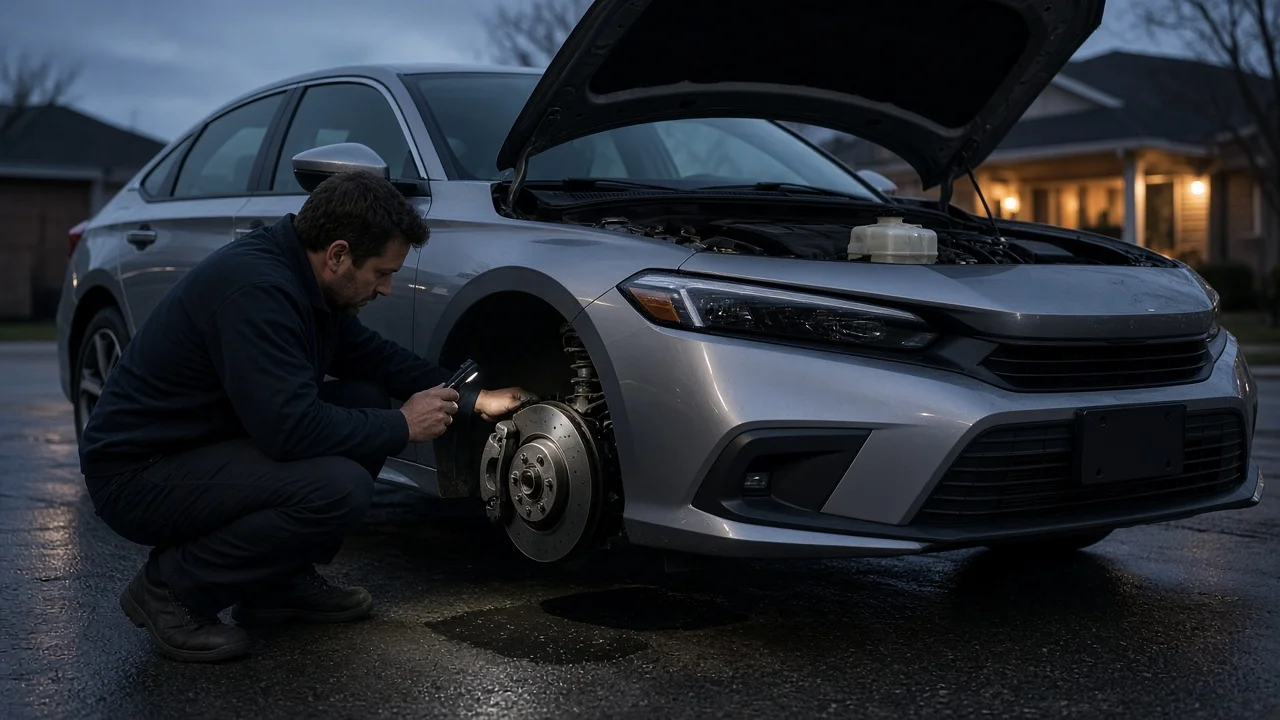
A Honda that cranks slowly or stays silent while also showing a brake warning can feel like two separate failures, but the no-start condition often traces back to shared electrical and vacuum foundations. The brake system itself rarely locks out the engine directly. Instead, low battery state of charge, a weak starter circuit, or a brake pedal position signal can interrupt the normal start sequence. Understanding how the brake warning overlaps with cranking speed and ignition switch behavior helps narrow the diagnosis before parts are replaced.
Essential answer
The essential answer is that a brake system warning alone usually does not prevent a Honda from starting, but a related fault can appear alongside a no-crank or slow-crank condition. A low battery state of charge may illuminate warning lamps while leaving too little current for the starter circuit. In push-button start models, the brake pedal position input is part of the start authorization path, so a failed switch or blown stop lamp fuse can stop the engine from cranking even though the hydraulic brakes remain functional.
In many conventional key-start Hondas, the brake warning and the starting circuit are separate enough that the engine may still crank with a brake problem. When the car will not start and the brake warning is present, the most useful first step is to observe cranking speed and dash behavior. A rapid click, dim instrument cluster, or no crank points toward electrical supply. A normal strong crank that never fires shifts attention toward fuel delivery or ignition rather than blaming the brake hydraulic system.
Diagnosing a problem
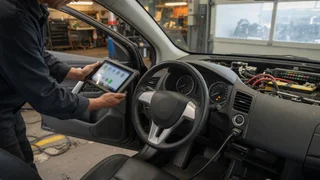
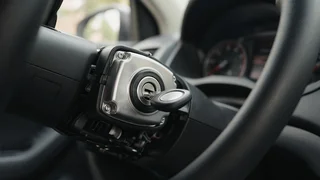
Begin with observable checks that separate electrical supply from brake input faults. Measure the battery state of charge and watch how the dash responds when the ignition switch is turned. If the brake warning glows weakly or flickers during a slow crank, the battery may have enough energy for lamps but not enough for the starter circuit. A fault code related to the brake switch is evidence to investigate, not proof the switch has failed, because wiring, adjustment, or a shared fuse can produce the same code.
If the engine cranks normally but does not start, the brake warning is less likely to be the root cause. In that case, listen for the fuel pump priming and consider whether fuel delivery or an immobilizer condition matches the symptoms. For push-button start systems that require the brake pedal to be pressed, check whether the stop lamps respond to pedal movement. No stop lamp response with a no-crank condition suggests checking the brake switch circuit and related fuses before replacing hydraulic components.