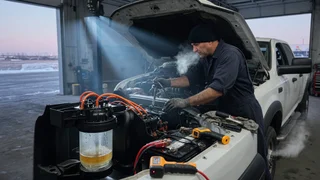
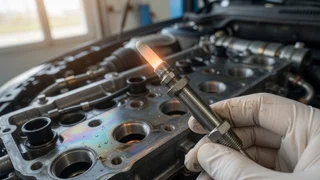
Fix diesel truck cold start problems
A diesel truck that struggles on frigid mornings usually points to a few predictable areas: glow plug operation, battery capacity, fuel condition, or cranking speed. Before replacing expensive components, look at what the engine actually does when the key is turned. A slow crank, white smoke, or extended cranking before firing each tells a different story. Understanding why compression ignition depends on heat and fuel pressure makes it easier to separate a weak electrical system from a fuel delivery fault. The checks below follow that chain systematically, from the battery and starting circuit through the high-pressure fuel side and injectors.
Essential answer
Cold starting a diesel truck depends on generating enough cylinder heat to ignite fuel that is sprayed into compressed air. Unlike a gasoline engine with a spark plug, a diesel relies entirely on compression temperature. When ambient temperatures drop, the block, intake air, and fuel all absorb heat that would otherwise support ignition. Glow plugs or an intake heater add warmth before and during cranking, while healthy batteries maintain the cranking speed required to build compression heat quickly. Addressing cold start trouble begins with confirming those heat sources and the electrical energy behind them.
The likely causes split into three groups: insufficient preheat, slow engine rotation, and poor fuel delivery. A dead or weak glow plug circuit can allow the engine to crank normally but fire late or not at all. A tired battery or corroded cable can slow the starter enough to reduce compression temperature. Fuel that has gelled, lost pressure, or is not reaching the injectors correctly can also prevent light-off even when the engine spins fast. Observing how the truck behaves before it starts narrows the problem faster than swapping parts randomly.
Diagnosing a problem
Begin with the simplest observable check: how the engine cranks. A labored or slowing crank on a cold morning often indicates battery reserve or cable resistance rather than a fuel issue. Warm batteries produce less current, which is why a truck that starts in the afternoon may fail at dawn. Load testing the batteries, checking voltage during cranking, and inspecting terminal connections for corrosion provide a clearer picture. The starter must spin the engine fast enough to create adequate compression heat; a minor voltage drop can erase that margin.
If cranking speed sounds normal, consider the glow plug or intake heater circuit. A relay that does not stay energized long enough, or one or more failed glow plugs, may leave cold cylinders unable to light the fuel. White or gray smoke during extended cranking suggests fuel is being injected but not burning completely. In that case, check for air in the fuel system, a restricted fuel filter, or low fuel pressure from the fuel pump. A fault code pointing to the fuel system is not proof of a failed injector; it only indicates where the engine controller sees an unexpected value. Confirm each suspect with a targeted pressure, leak, or electrical check before condemning a component.