Finding keys lost inside a car
The short answer
Keys lost inside a car are usually in a small number of predictable places: the gaps beside the seats, under the seats, in the seat rails, or in the storage areas around the center console and doors. A slow, section-by-section search with a good light usually turns them up. If the car uses a keyless or proximity fob, the vehicle itself may be able to tell you whether the fob is still inside. How it does this varies by make, model year and trim.
First decide which situation you are in. If you can get into the car and the key is lost somewhere in the cabin, this guide is mostly about searching. If the key is locked inside and you cannot get in, you need a safe way to unlock the car, not a search. That case is covered separately below.
Where keys most often end up
Search one zone at a time and finish it before moving on. Jumping between areas makes it easy to miss the one spot that matters.
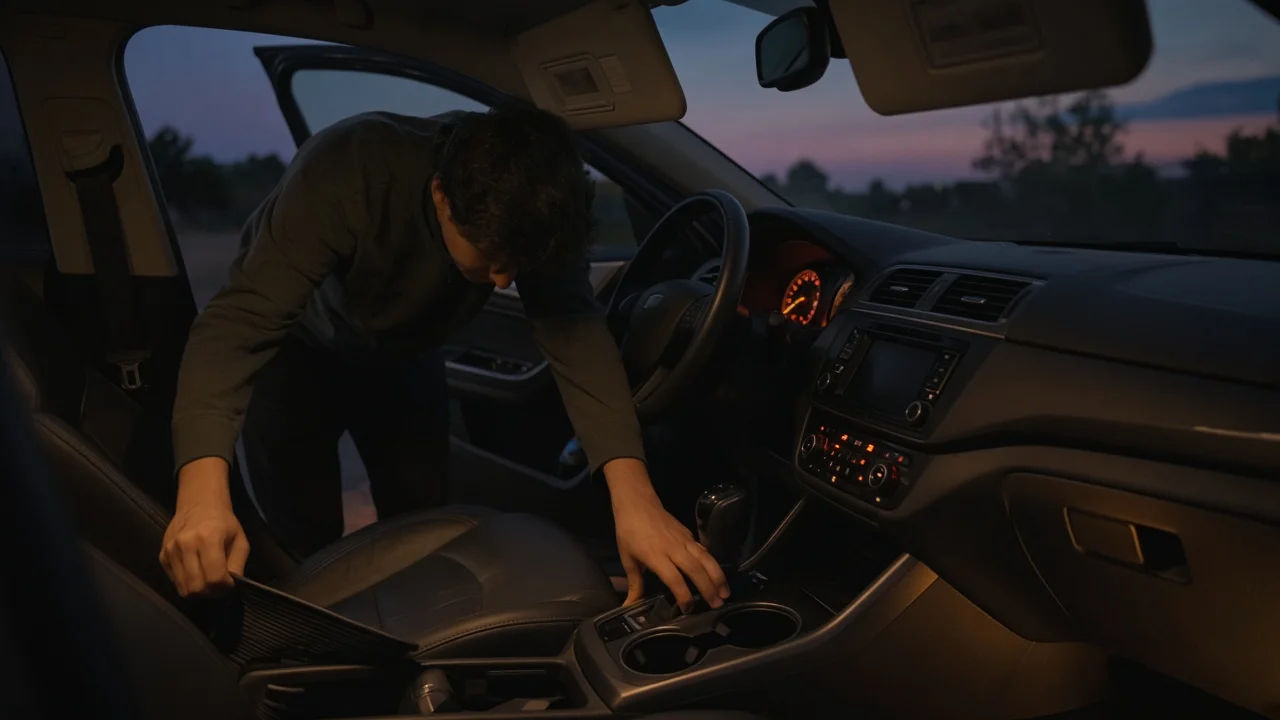
The gap between each front seat and the center console, which is a common trap for small fobs; Under the front seats, including the area around the seat rails and any wiring underneath; Seat-back pockets, door pockets and map pockets; Cupholders, the center console bin, the glovebox and any small trays or coin compartments; The rear footwells and under the rear seat cushion, if it lifts or folds; Around and under child seats, booster seats and any seat covers; The trunk or cargo area, including under the cargo floor panel and in side storage cubbies; Sun visor pockets and overhead storage, if the vehicle has them; Inside bags, jackets or shopping left in the car
A flashlight, or a phone light held low and angled across the carpet, shows shapes in dark footwells better than overhead lighting. For narrow gaps, a telescoping magnetic pickup tool or a grabber can reach a key ring without forcing your hand into tight spaces. A magnet works only if the key or ring contains ferrous metal, so it may not pick up some fobs.
Moving the seats safely
Sliding a seat fully forward and then fully back opens up the space beneath it and often reveals a key that has dropped into the rail area. Move power seats slowly and watch the floor while they travel. A key caught in the seat track can be damaged, or it can obstruct the mechanism. If you hear resistance or grinding, stop and look before continuing.
Using the car to check for a keyless fob
Many vehicles with push-button start look for the fob inside the cabin before they allow starting. On some models, the dashboard shows a message when no key is detected. On others, the car will start or enter accessory mode only if it senses the fob somewhere inside. Some vehicles also give a warning, or refuse to lock, when the fob is detected inside with the doors closed. Whether your car does any of this depends on the manufacturer, model year and equipment level. The owner's manual describes the behavior for your specific vehicle.
Treat these signals as a clue rather than proof. A weak fob battery can stop the car from detecting a key that is actually present. Detection zones also vary, so a fob in the trunk or deep under a seat may not register the way one in the cabin would. If the car reports no key but you are confident it is inside, keep searching anyway.
If the key ring has a Bluetooth item tracker attached, its companion phone app may help you narrow down the location. This works only if a tracker was fitted beforehand. Standard factory key fobs generally do not report their location to a phone app.
If the key is locked inside
If you can see or suspect the key is inside but cannot open the car, the usual options are roadside assistance (through an auto club, your insurer or the manufacturer's program, if you have one), a licensed locksmith, or the dealer. Some vehicles with connected-car services can be unlocked remotely through the manufacturer's app or call center. Availability depends on the model, the market and whether the service subscription is active.
Breaking a window or forcing a door is costly and can damage seals, wiring or airbag components in the door. In a genuine emergency, such as a child or pet shut inside on a hot or cold day, call 911 immediately rather than waiting for a locksmith.
If the key cannot be found
If a thorough search turns up nothing, start with the spare key if you have one. If there is no spare, you will need a replacement. Dealers and many automotive locksmiths can supply one. Modern keys and fobs usually have to be cut and electronically programmed to the vehicle's immobilizer, the anti-theft system that stops the engine from running without a recognized key.
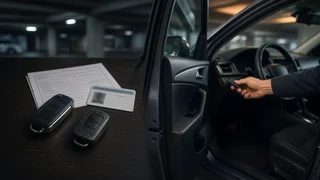
Expect to prove that you own the vehicle before anyone will make a key. Providers commonly ask for government-issued photo ID together with the vehicle title or registration, and they will need the vehicle identification number (VIN). Exact requirements differ between dealers, locksmiths and states, so confirm what to bring before you go. If an original key is lost rather than simply misplaced, ask whether it can be removed from the vehicle's memory so it no longer works.
The evidence used for this guide included no confirmed prices, turnaround times or brand-specific procedures for replacement keys. Cost and timing depend heavily on the make, model year, key type and provider, so get a quote directly.