Find a Home EV Charger Installer: What to Check Before You Hire
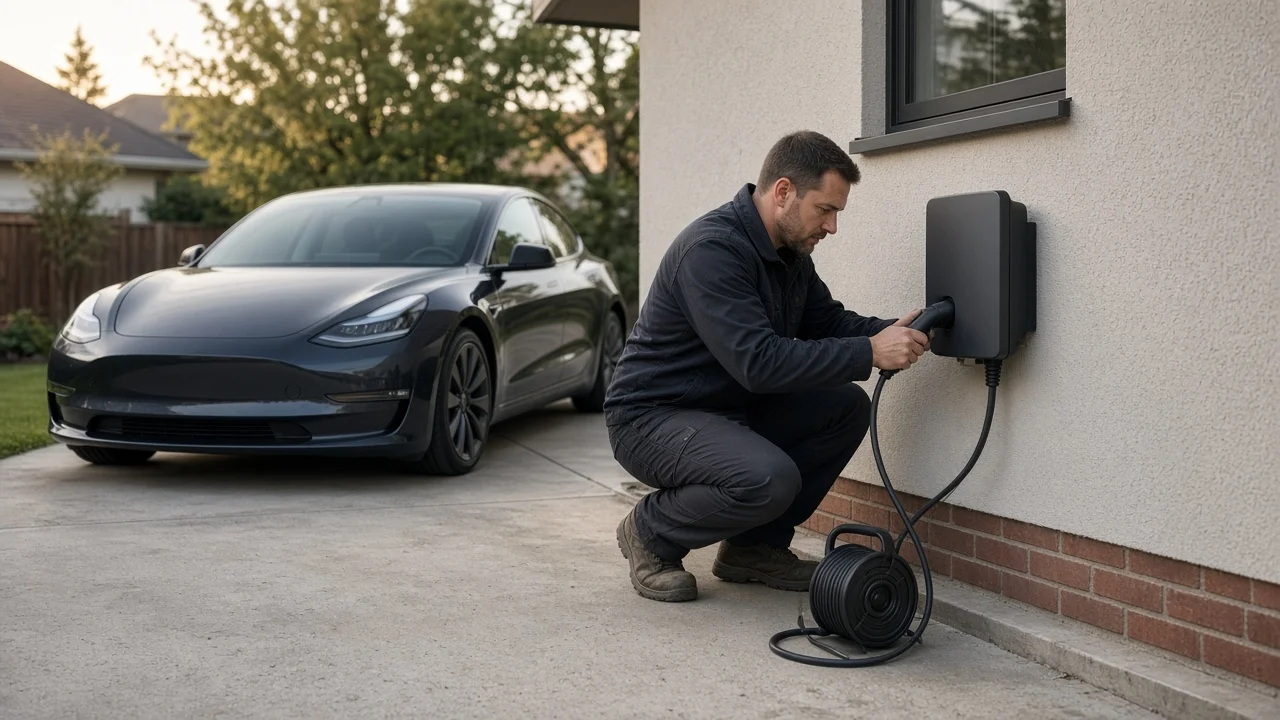
The short answer: for most US homes, the right EV charger installer is a licensed electrician, or an installation company that employs one, who will check your electrical supply capacity, pull the required permit and install a charger listed for safety that suits your vehicle. That holds whether you find them through a local search, a charger brand's installer network, an automaker or dealer program or your utility. Two conditions change the job the most. One is whether your electrical panel has room for a new high-power circuit. The other is whether you rent, live in a condo or park away from your home's panel. Either can shift the work from a simple circuit addition to a panel upgrade, load management or approval from a landlord or association.
What an EV Charger Installer Actually Does
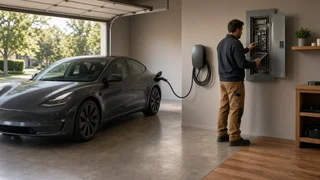
Home charging usually means Level 2 charging, which runs on a 240-volt circuit like the one used by an electric dryer or range. Standard 120-volt outlets can charge a car, which is called Level 1, but slowly. Installing Level 2 involves running a dedicated circuit from your panel to the parking spot. The electrician either mounts a hardwired charger or installs a heavy-duty receptacle for a plug-in unit.
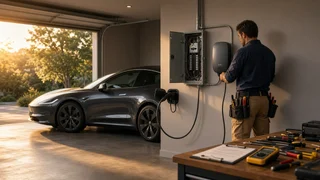
A competent EV charging electrician handles the parts that are easy to get wrong without training. That includes sizing the breaker and wire for the charger's current, choosing the right protection devices, routing the cable safely, meeting local code and arranging inspection. Under the National Electrical Code, EV charging is treated as a continuous load. Circuits are therefore sized with extra headroom above the charger's rated current, and an installer should be able to explain how they sized yours.
Types of Installers and How They Differ
Searches for EV installers turn up several kinds of providers. All of them should ultimately rely on a licensed electrician for the electrical work. The difference is usually who you deal with, how pricing is packaged and who stands behind the result.
Installer type | How it usually works | What to watch for; Independent licensed electrician | Quotes the job directly after a site visit or photos; you may supply the charger | Confirm EV charging experience and that the permit is in the quote; EV charger installation company | Specializes in charging; often offers packaged pricing and handles permits | Check who does the work on site, their own staff or subcontractors, and that they hold local licenses; Charger brand installer network | Brand refers you to vetted installers for its products | Get the quote itemized; compare with an independent electrician; Automaker or dealer program | Arranged alongside the vehicle purchase, sometimes with promotions | Read what the package covers and what counts as extra work; Utility or local program | Some utilities offer rebates, approved contractor lists or special rates | Program rules may require specific chargers, contractors or paperwork before installation
Information to Gather Before You Call
You will get more accurate quotes, and spot a weak one faster, if you know a few things about your vehicle and home before contacting EV charger installation services.
Your vehicle's charge port. Most non-Tesla EVs sold in the US have used the J1772 connector for Level 2. Tesla vehicles use the NACS connector, standardized as SAE J3400, and a growing number of other brands are adopting it. Check the port on your car and the vehicle's documentation for your model year, because some models changed ports between years or ship with adapters. Your vehicle's maximum AC charging rate. The onboard charger limits how fast the car accepts Level 2 power, regardless of how powerful the wall unit is. This figure appears in the owner's documentation for your specific model year and trim, and it can differ between trims or battery options. Your main panel rating. The main breaker, usually at the top of the panel, is labeled with its amperage. Note the panel brand and roughly how many open breaker spaces you have. Where you park, and the distance and path from the panel to that spot. Detached garages, outdoor driveways and long runs through finished walls all affect the work. Existing large electrical loads, such as electric heat, a heat pump, a hot tub, an electric range or a dryer. These all count against your supply capacity. Whether you own the home outright, rent or belong to a homeowners or condo association that must approve the work.
Photos of the panel with the door open, the main breaker label and the parking area let many installers give a preliminary estimate before visiting. A firm quote still generally needs an in-person assessment.
Matching Charging Power to Your Needs
More charging power is not automatically better. The useful rate is the lowest of three things: what your circuit can supply, what the charger is set to deliver and what your car's onboard charger accepts. If the car accepts less than the charger can provide, the extra capacity goes unused. A larger circuit may then mean higher cost, or a panel upgrade, with no faster charging.
Think about how far you typically drive in a day and how long the car sits at home. Your vehicle's energy consumption, usually shown as miles per kilowatt-hour or kilowatt-hours per 100 miles, tells you how much energy you replace each night. Many drivers who park overnight find that a moderate Level 2 circuit restores a full day's driving with time to spare. A good installer will ask about your driving instead of defaulting to the largest circuit. They may also suggest sizing conduit or wire for a future second EV or higher-power charger if that is cheaper to do now.
Hardwired Charger or Plug-In Receptacle
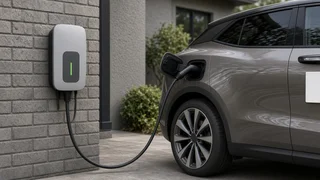
A plug-in charger connects to a 240-volt receptacle, commonly a NEMA 14-50. It is easy to unplug and take with you if you move. A hardwired charger is connected directly to the circuit. Hardwiring often allows higher charging power, avoids wear on a receptacle from repeated use and suits outdoor installations. Recent code editions also require GFCI protection for many garage and outdoor receptacles, and that can add cost or interact with some chargers' own internal protection. Ask your electrician which approach fits your charger, your local code edition and where it will be mounted. If you choose a receptacle, ask for a heavy-duty, industrial-grade one rather than a basic model.
Choosing the Charger Itself
Whether you buy the charger or the installer supplies it, check these points:
Vehicle compatibility. The connector should match your car, or you should know which adapter you will use and that the vehicle maker supports it. If you expect to change vehicles, consider how likely it is that your next car uses a different connector standard. Safety listing. Look for certification from a nationally recognized testing laboratory, such as a UL or ETL listing. Many inspectors and utility rebate programs require it. Adjustable output. Chargers that can be set to a lower current let the installer match the unit to your circuit. Cable length and mounting location, so the cable reaches your port without stretching across walkways. Weather rating, if the charger will be outdoors. Smart features, if you want scheduling, energy tracking or utility program participation. Some utility programs require a networked charger that supports a particular charging protocol for remote scheduling or demand response, so check program rules before buying. Warranty terms, including whether installation by a licensed electrician is required to keep the warranty valid.
Questions to Ask an EV Charger Installation Company or Electrician
Are you licensed in this state or locality, and are you insured? Can you show proof? Who will actually do the work, your employees or a subcontractor? Will you perform a load calculation to confirm my panel can handle the new circuit? If my panel is near capacity, what are my options besides a full panel or service upgrade? Ask about load management devices or chargers that adjust output based on household demand. Is the permit and inspection included in the quote, and who schedules the inspection? What breaker size, wire gauge and protection will you use, and why? What is included, and what would count as extra work: drywall repair, trenching, conduit or exterior wall penetrations? Do you install the charger I have chosen, and will installing it keep the manufacturer warranty valid? What warranty do you provide on your workmanship? Can you help with utility rebate or incentive paperwork?
Comparing Quotes
Installation costs vary widely by home, so a single quoted figure means little without context. Ask each installer for an itemized quote so you can compare like with like. Compare labor, materials, the permit, the charger if supplied and any panel work. A noticeably lower quote may leave out the permit, use a smaller circuit or assume an easy wire route that does not match your home. A higher quote may include a panel upgrade one installer thinks is necessary and another thinks is avoidable. If quotes disagree on whether you need a panel or service upgrade, ask each installer to explain their load calculation. That is usually the deciding factor.
Before signing, check whether your utility, state or local government offers rebates or special time-of-use rates for EV charging, and what they require. Federal tax credit rules for home charging equipment have changed in recent years, so confirm current eligibility with a tax professional instead of relying on an installer's or retailer's summary. Some programs require approval before installation or the use of a participating contractor, and missing that step can disqualify you.
Red Flags
Suggesting you skip the permit to save time or money. Unpermitted work can cause problems with insurance claims, home sales and rebates. No license number, or reluctance to provide proof of insurance. Quoting a high-power circuit without asking about your panel, existing loads or vehicle. Recommending a full service upgrade without a load calculation or explanation. A large upfront payment demanded before any work is scheduled. Dismissing the charger's installation instructions or listing requirements.
If You Rent or Live in a Condo
Renters and condo owners usually need written permission from the landlord or association before an EV charger electrician can begin. The supply may come from a shared or separate meter, and parking spaces may be far from your unit's panel. Some states have laws that limit an association's or landlord's ability to refuse reasonable charging requests. These laws usually come with conditions about who pays and who carries insurance. Check the rules where you live, and look for installers who have done multi-unit work, since metering and building approvals add steps that single-family installers may not handle often.
Next Step
Note your vehicle's charge port and maximum AC charging rate, photograph your panel and parking area, and contact two or three licensed installers for itemized quotes. Choose the one who asks about your vehicle and driving, explains their load calculation, includes the permit and inspection and clearly defines what the price covers. That combination, more than the lowest number, is the best indicator of a safe installation that suits your car.