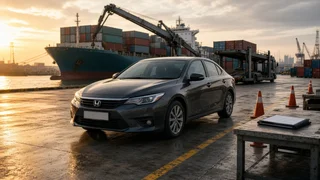
Exporting a Car from Switzerland: Process, Documents and Destination Rules
Exporting a car from Switzerland has two separate stages. First, the vehicle has to leave the Swiss system: it is deregistered with the cantonal road traffic office and declared for export with Swiss customs. Second, the car has to be accepted in the destination country, which applies its own customs clearance, vehicle eligibility, emissions and safety rules. The Swiss stage is usually the simpler of the two. Whether the car can actually be registered at its destination often decides if the export makes sense at all. This guide explains how the process generally works, how it differs by destination, and what to check before committing to shipping. Fees, processing times and some procedures vary by canton and change over time, so confirm the current details with the relevant offices before you act.
The Short Answer
In most cases you can export a privately owned car from Switzerland. You need to:
Cancel the Swiss registration and return the plates to the cantonal road traffic office. File an export declaration with Swiss customs, either yourself or through a forwarder. Arrange transport. Clear the car through customs in the destination country and meet its registration requirements.
The qualification that changes the answer most is the destination. A car built to European or Swiss market specification may be straightforward to register in an EU country. The same car can be difficult or impossible to register in the United States unless it is old enough to qualify for an exemption or is brought into compliance through an approved route.
Stage One: Leaving the Swiss System
Deregistration with the Cantonal Office
Swiss vehicle registration is managed at the cantonal level. To take a car off the road for export, the owner normally returns the license plates to the cantonal road traffic office, which cancels the registration. The vehicle registration document (the Fahrzeugausweis, also called the permis de circulation or licenza di circolazione) is typically marked as cancelled or handled according to the canton's procedure.
Deregistration matters for practical reasons. In many cases it ends liability for the cantonal vehicle tax, and some cantons refund prepaid tax on a pro-rata basis. It also lets you cancel the Swiss motor insurance policy. Refund rules and timing differ between cantons, so check with your own canton.
Driving the Car Out After Deregistration
Once the regular plates are returned, the car can no longer be driven on its normal registration. If you plan to drive it across the border rather than ship or truck it, ask the cantonal office or customs about temporary or customs-type export plates, along with the matching insurance cover. Availability and conditions depend on the canton and on your situation.
Swiss Export Customs Clearance
Switzerland is not a member of the European Union or the EU customs union. Taking a car out of Switzerland is therefore a customs export even when the destination is a neighboring EU country. The export is declared to the Swiss customs authority, the Federal Office for Customs and Border Security. The declaration can be made electronically or arranged by a customs broker or freight forwarder, who will often handle the paperwork as part of a shipping package.
The export declaration also serves as proof that the vehicle left Switzerland. You may need that proof to close the Swiss registration file, to support a tax position, or, for businesses, to justify the VAT treatment of the sale. Keep the stamped or electronically confirmed export documents with the vehicle file.
Documents Commonly Needed on the Swiss Side
Swiss vehicle registration document, original or as returned by the cantonal office after deregistration; Proof of ownership, such as a purchase contract or invoice; Passport or other identification of the owner or exporter; Vehicle identification details: VIN, make, model and first registration date; Certificate of Conformity or type approval information, if available, which is often useful at the destination; Service and inspection records, including the most recent Swiss periodic inspection report if you have one
Stage Two: Getting the Car Accepted at Its Destination
Import documentation and approval rules depend entirely on where the car is going. The destination country decides whether the vehicle can be imported, which duties and taxes apply, and whether it can be registered for road use. Check these points before paying for transport, because a car that clears customs is not necessarily one that can be registered.
Exporting to an EU Country
Cars sold new in Switzerland are generally built to European market specification and often carry EU-type approval. That usually makes registration in an EU country more straightforward than in North America. The car still has to be cleared through EU customs on entry. Import duty may apply depending on the vehicle's origin and the paperwork available, and import VAT is generally due at the destination country's rate.
Some returning residents and people relocating may qualify for relief from duty and VAT on personal belongings, including a car they have owned and used for a minimum period. The conditions are set by each destination country and are applied strictly. After customs, the car normally needs national registration, which may include a technical inspection and proof of conformity.
Exporting to the United States
For US readers, the United States is where exporting a car from Switzerland gets most complicated. US entry involves Customs and Border Protection for the customs side, the EPA for emissions compliance, and the Department of Transportation, through NHTSA, for federal motor vehicle safety standards. A car built for the Swiss or European market usually was not certified to US standards at the factory, even if a similar model was sold in the US.
In general terms, a non-US-specification car falls into one of these routes:
Age-based exemptions. Under federal rules, vehicles at least 25 years old are generally exempt from US safety standards for import. The EPA has a separate age-based exclusion for older vehicles. Check the current EPA and NHTSA criteria for your specific vehicle, because the two thresholds are not identical. Registered Importer route. A newer non-conforming vehicle may be importable only through a DOT Registered Importer, and only if the model has been found eligible for modification. Conversion can be expensive and is not available for every model. US-certified vehicles. If the car was originally manufactured to US specification and carries the manufacturer's US certification labels, import is usually simpler. This is uncommon for cars sold new in Switzerland. Temporary import. Some non-residents may bring a vehicle temporarily under restricted conditions. This does not lead to permanent registration.
US entry normally requires a DOT declaration, commonly handled on form HS-7, and an EPA declaration, commonly handled on form 3520-1, alongside the customs entry. Ocean shipments also involve advance security filing obligations, usually handled by the shipper or broker. US import duty applies to most vehicles, and the rate depends on the vehicle classification. Confirm the current rate with CBP or a licensed customs broker.
After federal clearance, the car still has to be titled and registered in a US state. Some states, notably those with their own emissions programs, have additional requirements. The Swiss registration document and the export paperwork help establish ownership history for the title application.
Other Destinations
Countries such as the United Kingdom, Canada, Australia and many in Asia, Africa and the Middle East each have their own vehicle eligibility rules. Common restrictions include age limits on imported used cars, right-hand-drive requirements, emissions standards, and approval schemes for vehicles not originally sold in that market. Check the destination's import authority or use a broker who specializes in that country before shipping.
How Market Specification Affects Eligibility
Market specification means the configuration a car was built to for a particular region. It covers lighting, emissions equipment, safety systems, labeling and sometimes software. Two cars with the same model name can differ in ways that matter to a regulator. The Swiss market has largely followed European specifications, so destination authorities generally treat a Swiss car as a European-spec vehicle.
Before export, collect whatever documents the manufacturer or importer can provide about the vehicle's original specification and type approval, such as a Certificate of Conformity. Destination authorities often ask for this information, and it can be harder to obtain once the car has left Switzerland.
Shipping Options
Driving across the border: practical for nearby European destinations if temporary plates and insurance are arranged. Truck transport: common within Europe and convenient after deregistration, since the car is not driven on public roads. Container shipping: the car travels in a sealed container from a European port. It offers more protection and can sometimes be combined with household goods. Roll-on/roll-off shipping: the car is driven onto a specialized vessel. It is often cheaper for running vehicles but offers less protection and usually does not allow personal items inside.
Switzerland is landlocked, so overseas shipments typically travel by road or rail to a seaport in a neighboring country first. Ask a forwarder whether this inland leg and any transit customs formalities are included in their quote.
Practical Sequence
Confirm that the car can be imported and registered at the destination, including any age, emissions and safety requirements. Gather ownership, registration and specification documents. Choose a shipping method and, if useful, a forwarder or customs broker who handles both ends. Arrange deregistration with the cantonal office and cancel or adjust insurance at the right time. Complete the Swiss export declaration and keep the proof of export. Transport the car. Clear destination customs, pay any duties and taxes, and complete the local inspection and registration.
Common Pitfalls
Shipping first and checking eligibility later. This is the most costly mistake, particularly for the United States. Assuming a familiar model name means the car is compliant. European and US versions often differ in certified equipment and labeling. Deregistering too early and losing the ability to drive the car to the shipping point. Losing the proof of export, which may be needed to close Swiss obligations or reclaim taxes. Overlooking state-level or national registration rules after customs clearance.
Bottom Line
The Swiss side of exporting a car is mostly administrative: deregister with the canton, declare the export to customs and keep the proof. The real decision is about the destination. Europe is usually manageable for Swiss-market cars. The United States is restrictive for newer European-spec vehicles unless an exemption or approved conversion route applies. Check eligibility first, then book shipping.