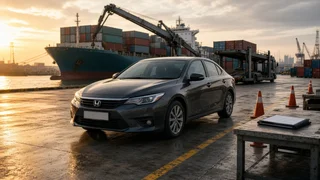
Exporting a Car from Australia: Process, Paperwork and Destination Rules
Exporting a car from Australia is usually the easier half of the job. Australia does not generally restrict the export of an ordinary privately owned passenger vehicle, so the Australian side is mostly administration: proving ownership, clearing any finance, cancelling registration, lodging an export declaration where required and arranging shipping. Whether the car can be used in the destination country depends on that country's import rules for vehicle eligibility, emissions compliance and safety standards. Check those rules before you book shipping, because a car that leaves Australia without problems can still be refused entry, held in storage or ordered back out at the destination.
The Short Answer
For a typical used car, the Australian steps are confirming clear title, cancelling state or territory registration, completing customs clearance for export through Australian Border Force processes, and handing the vehicle to a shipping provider in a clean, inspectable condition. The deciding question is whether the destination accepts the vehicle. That depends on the car's age, its market specification, the standards it was originally built to and the documents you can provide. Rules differ between countries and change over time, so treat this guide as an overview and confirm current requirements with the relevant authorities or a licensed customs broker.
Steps on the Australian Side
Confirm ownership and clear any finance
You need to show that the car is yours and free to leave the country. If the vehicle has a loan or lease against it, the lender normally has a registered security interest. A search of the Personal Property Securities Register shows whether one is recorded. Shipping a financed vehicle overseas without the lender's agreement can breach the finance contract. In most cases the debt should be paid out and the interest discharged before export. Keep the purchase invoice, the registration papers and any payout confirmation, because destination customs and shippers often ask for proof of ownership.
Cancel registration
Registration in Australia is managed by each state or territory road authority, not at the national level. When a car is permanently leaving the country, registration is normally cancelled and the number plates returned, unless they are personalised plates you choose to keep under that state's rules. Depending on the jurisdiction and how much registration period remains, you may be entitled to a partial refund of registration and compulsory third-party insurance. Ask the shipper or broker when to cancel. Some exporters keep the car registered until delivery to the port, and the car may need to be legally drivable to get there. Get written confirmation of the cancellation. It is one of the documents many destination authorities expect to see.
Export declaration and customs clearance
Goods leaving Australia above a set value threshold generally need an export declaration lodged with Australian Border Force. Once accepted, it produces an Export Declaration Number that the shipping line uses to load the cargo. Many private exporters have their freight forwarder or customs broker lodge it. The declaration records the vehicle's description, value, destination and the details of the exporter and consignee. Accurate details matter, especially the vehicle identification number (VIN). Mismatches between the declaration, the shipping documents and the car itself are a common cause of delays.
Cleaning and inspection
Biosecurity is a frequent sticking point. Many importing countries, particularly those with strict agricultural controls, inspect vehicles for soil, plant material, seeds, insects and organic debris. A car that fails inspection may be cleaned at the owner's expense or, in some cases, refused. Before handover, clean the underbody, wheel arches, engine bay, boot, spare wheel well and interior thoroughly. Most shippers also require personal belongings to be removed and limit the fuel left in the tank. These conditions vary by carrier and shipping method, so check them when booking.
Choosing How to Ship
Cars leave Australia by sea in two main ways. Which suits you depends on the vehicle's value, its condition and the routes available to your destination.
Method | How it works | Typical suitability; Roll-on/roll-off (RoRo) | The car is driven onto a specialised vessel and secured on a vehicle deck | Running, registrable-condition vehicles on routes served by car carriers; usually simpler handling; Shared container | Several vehicles are loaded and secured in one container | A middle option where consolidation services operate on the route; Exclusive container | The car travels alone in a sealed container, sometimes with permitted goods | Higher-value, classic or non-running vehicles, or owners wanting more physical protection
Ask any shipper which costs are included and which are not. Common extras include port and terminal charges at both ends, destination customs brokerage, storage if clearance is delayed, marine insurance and inland transport. Quotes that cover only the ocean freight can understate the total cost considerably.
Destination Rules Decide the Outcome
Every importing country sets its own conditions. Most combine some or all of these elements:
Vehicle eligibility: whether the model, age and configuration may be imported at all, sometimes with age-based exemptions or bans on certain vehicles. Emissions compliance: whether the car meets, or can be modified to meet, local exhaust and evaporative emissions standards. Safety standards: whether the car complies with local construction and crash standards, or qualifies for an exemption. Import documentation: proof of ownership, the bill of lading, the cancelled foreign registration, commercial invoice or bill of sale, and country-specific forms. Duties and taxes: import duty, sales or value-added taxes and any luxury or environmental levies, which vary by country and vehicle class. Residency or personal-import concessions: some countries treat returning residents or migrants bringing an owned vehicle differently from commercial imports.
Exporting an Australian Car to the United States
For readers in the United States, the central issue is that Australian-delivered cars are built to Australian Design Rules, not to US Federal Motor Vehicle Safety Standards (FMVSS) or US Environmental Protection Agency (EPA) emissions requirements. Even when a model was also sold in the US, the Australian version is a different market specification. It may differ in lighting, bumpers, emissions equipment, labelling and other details. A US-market label on a similar car does not make the Australian car compliant.
In practice, a non-US-specification vehicle generally enters the US by one of these routes:
Age-based exemption: under the widely cited 25-year rule, vehicles at least 25 years old are exempt from FMVSS compliance. The EPA has a separate age-based exclusion with its own conditions. This is why older Australian-market models are common US imports. Registered importer conversion: a younger vehicle may be imported through a Registered Importer, but only if the model has been determined eligible for conversion. Many Australian-market models have no such eligibility determination, and conversion can be costly. Temporary or special-purpose entry: limited provisions exist for purposes such as show, display or research, and they carry strict conditions on use.
US Customs and Border Protection handles entry, together with Department of Transportation and EPA declarations. These are typically made on forms HS-7 and EPA 3520-1, filed with the entry paperwork. Expect to provide the bill of lading, proof of ownership and the foreign registration documents. Right-hand drive is not itself a barrier to federal import, but individual US states set their own titling, registration and emissions inspection rules, and some states are stricter than federal requirements. Confirm your state's position before shipping, and use a customs broker experienced with vehicle entries if you are unsure.
Other Destinations
Countries that drive on the left and share some standards with Australia may be more straightforward, but none should be assumed to accept an Australian car automatically. Some markets require a compliance inspection or entry certification after arrival. Others restrict imports by vehicle age, and some offer concessions only to people who have owned and used the car for a set period before relocating. Left-hand-drive countries may restrict or prohibit right-hand-drive registration. Check the destination's transport and customs authority guidance for your specific vehicle and circumstances.
Practical Checklist Before You Book
Confirm the destination will accept your car's age, model and market specification, and identify any compliance or conversion work required. Estimate total landed cost: shipping, insurance, port charges at both ends, duties, taxes, brokerage, compliance work and local registration. Search for and clear any registered finance, and gather proof of ownership. Arrange the export declaration through your forwarder or broker, and check that the VIN and details match every document. Plan when to cancel Australian registration, and keep the cancellation confirmation. Clean the vehicle thoroughly for biosecurity inspection, and follow the carrier's rules on personal items and fuel. Keep copies of every document, digital and paper, until the car is registered at the destination.
Common Mistakes
The most costly mistake is shipping first and researching import rules afterwards. A car refused entry can run up storage fees and may have to be re-exported or destroyed. Other frequent problems are undischarged finance, inconsistent VINs or descriptions across documents, underestimating destination charges, and cars rejected at inspection for dirt or organic material. Most of these are avoided by confirming eligibility early and letting an experienced forwarder or customs broker coordinate the paperwork at both ends.
Bottom Line
Getting a car out of Australia is mainly a matter of ownership checks, registration cancellation, export customs clearance and careful preparation for shipping. Whether the move is worthwhile depends on the destination's rules on eligibility, emissions and safety. For the United States, those rules usually mean the car must be old enough to qualify for an exemption or be an approved model converted by a Registered Importer. Confirm that first, then work through the Australian steps.