Exhaust Repair Tape: Suitable Uses and Application
Direct answer
Exhaust repair tape is best understood as a temporary or short-term patch for small cracks, pinholes, and seam leaks on rigid exhaust sections such as pipes, mufflers, and resonators. It is not a cure for rusted-out flanges, broken hangers, failed gaskets, or flexible-joint damage, and it cannot restore structural strength to a heavily corroded system.
What the tape is designed to do
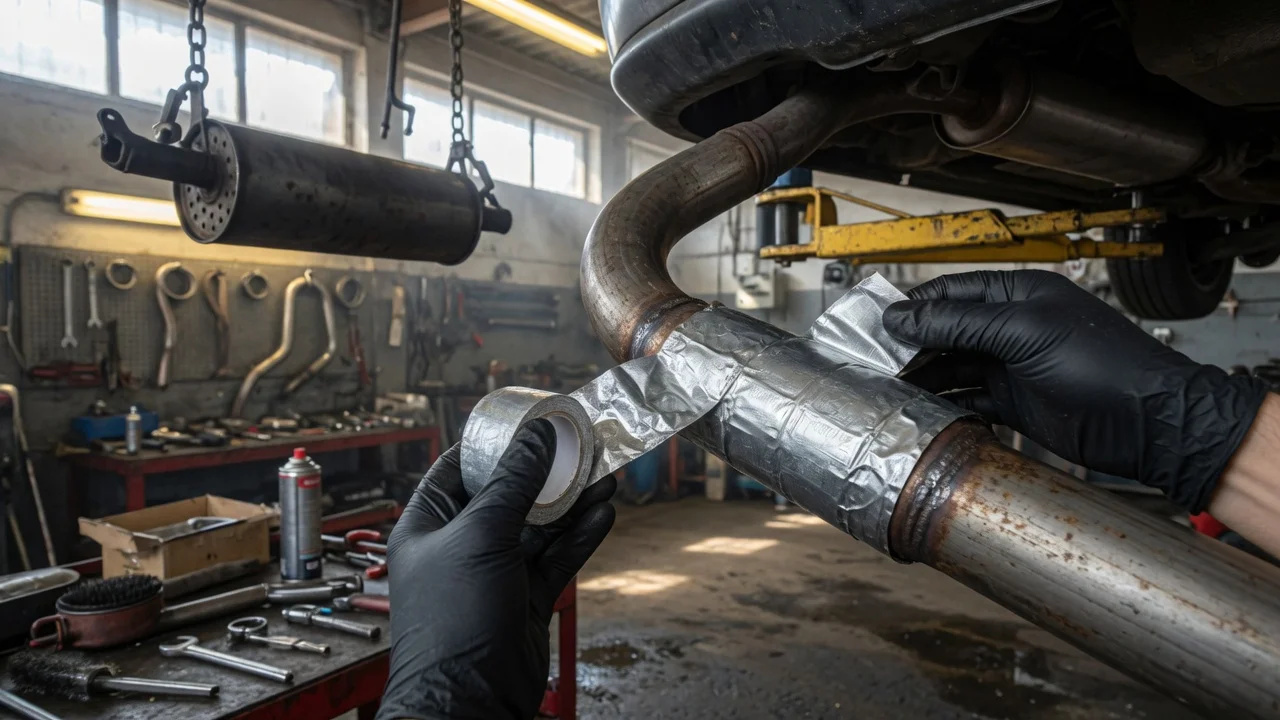
Most exhaust repair tapes consist of a woven fiberglass or similar heat-resistant fabric impregnated with a compound that cures after installation. The cloth provides shape around the pipe, while the resin or silicate binder hardens under exhaust heat and seals small openings. The result is a rigid wrap that can reduce noise and gas escape from a localized leak.
A common claim is resistance to continuous temperatures in the range of roughly several hundred degrees Fahrenheit, with short-term tolerance to higher spikes. The exact rating depends on the product, so the package specification should be checked before use.
Places where tape can be suitable
Small pinholes in steel pipe sections; Narrow cracks along a pipe seam; Minor leaks where a pipe enters a muffler or resonator body; Low-pressure areas away from turbocharger outlets or catalyst entry points
These locations share a useful characteristic: the surrounding metal is still mostly intact, so the wrap is sealing a defect rather than replacing missing material.
Where tape is not the answer
Tape should not be used as the primary repair when the metal is thin, flaking, or collapsing. Wrapping heavily rusted pipe can crush the weakened section during installation, and the patch will have little solid material to bond against.
Flange connections are another poor fit. A leaking gasket joint usually needs disassembly, surface cleaning, and a new gasket or machined flange surface. Tape applied over the outside rarely stops a flange leak for long.
Flexible exhaust sections require a different category of repair. The braided coupling is designed to move, and a cured rigid wrap prevents that movement, transferring stress to nearby pipe, hangers, or the manifold.
Failures directly caused by a broken hanger should also be addressed at the source. If unsupported weight or vibration opened the crack, patching the leak without replacing or repairing the bracket will usually allow the problem to return.
Symptom checks before choosing tape
A louder exhaust note, a ticking sound that changes with engine speed, or a visible soot stain can point to a leak. Before applying tape, locate the exact source with the exhaust cool. Examine the metal around the leak under good light and probe gently with a small tool.
A small dark line or pinhole in otherwise firm metal suggests a candidate for tape; Soft, crumbling, or peeling scale means the section is too corroded for a surface wrap; A crack extending most of the way around the pipe indicates structural failure rather than a minor leak; Soot at a flange or flex joint points to a gasket, joint, or movement problem instead
If the leak cannot be located, if exhaust smell is entering the cabin, or if the system is loose enough to move by hand, stop and have the vehicle inspected. A patch placed over the wrong area will not solve the symptom and may hide a worsening problem.
When stopped use or professional diagnosis is required
Stop use and seek professional diagnosis if there are signs of carbon monoxide entry into the cabin, such as exhaust odor while driving, headache, or drowsiness. A leak ahead of the cabin, near a manifold, or at a joint close to the floor requires more than a surface wrap.
A separated pipe, broken bracket, damaged catalytic converter, or flex-joint failure also calls for a real repair. Tape cannot bridge a gap where exhaust components have come apart or where support has been lost.
Application method
Preparation determines most of the result. The leak must be accessible, clean, and dry. Use a wire brush or coarse abrasive to remove loose rust and scale, then wipe the area with a solvent that leaves no oily residue. Soot and moisture will prevent the binder from curing against the metal.
Tape is usually applied with the exhaust cool and the engine off. Wrap tightly with consistent tension and overlap each turn by roughly one half to one third of the tape width. Extend the wrap beyond the damaged area so the cured edge grips sound metal rather than ending directly on the crack.
After wrapping, follow the product's cure procedure. Many products cure from exhaust heat, which means starting the engine and bringing the system up to operating temperature according to the instructions. Avoid disturbing or soaking the wrap before the binder has hardened.
What to expect afterward
A well-applied tape repair on a small, clean, structurally sound leak may quiet the exhaust and reduce gas escape for a period. It is not a permanent replacement for welded or sleeved repair because the exhaust system continues to expand, contract, vibrate, and corrode.
Inspect the patch after the first few heat cycles and periodically afterward. Reappearing soot, a change in exhaust sound, or loosening of the wrap means the repaired section needs proper attention.
Limitations and evidence gaps
Specific temperature ratings, cure times, and compatible pipe materials vary by product and engine application. This guide does not test a particular brand, so the package instructions are the controlling source for the exact preparation and cure requirements.
Tape performance is also vehicle-dependent. Exhaust gas temperature is affected by engine type, load, tuning, and distance from the manifold. A location that stays within a product's continuous rating on one vehicle may exceed it on another.
Practical decision rule
Use exhaust repair tape only on a small leak in a solid pipe, muffler, or resonator body where the metal is clean enough to accept the wrap and the surrounding structure is sound. If the failure involves heavy rust, a flange, a flex joint, a broken support, cabin exhaust odor, or separated components, treat the tape as unsuitable and address the underlying repair.