Exhaust and Muffler Clamps: Choosing the Right Joint Clamp
The short answer
Choose an exhaust clamp that matches the outside diameter of the pipe or joint and the type of connection being secured. For slip-fit or lap joints, a band clamp usually spreads load evenly and is easier to remove later. For a lower-cost repair or a butt joint with flared ends, a traditional U-bolt clamp may be suitable, provided it matches the pipe size and leaves enough access for tightening.
Start with pipe size and joint type
Clamps are sized by the outside diameter of the tubing they must surround. A clamp listed for a nominal exhaust size may be slightly larger than the pipe so it can fit over the outer layer of a slip joint, but the listed range still needs to match the installed parts. Measure the pipe at the intended clamp location rather than relying only on the muffler or pipe description.
The joint configuration changes which design works best. A slip-fit connection has one pipe inserted into another, while a butt joint brings two ends together. Flanged or flared joints may need a clamp shaped to pull the flared faces together. Confirm whether the replacement part uses the same joint style as the original system; mixing connection types can create a weak or leaking joint even with a correctly sized clamp.
Band clamp vs U-bolt clamp
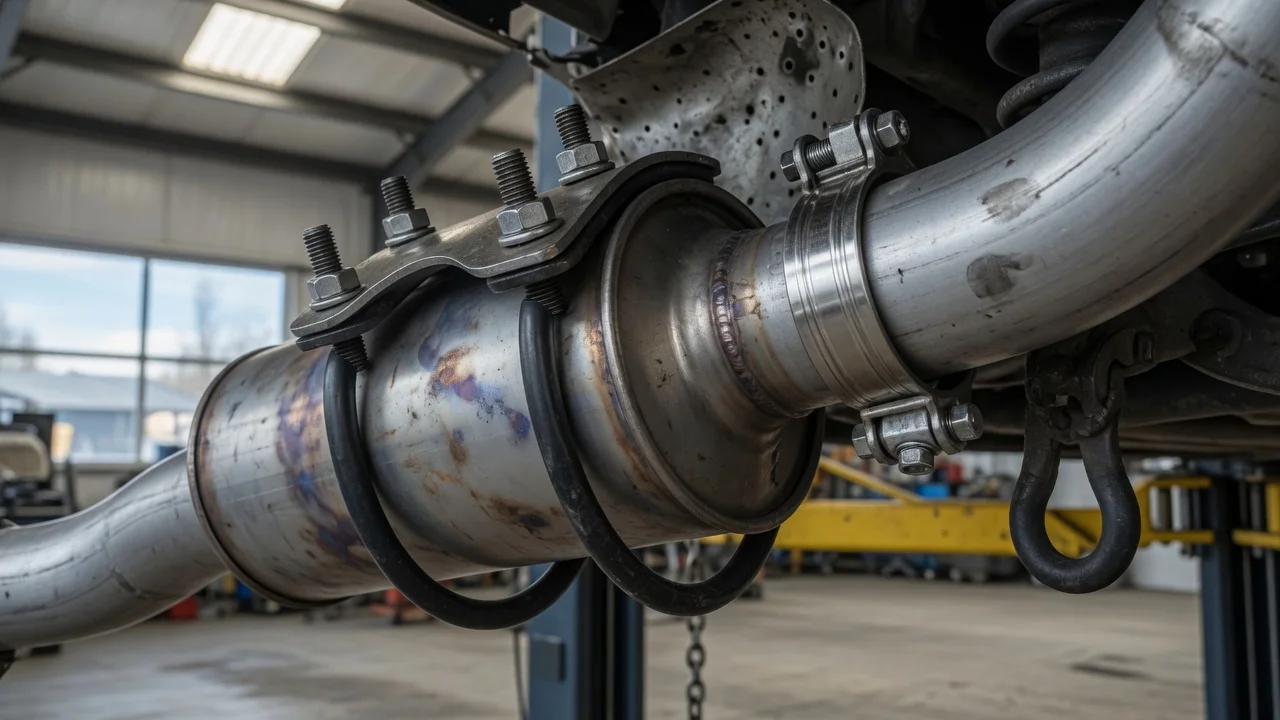
An exhaust band clamp uses a wide strap that encircles the joint. It applies pressure around more of the pipe circumference, which helps avoid crushing thin tubing and generally leaves the joint easier to separate during later service. Band clamps work well on slip-fit connections and are a common choice when the system may need to be removed again.
A U-bolt clamp uses a U-shaped bolt, a saddle, and nuts. It can be inexpensive and effective, but it concentrates pressure in a smaller area. On thin or corroded tubing, that can deform the pipe and make future disassembly difficult. A U-bolt clamp is generally more appropriate for butt joints or where its lower cost matters more than later serviceability.
What to check before buying
Measure the outside diameter of the pipe at the exact joint location. Confirm the clamp's listed size range covers that measurement. Identify whether the joint is slip-fit, butt, or flanged/flared. Match the clamp design to the joint style and to the pipe material thickness. Check that the clamp can physically fit in the available space and that you can reach the fasteners with normal hand tools. Compare the replacement clamp's working width and hardware with the original part when possible.
Fitment and condition checks
Aftermarket exhaust systems may not use the same outside diameter as the original pipe, especially where adapters are present. Check the fitted components together before tightening. The clamp should sit fully over the joint rather than bridging a step or resting on a bend.
Inspect the surrounding area for damage that would prevent a good seal. A heavily rusted or out-of-round pipe can keep even the correct clamp from seating properly. In that case, the repair may require cutting back to sound tubing or replacing the damaged section, not just installing a new clamp.
Installation and total cost considerations
A clamp-only repair is usually inexpensive, but the total cost depends on the condition of the surrounding exhaust parts. If the clamp is being used to join a new muffler or pipe, include the cost of any required adapter, gasket, or hardware. Clamps with stainless steel hardware generally resist corrosion better, while plain steel hardware may be less expensive but more likely to seize.
Tighten the hardware evenly and recheck it after a short drive. A band clamp should close uniformly around the joint. A U-bolt clamp should be snug enough to prevent movement without crushing the pipe. If a leak remains after tightening, confirm the pipe sizes and joint style before replacing the clamp again.
Choosing by use case
Slip-fit replacement muffler or pipe: prefer a correctly sized exhaust band clamp for even clamping and easier future removal. Low-budget temporary repair: a matching U-bolt clamp may work when the joint type suits it and pipe deformation is acceptable. Flared or flanged joint: select a clamp designed for that specific joint type rather than forcing a general band or U-bolt clamp. Corroded or thin tubing: use a wide band clamp to reduce the chance of crushing; replace unsound pipe sections first.
What still needs confirmation
Exact advertised prices and completed transaction costs are not supplied here and vary by market, date, retailer, and vehicle application. The essential purchase check remains physical: measure the installed pipe outside diameter, identify the joint style, and confirm access for the fasteners before selecting a clamp.