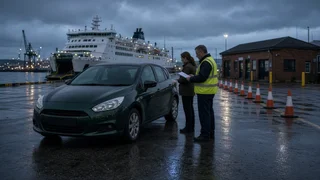
Drive in Northern Ireland after Brexit
Driving in Northern Ireland after Brexit changed the legal backdrop for motorists without always changing the asphalt ahead. The region remains part of the United Kingdom, so the steering wheel stays on the right and speed limits still appear in miles per hour. The practical questions usually involve insurance, driving licences, vehicle registration, and the road border with Ireland. For most visitors in a private car, the daily routine of route segments, lane layouts, and traffic signs feels familiar, yet the access restrictions and travel conditions can shift depending on nationality, residency, and the purpose of the journey.
Essential answer
The essential point is that Northern Ireland remains inside the UK for most road rules and licensing, but Brexit introduced a new customs and regulatory boundary with the Republic of Ireland. A driver crossing that border may encounter different requirements than before, even though the physical road classification often does not change at the line. The key distinction is between UK domestic rules, which still govern driving in Northern Ireland, and EU-related rights that no longer extend to UK licence holders in the same automatic way. Preparing before a trip means checking which category applies to the driver, vehicle, and journey purpose rather than expecting a single universal answer.
For a UK resident driving a UK-registered private car, everyday motoring in Northern Ireland after Brexit generally continues under the same domestic framework as before. The more visible differences affect international drivers, commercial operators, or anyone who previously relied on EU freedom of movement for documentation. Road signage, junction design, and lane layout remain consistent with UK practice, but access restrictions at ports and the border can change how a journey is treated. Understanding this split between unchanged local driving and altered cross-border status is the most useful way to interpret the topic.